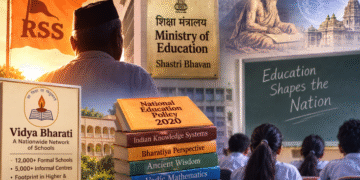


Across India, the past decade has seen a quiet but unmistakable centralisation of higher education policy — through the National Education Policy (NEP) 2020, the creation of umbrella regulatory bodies, and expanding ministerial oversight over institutions once defined by their autonomy. The recent controversy at Panjab University (PU) — over the Union Ministry of Education’s now-withdrawn notification restructuring the university’s Senate and Syndicate — has only made that trend more visible.
“The debate in Chandigarh mirrors what’s happening nationwide — the shrinking space for academic self-rule,” noted Dr. Meenakshi Gopinath, a respected academic leader.
 Founded in 1882, Panjab University stands among India’s oldest centres of higher learning, tracing its lineage to the pre-Partition University of the Punjab in Lahore. Re-established in Chandigarh after 1947, it occupies a unique legal and moral space. Under the Punjab Reorganisation Act, 1966, PU was conceived as an inter-state body corporate, giving both the Centre and the state a stake in its governance — a federal arrangement meant to preserve the university’s shared intellectual and cultural heritage.
Over decades, PU’s Senate and Syndicate came to symbolise that delicate balance. The Senate — a body of elected teachers, alumni, and college representatives — embodied the university’s public character. The Syndicate, its executive arm, carried out academic and administrative decisions. Together, they reflected an essential belief: that a university’s strength lies in its community of scholars and citizens, not in bureaucratic hierarchy.
That balance was shaken on October 28, 2025, when the Union Ministry of Education issued a notification restructuring PU’s Senate and Syndicate. The new rules reduced the number of elected representatives — traditionally drawn from teachers, alumni, and even non-teaching staff — while expanding the number of nominated members, many appointed through central mechanisms.
For an institution that has long prided itself on participatory governance, the proposal was seismic. Critics saw in it not reform, but a quiet transfer of control.
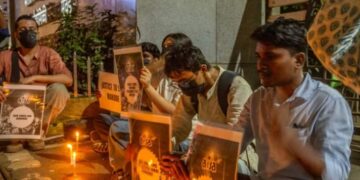
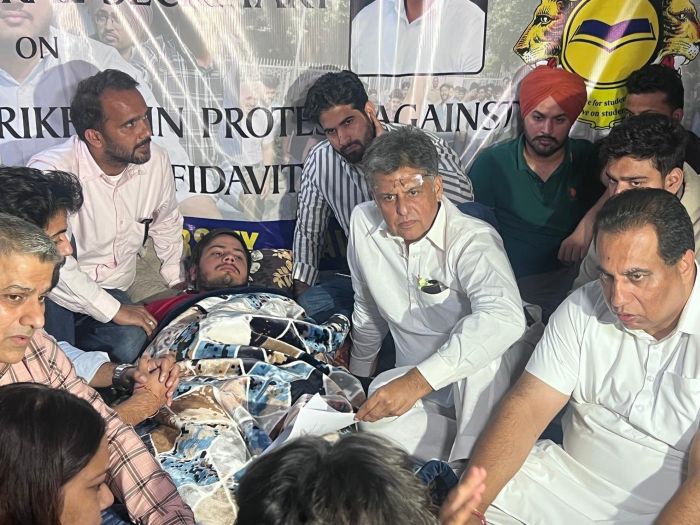
The roots of the unrest lay earlier, in the admissions season of June 2025, when incoming students were asked to sign an affidavit pledging not to participate in protests or demonstrations without prior permission. To many, this was more than a bureaucratic formality — it was a symbolic gag order.
Student groups across the spectrum mobilised in protest. In a gesture that became emblematic, they printed the affidavit on toilet paper rolls, distributing them across hostels — a biting metaphor for administrative overreach. By August, the movement had spread across departments.
University officials defended the clause as a “measure to maintain order.” But for students and faculty, it reflected a larger anxiety: the shrinking space for dissent and debate within Indian universities.
As the controversy deepened, the Aam Aadmi Party–led Punjab government and opposition parties threw their weight behind the protesters. Chief Minister Bhagwant Mann called the Centre’s move an “attempt to rob Punjab of its educational heritage.” Legal experts noted that any unilateral change in PU’s structure could violate the Punjab Reorganisation Act, which enshrines the university’s federal character.
The university’s unique status — “a national university with a regional character,” jointly funded by both Centre and state — became the core of the debate. For many in Punjab, the notification was not simply administrative; it was political, touching questions of identity, representation, and the constitutional boundaries of federalism.
By early November, following protests, petitions, and mounting public pressure, the Ministry withdrew the notification. But the questions it raised have not disappeared.
Observers see in the Panjab University row a national pattern. Across India, from Visva-Bharati to JNU, universities face creeping centralisation — whether through appointments, funding control, or curriculum approval. The impulse for “streamlining” often masks a deeper drive toward administrative conformity.
The so-called “affidavit culture” — conditioning academic participation on political silence — sets a dangerous precedent. It redefines citizenship within campuses as compliance rather than critique, turning universities from laboratories of free inquiry into gated institutions of obedience. For India’s scholars, the fear is not merely bureaucratic interference, but the slow erosion of the collegial culture that sustains higher education. “Universities are not factories,” a retired professor of political science remarked. “They are spaces of debate, dissent, and discovery. Governance must reflect that spirit.”
Panjab University’s 143-year-old story offers a warning for the nation. Autonomy is not a privilege bestowed by governments; it is a constitutional trust that enables the pursuit of knowledge free from fear. The boundaries of India’s federalism, democracy, and the freedom to think — all find their reflection in how universities govern themselves.
In restoring the Senate’s elected character, the Ministry may have stepped back. But the larger question remains:
Will India’s universities continue to be governed by their scholars — or by those who fear what free minds can do?