

Ever since Prime Minister Narendra Modi, in his Independence Day address to the nation on August 15, announced the government’s plan to offer free coaching for competitive examinations to reduce the financial burden of coaching on millions of parents, there has been considerable interest in the details of the proposed service and its implementation mechanism.
Meanwhile, a newspaper report has suggested that the free coaching programme could begin on October 2, the birth anniversary of Mahatma Gandhi, with the initial offering covering high-stakes examinations such as NEET and JEE. Other major entrance and public recruitment examinations could subsequently be brought under the programme.
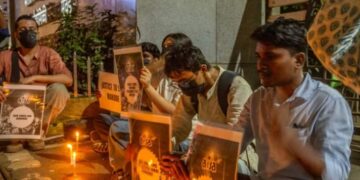
The government may have been prompted to consider such a measure partly by the recent Gen Z agitation at Jantar Mantar over NEET, which widened into a broader questioning of the integrity of public examinations and the irregularities and scandals surrounding them. If a credible delivery model is developed and succeeds, the initiative could become a significant intervention. Apart from making quality coaching more affordable, a government-backed platform could help establish common standards, reliable study material and relevant, regularly updated courseware.
Some experts believe that an initiative of this scale can realistically be delivered only through a robust online platform. In this context, IIT Kanpur’s SATHEE, launched in 2023 in collaboration with the Ministry of Education, could provide a useful model. SATHEE already offers preparation for JEE, NEET, CUET, CLAT, SSC, Railways and banking examinations, and has a digital platform, curated content, mentoring mechanisms, examination modules and experience of working with government schools.
The Ministry of Social Justice and Empowerment is also implementing the Free Coaching Scheme for SC and OBC candidates preparing for competitive and entrance examinations. Its experience in designing, administering and monitoring free coaching programmes could provide useful inputs and an institutional architecture for any larger national initiative, if the government is seriously considering a genuinely accessible and high-quality coaching platform for India’s youth.
However, affordability alone will not make such a programme successful. There are legitimate apprehensions about the influence of the commercial coaching industry, including aggressive marketing, manufactured perceptions and, in some cases, attempts to undermine competing or publicly supported platforms. DIKSHA, the government’s online resource platform offering NCERT-aligned content across school classes, is often cited in discussions on the challenges facing government-supported digital education resources. While the platform has a vast repository, concerns have been raised by some users about aspects of content delivery, including audio quality, as well as the absence of a strong rating and review mechanism. Such mechanisms, if carefully designed, could help identify talented teachers, recognise high-quality contributors and continuously improve the overall quality of content and delivery.
The lesson is clear: content and technology must receive unequivocal attention in any government-supported digital learning initiative. A free platform that is difficult to navigate, has poor production quality or lacks mechanisms for feedback and quality control will struggle to compete with the highly polished commercial coaching ecosystem, regardless of how much content it offers.
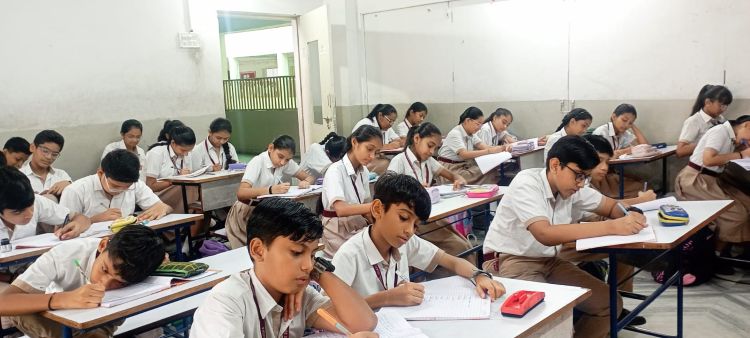
Free coaching for competitive examinations is undoubtedly a good idea, particularly in a country where the quality of school education remains uneven and shortages of subject teachers persist. But the government also needs to look beyond coaching, particularly in the case of examinations such as NEET and JEE.
One possible approach would be to revisit the idea behind the NCERT’s National Talent Search Examination (NTSE), which was designed to identify and nurture academically talented students and provide them financial support for higher education. A modernised version of such a national talent-identification mechanism could be used much earlier to identify students with exceptional aptitude in science, mathematics, languages, social sciences, technology and other fields.
Doctors and engineers are not merely individual career choices. Professionals in these fields, along with scientists, researchers and innovators, constitute national human resources. If a robust national talent-hunt and support system can identify potential at an early stage, it could help talented students realise their capabilities while enabling the education system to nurture them systematically. Certification or rewards earned here can be included in the credit system can be made applicable to the application process as weightage or even a criteria.
Such an approach could also have a wider impact on India’s future leadership, innovation, research and development. Instead of pushing millions of young people into a single high-pressure race for a limited number of seats, the system could help identify aptitude and encourage a much wider range of academic and professional pathways.
The objective, therefore, should not merely be to make coaching free. It should be to make quality learning, talent identification and career opportunities more equitable.
A broader systemic approach could benefit deserving students while also helping puncture the coaching-driven rat race that has contributed to excessive academic pressure, compromised school education and, in extreme cases, suicides and examination malpractice. It could free a large number of students to explore and develop their potential in fields beyond the conventional obsession with medicine and engineering.
If implemented with quality, transparency and long-term vision, the government’s proposed free-coaching initiative could thus become much more than a subsidy for examination preparation. It could be an opportunity to rethink how India identifies, develops and deploys its young talent—and help create a more robust, diverse and future-ready workforce.