

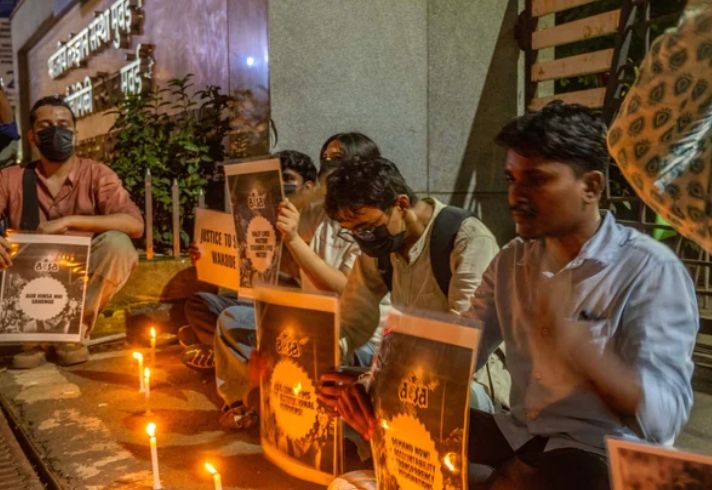
The tragic and unfortunate death of Sahil Wakode, a second-year student of IIT Bombay, on September 18, 2026, has, for understandable reasons, dominated headlines and generated intense discussion—not only about student suicides in higher education institutions, but also about the adequacy of mental-health and student-support systems at some of India’s most demanding academic institutions.
Official data show that 23 IITs reported 45 student suicides between 2020–21 and 2024–25. The data also record eight other unnatural deaths during the five-year period, but do not provide sufficient information to establish the circumstances or causes of those individual deaths. The figures therefore underline the scale of the concern without, by themselves, establishing why students died.
The present case inevitably brings back memories of other tragic deaths in higher education, including Ayush Ashna and Anil Kumar at IIT Delhi in 2023, Dr Payal Tadvi at BYL Nair Hospital in Mumbai in 2019, and Rohith Vemula at the University of Hyderabad in 2016. These cases arose in very different circumstances and should not be treated as interchangeable. Tadvi’s case, for instance, involved allegations and official inquiries concerning ragging and caste-based discrimination, while the circumstances surrounding the deaths at IIT Delhi were reported differently.
The Sahil Wakode case, likewise, should not be fitted prematurely into any predetermined narrative. But it does deserve close scrutiny for whatever lessons it may offer about institutional accountability, disciplinary mechanisms, grievance systems and campus culture. More broadly, it raises a question about whether higher education institutions have sufficiently internalised the need for sensitivity, empathy and early support alongside academic rigour.
At the same time, the concerns raised by protesting students deserve to be heard without allowing the tragedy to become a vehicle for unrelated political narratives. As one student handout put it, “the loss of Sahil must not become a platform for external political interests, organisations or narratives to shape the narratives of the IIT Bombay community.” That is a useful reminder that the focus should remain on establishing facts, examining institutional processes and identifying reforms that can prevent future tragedies.
Nor should the case become an occasion to denigrate the IIT system or diminish the importance of the academic standards that have helped build its reputation over decades. The Indian Institutes of Technology have acquired standing through academic rigour, highly competitive selection, scientific and technical training, faculty quality, research, and the contributions of generations of alumni. That reputation is an institutional asset, built over time through the work of faculty, students, researchers and administrators.
Protecting that legacy requires protecting academic standards themselves. Examination integrity cannot become optional, and rules governing academic misconduct must be clear, consistently applied and fair to students who comply with them. A premier institution cannot maintain credibility if academic malpractice is treated casually.
But the enforcement of standards is only one side of institutional credibility. The other is the manner in which those standards are enforced.
That is why the circumstances surrounding Sahil’s death require investigation rather than assumption. IIT Bombay’s Board of Governors has constituted a 10-member high-level committee, headed by Prof. Ramesh Venkateswaran, Chairman of the Board of Governors of IIT Palakkad, to examine the circumstances surrounding the death. The committee includes faculty members, three student representatives, a retired IAS officer, a former IIT Bombay vigilance officer and a psychiatrist, and has been asked to submit its report within seven days. A separate Mumbai Police Crime Branch investigation is also examining the circumstances of the death.
The distinction is important because several claims surrounding the episode remain allegations or matters under investigation. The institute has said that Sahil was caught using a mobile phone during an examination and that he had uploaded the question paper to ChatGPT. CCTV footage reported by The Indian Express has also emerged as part of the investigation. At the same time, Sahil’s family has made allegations of caste-based harassment, and students have raised questions about the manner in which disciplinary action was handled. These competing claims need to be tested against evidence rather than converted into settled conclusions.
There is also a specific issue concerning the disciplinary framework. According to IIT Bombay’s Senate-approved July 2026 rules, possession or use of unauthorised material or electronic devices—including mobile phones and AI-enabled gadgets—during an examination can attract an FR2 grade and one-semester academic suspension. The rules also provide for stricter consequences in repeat cases.
A September 23 handout circulated by AAPSC-IIT Bombay has alleged that Prof. Suryanarayana Doolla threatened Sahil with a year-long suspension. Even if that allegation were established, it would still not, by itself, establish caste discrimination. The distinction matters: a stringent approach to academic discipline and discriminatory conduct are separate questions, and each must be examined on its own evidence.
Indeed, one possible lesson emerging from the controversy is the need for much greater awareness—among both students and faculty—of the precise disciplinary framework. Students must know what constitutes academic misconduct, what penalties the rules prescribe, what due process is available, and what avenues exist for appeal or grievance redressal. Faculty, in turn, must be equally familiar with those rules and with the institutional responsibilities that accompany their enforcement.
This becomes particularly important against the wider national backdrop. The latest NCRB data for 2024 record 14,488 student suicides in India, compared with 13,892 in 2023. Over 2014–2024, the cumulative number was 1,23,918, according to analyses of the NCRB’s Accidental Deaths and Suicides in India data.
Those numbers, however, should be handled carefully. They establish the scale of student suicide, not a single explanation for it. Academic pressure, examination-related stress, financial difficulties, discrimination and other personal or institutional factors can interact in complex ways, and the cause of an individual death cannot be inferred from national statistics.
The Supreme Court’s National Task Force on Student Mental Health and Suicide Prevention in Higher Educational Institutions, constituted in March 2025, was specifically tasked with examining multiple determinants of student suicide—including academic pressure, discrimination, financial hardship and the effectiveness of existing mental-health and institutional support systems—and recommending reforms. The Task Force submitted an interim report in November 2025, while its broader work continues.
The present controversy therefore ought to generate thoughtful reform rather than indiscriminate targeting. The objective should be neither to excuse institutional failures nor to weaken the academic standards for which IITs are known. It should be to examine whether disciplinary procedures are transparent and proportionate, whether students understand the rules, whether grievance mechanisms are credible and accessible, and whether mental-health support is sufficiently integrated into the everyday life of the institution.
The question for India’s premier institutions is ultimately larger than the immediate controversy. How can they preserve academic excellence while ensuring that disciplinary systems remain fair, humane and accountable?
The long-term reputation of the IITs depends not merely on the standards they demand from students, but also on the standards of governance, responsibility and institutional culture they set for themselves.
-AN