

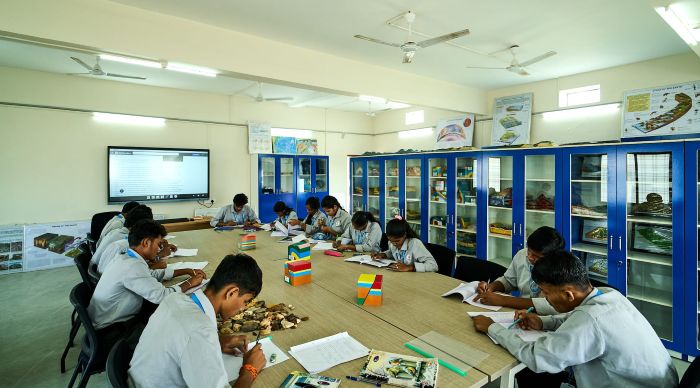
The University Institute of Technology (UIT), Gadchiroli — established in 2025 under a public-private partnership (PPP) model between Gondwana University and Lloyds Metals and Energy Ltd — was founded with the vision that quality technical education should not remain confined to large urban centres.
The institute has recently received Extension of Approval (EoA) for its diploma programmes, along with approval for new B.Tech programmes in Mining Engineering, Manufacturing Engineering, and Computer Science Engineering.
Under the leadership of B. Prabhakaran, the initiative seeks to strengthen industry-oriented technical education and empower local communities in the Gadchiroli region through quality engineering and technology education. The broader objective is to create meaningful opportunities for students in emerging industrial corridors while building a skilled local workforce.
The initiative highlights the growing importance of collaboration between academia and industry in strengthening India’s evolving education ecosystem, particularly in Gadchiroli — a region long affected by Naxalite-Maoist insurgency and developmental challenges.
Speaking on the development, B. Prabhakaran said:
“Regions like Gadchiroli have always had strong potential but limited access to quality education and industry exposure. With growing industrial activity, it is crucial to ensure that local students are equipped with technical education so they can become active participants in this growth story.
Institutions like UIT play an instrumental role in bridging the gap between industry and education by creating opportunities that combine academic learning with practical skills. Our aim is to strengthen the skills, confidence, and capabilities of the youth in the region so they can access long-term opportunities.”
The institute’s academic approach focuses on industry-integrated education, innovation-driven learning, and employability-oriented training aligned with emerging engineering and technology needs. It also aims to expand educational access for students from rural and aspirational districts.