

By Autar Nehru
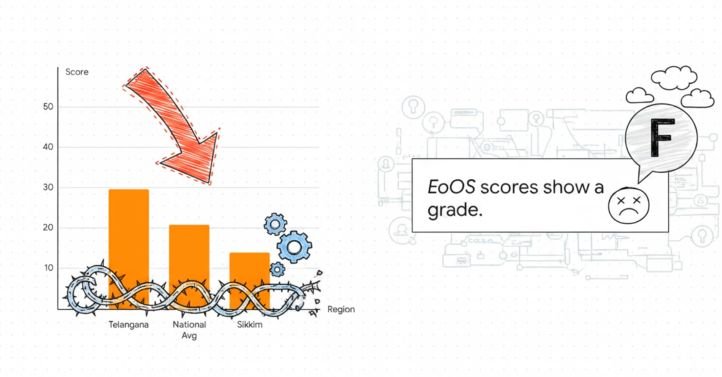
Last month, the Centre for Civil Society (CCS) released its Ease of Operating Schools (EoOS) Index 2026, an assessment of the regulatory environment governing nearly 339,583 private unaided schools—23.1 per cent of all schools in India. That these schools are heavily regulated was hardly surprising. Public debate around them has long revolved around alleged violations, fee hikes, and corruption, both within schools and government agencies. What is startling, however, is the scale of regulatory dysfunction the Index reveals. India’s national EoOS score stands at just 20.86 out of 100—a failing grade that should concern policymakers far beyond the education sector.
The Index evaluates school governance across six equally weighted domains: regulatory clarity, regulatory compliance, protection against arbitrary regulatory action, financial sustainability and resource mobilisation, school lifecycle operations, and institutional autonomy. These are further broken down into 23 indicators and 164 sub-indicators. The assessment relied on an exhaustive review of state education Acts, rules, regulations, government orders, notifications, circulars, and other legally operative instruments in the public domain, supplemented by information obtained through Right to Information (RTI) applications where necessary.
The results are sobering. Even the best-performing state, Telangana, scored only 29.69, while Sikkim ranked last at 13.97. In other words, no state has built a regulatory environment that can reasonably be described as enabling. As the report notes, its purpose is not merely to rank states but to initiate an informed conversation about the governance architecture of school education. That conversation is overdue.
The idea of schools has evolved over time, adapting to changing social and educational needs. Yet, in light of the findings of this report, India’s school regulatory system does not appear to view schools as dynamic institutions. “Educational outcomes might be visible, but educational governance is often invisible,” writes Nitesh Anand, lead researcher at the Centre for Civil Society (CCS) and one of the report’s authors.
One of the report’s key findings concerns school finances. While many states have introduced robust fee-regulation mechanisms—including fee-control laws, approval committees, fee determination authorities, restrictions on fee hikes, and grievance redressal systems—to protect affordability and prevent exploitation, far less attention has been paid to ensuring the financial sustainability of schools. “The challenge is not merely that schools face procedural barriers,” the report observes. “The deeper challenge is that regulatory systems appear considerably more developed in governing school establishment than in governing school evolution.” Schools today face expanding obligations related to infrastructure, safety, staffing, compliance, reporting, and educational quality, yet have limited flexibility to generate the resources required to meet these demands, the report says.
This naturally raises a more fundamental question: why do private schools exist in the first place?
Anand argues that educational pluralism has always been central to India’s constitutional vision. Governments, charitable trusts, religious institutions, community organisations, philanthropists, and private educational entrepreneurs have all contributed to expanding access to education. This diversity, he suggests, reflects the spirit of Mahatma Gandhi’s idea of swaraj and Rabindranath Tagore’s conception of educational freedom rather than any departure from constitutional values.
Indeed, the rapid expansion of schooling after the 1930s—and particularly after Independence—was driven by a shared national belief that schools were instruments of nation-building. Those values also gave rise to a generation of venerated teachers, who became agents of change in transforming India’s human capital while education became synonymous with opportunity, mobility, and a better life. India’s growing aspirations, rising incomes, urbanisation, and expanding labour markets steadily increased demand for schooling. In the public imagination, education was the currency to good life (primarily a good job). Although the demand for universal education existed, it had not yet crystallised into a justiciable right. The expansion of schooling appeared to be following a natural growth trajectory, and few anticipated the regulatory challenges that rapid private participation would later create.
Private participation, which had largely emerged from a tradition of philanthropy rather than commerce, gradually sensed a growing market opportunity. Thousands of small entrepreneurs entered school education, often navigating ambiguities in existing laws because no coherent legal framework existed either to encourage or regulate this emerging ecosystem. Obtaining official recognition from education departments became the first badge of legitimacy, prominently displayed outside school gates as a mark of credibility. Then it was already a movement.
Successive governments largely failed to recognise this structural shift. Instead of creating a modern regulatory architecture, they allowed the sector to expand through piecemeal administrative arrangements. Instead, private school enterprises were indirectly incentivized through earmarking lands for schools in new residential colonies leading to the emergence of larger institutions. This added a second layer of medium to big private school, which remained charitable on paper but entrepreneurial in intent and operations. Eventually, school education followed the trajectory already visible in higher education, where private providers now dominate many segments. Modern private school campuses now dot cities and towns across India, reflecting the scale and commercial maturity the sector has acquired over the past three decades.
In nutshell, today, India has a thriving private school sector. Yet its regulatory architecture continues to reflect assumptions from a very different era.
School owners themselves describe the contradiction vividly. Vikas Jhunjhunwala, Founder and CEO of Sunshine Schools in Delhi, argues that the legal requirement for schools to operate as non-profit trusts, societies, or Section 8 companies has created a paradox. Entrepreneurs often invest substantial capital, years of effort, and professional expertise into building schools, yet are legally prohibited from earning returns comparable to those in other sectors. “Because as trustees, society members or directors, having invested a huge amount of financial resources and our blood, sweat and tears into our schools like any other genuine entrepreneur, as the non-profit requirement means that we are not legally allowed to even draw a salary for our investment and efforts, leave alone benefit from the profits generated in the school. Banks don’t give us loans. The standard operating procedure is to take the money out in black using various illegal methods. Thus, the current regulation has inadvertently turned all of us into criminals. And then asked us to teach honesty and integrity to our students. There is a maze of regulations and approvals required to run even the smallest of schools. The current regulations completely prevent the best, the most talented, innovative and passionate people from running schools,” he adds.
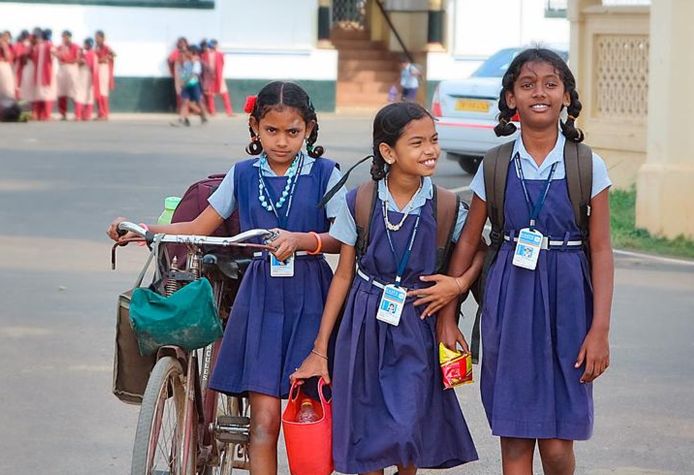
When nearly one-fourth of India’s schools are privately managed, they cannot be viewed either as ordinary commercial enterprises or as entities to be regulated solely through a compliance lens. They educate the generation expected to realise India’s aspiration of becoming a developed nation by 2047. Accountability, equity and child protection must remain non-negotiable, but regulation should also enable innovation and growth.
India needs to unleash the entrepreneurial energy that already exists in the sector—but through thoughtful reform, not indiscriminate deregulation. More than 90 per cent of India’s private schools are small institutions, many operating in low- and middle-income communities. Applying the same complex regulatory architecture to them as to large corporate schools imposes disproportionate compliance costs without necessarily improving educational quality. What India needs is smarter regulation. Small schools require a differentiated regulatory framework that simplifies compliance while maintaining essential quality standards. Policymakers should also strengthen neighbourhood schooling, school clusters, community partnerships, and enabling infrastructure such as safe transportation, particularly to improve girls’ access to secondary education. Shared facilities for sports, arts, and extracurricular activities could help smaller schools provide richer educational experiences without individually bearing prohibitive costs.
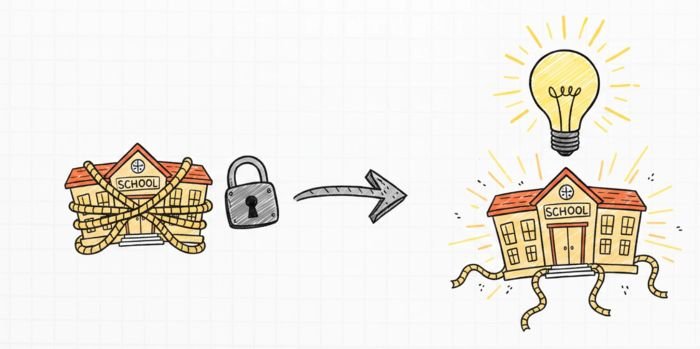
The National Education Policy (NEP) 2020 provides the philosophical direction for such reforms. But policy intent alone is insufficient. The real challenge lies in translating that vision into law by revisiting and amending the Right to Education Act and creating a regulatory framework that recognizes and encourages responsible entrepreneurship, and recognises private schools as partners in achieving national educational goals rather than subjects of perpetual regulatory suspicion. This may ultimately require recognising school education as a distinct public-purpose enterprise—neither a conventional business nor a purely charitable activity—with an accompanying statutory framework that encourages investment while preserving public accountability.
That is where this debate must now lead.
Reforming private school regulation and revitalising government schools are not competing agendas. India needs both. One expands educational choice; the other safeguards educational equity. Government schools have long been the backbone of India’s education system, and the reasons for their decline deserve a separate and serious debate. Part of the damage to their public image has come from sustained narratives that portray them as uniformly dysfunctional while amplifying the perceived superiority of private providers. Yet such generalisations overlook the many government schools that continue to deliver remarkable outcomes despite significant constraints. Public education remains indispensable to India’s vision of equitable schooling and should continue to anchor the country’s pluralistic education ecosystem. Educational departments, for their part, must do a far better job of documenting and disseminating these success stories instead of allowing stereotypes to define public perception. That is where the next space to look for.
A mature education system must strengthen both pillars simultaneously rather than pitching one against the other. The CCS report has started an important conversation. Policymakers should now carry it forward.