
• ECCE
  • School Edu
  • Higher Edu
  • Edu Tech
  • Skills
  • Jobs
  • Advertise
  • Login
[t4b-ticker]
  • Home
  • Latest
  • Spotlight
  • Perspective
  • Interview
  • Videos
  • Events
  • Shop
  • Student Kiosk
No Result
View All Result
  • Home
  • Latest
  • Spotlight
  • Perspective
  • Interview
  • Videos
  • Events
  • Shop
  • Student Kiosk
No Result
View All Result
Education21
Home Opinion

India’s YouTube Teachers Deserve More Respect, Not Ridicule

education by education
June 2, 2026
in Opinion
0
India’s YouTube Teachers Deserve More Respect, Not Ridicule
0
SHARES
151
VIEWS
Share on FacebookShare on Twitter

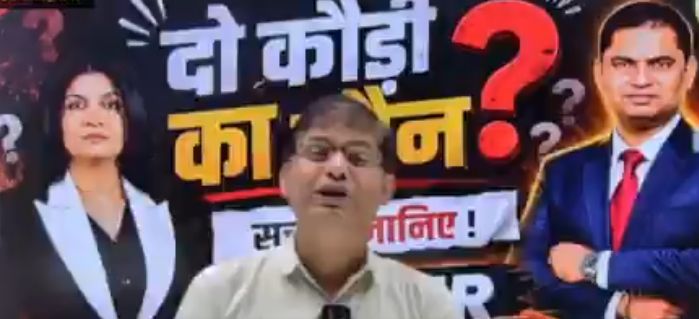
The trolling of popular TV anchor Anjana Kashyap over her remarks on star YouTube teachers—where she appeared to belittle their pedagogy and implied that they are more interested in garnering views than imparting knowledge—is a telling commentary on how profoundly the transformation of teaching and learning from the traditional to the digital world is still misunderstood, even by seasoned journalists.

Much of her criticism was unwarranted, and the backlash she has faced was predictable in an age where the virtual world has its own mechanisms of accountability and retaliation. The fundamentals of the digital economy rest on engagement—views, likes, shares, and subscriptions. The same ecosystem has produced influencers whose reach, in many cases, surpasses that of established celebrities. Kashyap may be operating from a conventional understanding of public influence, but the reality is that influencers now exist in virtually every field, and education is no exception.

Teacher-influencers deserve recognition for having earned their place in this ecosystem and for choosing a profession that remains socially vital. India continues to grapple with a severe shortage of teachers, particularly subject specialists. In many regions, this shortage has reached near-emergency proportions. Against this backdrop, the contribution of YouTube educators deserves appreciation rather than dismissal.

Online education platforms are, in many ways, an extension of this coaching ecosystem. However, over time, technological innovation, digital resources, and market competition have transformed them into something more dynamic and accessible. For millions of students, online classes often provide better learning opportunities than what is available in their schools or neighbourhoods. Meanwhile, many large, branded coaching institutes have, through aggressive commercialization and exorbitant fees, alienated sections of their student base. Increasingly, students are turning away from these institutions, aided by influencers, YouTubers, and social media communities that have exposed their shortcomings and marketing excesses.

The controversy also reveals a broader gap in media literacy. Most audiences fail to appreciate that news organisations operate within institutional constraints. Television channels and newspapers function according to editorial policies, commercial considerations, and political realities. Individual journalists are rarely fully autonomous actors. In an environment where the survival of many news organisations is uncertain, direct confrontation with political and economic power carries significant risks. Consequently, criticism of a journalist’s editorial choices should not always be reduced to personal preference or individual bias.

Viewed in this context, the controversy has had one positive outcome: it has brought online educators into sharper public focus and generated overdue appreciation for the work they do. Across the country, countless students from poor and lower-middle-class backgrounds rely on these educators for quality instruction that is either free or available at a nominal cost. For many of them, online learning offers not only access to knowledge but also hope, confidence, and the reassurance that quality education is no longer restricted by geography or income.

This debate should ultimately lead to a deeper understanding of the digital economy, the changing landscape of educational services, the persistent shortage of quality teachers in schools, and the limitations of India’s coaching culture. Above all, it should foster greater sensitivity toward those who are helping educate millions of Indian children and young people in ways that traditional institutions have often failed to do.


  • Facebook
  • Twitter
  • Instagram
  • LinkedIn
  • RSS Feed
Previous Post

Manipal Tata Medical College Jamshedpur conducts Its first Graduation Ceremony

Next Post

Government Shifts CBSE’s Top Brass, Orders Probe as OSM Controversy Deepens

education

education

Related Posts

BJP’s Fixation with ‘RSS’ Education Ministers
Opinion

BJP’s Fixation with ‘RSS’ Education Ministers

by education
July 31, 2026
The Dharmendra Pradhan Debate Is About More Than NEET
Opinion

The Dharmendra Pradhan Debate Is About More Than NEET

by education
July 20, 2026
NCERT Textbooks Become the New Battleground in India’s Education Debate
Opinion

NCERT Textbooks Become the New Battleground in India’s Education Debate

by education
July 9, 2026
NEET UG 2026 Lessons: A Test of Knowledge, Trust, Mental wellness and Resilience
Opinion

NEET UG 2026 Lessons: A Test of Knowledge, Trust, Mental wellness and Resilience

by education
June 24, 2026
NEET, CBSE & Crisis of Trust: Accountability Cannot End with Assurances
Opinion

NEET, CBSE & Crisis of Trust: Accountability Cannot End with Assurances

by education
May 31, 2026
Next Post
Government Shifts CBSE’s Top Brass, Orders Probe as OSM Controversy Deepens

Government Shifts CBSE’s Top Brass, Orders Probe as OSM Controversy Deepens

  • Facebook
  • Twitter
  • Instagram
  • LinkedIn
  • RSS Feed

Useful Announcements

  • All
  • Useful Announcements

Victoria University India launches its first brand campaign

July 31, 2026

Codingal Adds Math and Public Speaking to Its Growing AI and Coding Platform

July 30, 2026

Applications for the Teach For India 2027 Fellowship open on 1st August 2026

July 30, 2026

Drishti Group launches ‘Drishti Agriculture Exams’ for Agriculture Competitive Exam Aspirants

July 29, 2026

Admissions open for 6-month AI/ML training program by iHub-Data at IIIT Hyderabad

July 29, 2026

One in a Million: Kotak Kanya Scholarship 2026 announced

July 29, 2026

Math Bee Reality Championship launching in India

July 29, 2026

Official TOEIC Speaking prep app TOEIC® Pal Launches in India

July 29, 2026

EThames Business School announces TeenOrator Challenge 2026 for students of Classes IX to XII across Telangana

July 22, 2026
The Need for Toddler Transition Programs in India

EuroKids Launches Junior PlayGroup for children aged 18-24 months

July 21, 2026

Download current issue Not available

https://online.pubhtml5.com/jlyo/bxvr/

Monthly Magazine : Feb 2024

Interactive (Quizzes/Surveys)

Start Monthly Quiz
Education21

An initiative in continuation of Curriculum Magazine, Education21.in, is a platform for New India that aspires to be a valuable innovator, partner and collaborator for a just and sustainable world. Continuing with our steady and 360 degree coverage of education system and skills landscape, we are here more oriented towards learner community.

Useful Links

  • About us
  • Team
  • Contact
  • Editorial opportunities
  • Subscriptions
  • Job Opportunities
  • Features

Important Links

  • Blog
  • Archives
  • People
  • Careerwise
  • Resources
  • Downloadable
  • Old issues

Newsletter

  • Facebook
  • Twitter
  • Instagram
  • LinkedIn
  • RSS Feed

Copyright © 2020 All rights reserved. Education21.

No Result
View All Result
  • Home
  • Latest
  • Spotlight
  • Perspective
  • Interview
  • Videos
  • Events
  • Shop
  • Student Kiosk

Copyright © 2020 All rights reserved. Education21.

Welcome Back!

Login to your account below

Forgotten Password?

Create New Account!

Fill the forms bellow to register

All fields are required. Log In

Retrieve your password

Please enter your username or email address to reset your password.

Log In
Cleantalk Pixel