

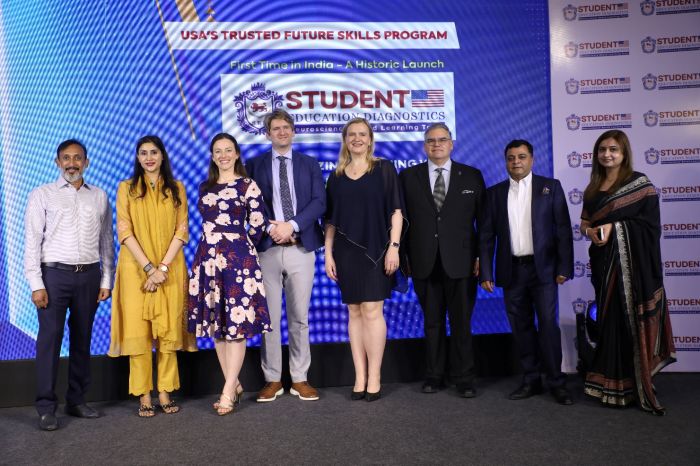
USA-based Student Education Diagnostics (SED) on March 17 announced the launch of its natural intelligence and neuroscience-based learning diagnostics platform in India. Developed as an assessment and learning intelligence platform, SED analyses how individual students process information and apply concepts. Using brain-based assessments, the platform identifies learning styles, strengths, and areas that need support. It maps cognitive patterns and academic performance to generate personalized academic roadmaps, allowing educators and families to address learning gaps early while strengthening existing competencies.
Speaking at the launch event in New Delhi, Srinesh V, Founder of Student Education Diagnostics, said, “Across classrooms, many students labelled as underperforming are often simply misunderstood. Conventional assessments tend to measure outcomes, but they rarely explain how a student learns. Through SED, we aim to introduce a neuroscience-based diagnostic approach that helps schools and families understand individual learning patterns, identify gaps earlier, and guide students toward clearer academic pathways.” It is designed to analyse how students learn, identify academic strengths and learning gaps, and support personalized development pathways.
The launch was announced during the SED Learning Intelligence Summit, which brought together educators and academic experts to discuss how learning diagnostics can support earlier identification of student learning gaps and guide more informed academic development. The event featured Joseph Salazar, M.S. in Engineering and Management in Aerospace, University of New Orleans; Jacqueline M. Klemke, MBA, Frankfurt University and Mental Health and Well-being Specialist; Dr. Sedighe Zamani Roodsari, PhD, M.Ed., Auburn University; and Eric Sambaluk, Curriculum Advisor.
The platform integrates neuroscience-based academic diagnostics with structured student tracking tools. These include early identification of learning gaps, SAT- and ACT-aligned frameworks, US-based certification pathways, and a 360-degree system that enables educators and parents to track student progress over time.
Speaking on the India launch, Ashli Sambaluk, CEO, Student Education Diagnostics; M.A. – Foreign Languages, University of North Texas, said, “India has one of the world’s largest student populations, yet most systems still measure performance without fully understanding how each student learns. Bringing SED to India is about changing that starting point. By applying neuroscience-based diagnostics, we can help educators and families identify learning strengths and gaps much earlier, and create academic pathways aligned with global benchmarks and future careers.”
Dr. Ganesanathan Geathiswaran, Deputy High Commissioner of Sri Lanka to Southern India, appreciated the SED initiative for its forward-thinking approach to understanding children’s learning patterns through neuroscience and natural intelligence. He expressed that such a model has strong potential to transform education systems and extended an invitation to the SED team to visit Sri Lanka to explore its implementation and impact further.
Student Education Diagnostics (SED) also announced its intent to enter into strategic educational partnerships with leading educationists and institutional heads across India.