

India is one of the youngest nations in the world currently and this advantage from a demographic perspective is going to stay with us for a few more decades. We have a burgeoning young population, which if steered in the right direction, can take our economy and society to the next level of development – from being a low-income economy to a middle to a high-income economy. This is the opportunity of a lifetime for India and needs sincere efforts to benefit from it. It is in the context of this demographic dividend that ‘Amrit Kaal’ seems plausible.
Challenges
There are immense changes taking place at the global as well as local levels that are both aiding and obstructing the pace of development in India. The nature of work itself is rapidly changing. The increased pace of digitization is changing the nature of skill requirements in favor of technical skills. Artificial Intelligence is bound to change the processes of production. There is a generational shift in the way students, especially at the undergraduate level, think about work and education. More and more students are leaving India for Western countries even for undergraduate education, in some cases, along with their parents. Another important fulcrum shift is taking place or rather has taken place where more and more students at the undergraduate level are now going to pass through the private sector-led higher education institutions. Given the increasing cost of higher education, many of these graduates may have a dominant pecuniary motive behind seeking further education, leading to differences in attitudes and ambitions. If parents finance education, there is a great chance of heightened indifference in the students towards the teaching-learning process.
In this fast-paced dynamic environment, the challenge in front of higher education institutions is to provide education at par with global levels in terms of quality. At the same time, there is also an opportunity to make India a hub of high-quality and reasonably priced undergraduate education in all streams.
The Five Opportunities
Strengthening Teaching-Learning Processes: We need to undertake a few changes in our higher education system’s incentives and design. The first change which is required is to adopt global best practices for updating and fine-tuning course curriculum, pedagogy and extra-curricular activities. This requires institutions to have regular stakeholder consultations to update their course content. The involvement of a wide variety of stakeholders can bring in the required dynamism that can in turn generate interest in students towards teaching-learning processes and at the same time ensure highly skilled human capital resource generation. To keep the private-led higher education system from becoming mere producers of degrees or a pipeline for universities abroad and to provide assurance of lifelong learning, time and resources have to devolve towards strengthening teaching-learning processes, the core activity of a higher education institution.
Changes in Exam Environment: The second change that is required is to provide students with an examination environment that mimics their work environment. If we want to move beyond rote learning, we will have to move beyond traditional examinations. This can be a resource-intensive change and will require delivery in phases. The focus in the initial phase could be to have a few examinations, out of the many held per semester, in computer-based or live interaction-based formats. In this context, any projects and assignments given to students need to focus on active learning instead of testing their memory. To move towards enhancing student engagement and skill development, the education system has to devolve resources towards students in the form of more labs, equipment, surveys, books, and better-designed exams to provide opportunities for applying their learning.
HEIs as Consulting Hubs: The third change that is urgently required is in the way we imagine academic institutions. As more and more students will be passing through the private education sphere, there is a need to think of these institutions in a wider context. A replicable example of taking undergraduate-level education seriously in terms of application is that of legal education. Many reputed institutions in this field are offering pro-bono legal advice via their undergraduate students under the guidance of their faculty. As a result, some excellent organizations and startups have emerged in the field of Law. This is a win-win situation for all parties involved. A similar innovation is possible in management education as well, where we imagine a university as a centre of low-cost, high reliability, consulting services for small businesses. Most Indian businesses are in the unorganized sector, and cannot afford high-cost consulting services. Universities can pitch in by undertaking their Corporate Social Responsibility by providing this valuable service via student engagement in consulting activities. Education institutions can become consulting hubs, where students engage with society and acquire higher-order learning, moving beyond classrooms and their monetary interests.
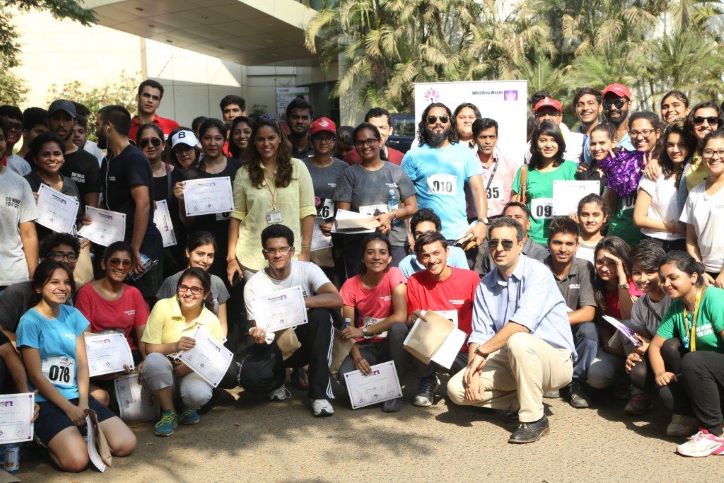
Meaningful Volunteerism: The fourth change that is required is connecting students to volunteering opportunities. There is a need to utilize student intervention to carry out meaningful activities at a large scale – like financial inclusion, gender sensitization, and environmental protection. When students engage as volunteers, they develop lifelong connections with fellow volunteers, they meet like-minded mentors, and above all, they are able to think about and implement solutions to problems they care for. These engagements have the potential to be a highly innovative platform for nurturing and channelling student potential towards developing scalable solutions to persistent problems.
These four potential changes can take us towards making our educational institutions more academically robust by creating an active partnership with society. These have the potential to generate two positive externalities, firstly, more engaged students via active learning and secondly, dedicated student energy towards societal needs.
Inclusive Approach: There is also a fifth change that we need, which is to desist from a top-down approach. A more inclusive and democratic approach where students, teachers and administrators are carefully guided and motivated is desirable. A situation where we create an environment that leads to organic development of such change and innovation is the need of the hour. The former approach can be faster but lacks effectiveness and the latter approach can be time and resource-consuming but promises effectiveness. If we want to create professionals, lifelong learners, dedicated citizens and leaders out of our students, we will have to be patient and creative.