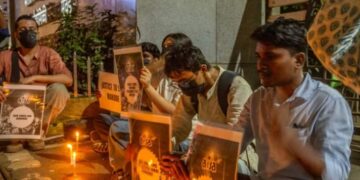



The tragic death of a 19-year-old female student from Government Degree College, Dharamsala, on 26 December 2025 has once again forced national attention on what increasingly appears to be an incurable routine of ragging in India’s medical campuses. The student died while undergoing treatment at a hospital in Ludhiana after a prolonged illness, which her family alleges was triggered by sustained harassment and ragging at her college. According to her father, she endured repeated abuse, including physical assault by senior students and inappropriate behaviour by a professor—allegations the professor has denied. A video recorded by the student before her death, describing the intimidation she faced, has since surfaced as a chilling testament to her ordeal.
Following the family’s complaint, an FIR was registered on 1 January 2026. Three senior students have been booked for ragging and voluntarily causing hurt, while a professor has been charged with sexual harassment and suspended by the Himachal Pradesh government. The University Grants Commission (UGC) has taken suo motu cognisance and constituted a five-member fact-finding committee to examine the circumstances leading to the death, alleged institutional lapses, and failures in enforcing anti-ragging and grievance redressal mechanisms. A parallel state-level inquiry committee, chaired by the Additional Director of Higher Education, has also been set up and asked to submit its findings within a week.
The incident has sparked widespread outrage, with protests demanding accountability and justice. The National Commission for Women (NCW) has taken suo motu notice, pointing to glaring failures in campus safety. Several groups have questioned why stronger provisions of the SC/ST Act were not immediately invoked, given that the student belonged to a Scheduled Caste community—highlighting how ragging often intersects with caste, gender, and entrenched power hierarchies.
While the reaction and legal response to this case are warranted, the larger and more uncomfortable question remains unanswered: why do India’s medical colleges continue to be notorious hubs of ragging? The evidence increasingly suggests that ragging is not merely persisting but has been normalised within the culture of medical education, with full awareness among those connected to these campuses. Despite decades of regulations, committees, affidavits, and helplines, medical institutions remain disproportionately represented in ragging complaints, serious injuries, and deaths—a reality that can no longer be dismissed as anecdotal or exceptional.
National data is damning. Medical students make up just 1.1% of India’s total student population, yet they report nearly 30 times more ragging incidents than students in other streams. Medical colleges account for 38.6% of all ragging complaints nationwide. Between April 2022 and May 2025, the National Medical Commission (NMC) recorded 894 cases of ragging—a figure that captures only those incidents formally reported. The true scale is almost certainly far larger. A 2017 study revealed that 84% of students who experienced ragging did not complain, primarily out of fear of retaliation, underscoring how intimidation and silence are structurally embedded in the system.
Dharamsala and its surrounding medical institutions have a long and troubling history with ragging. In 2009, Aman Satya Kachroo, a 19-year-old MBBS student at Dr. Rajendra Prasad Government Medical College, Tanda, was beaten to death by senior students in a hostel—a case that shocked the nation. Although four students were convicted and sentenced to four years’ imprisonment, the promise of “zero tolerance” that followed has repeatedly rung hollow. In September 2023, the same institution suspended 14 MBBS students and fined them ₹50,000 each for ragging. Over five years, 22 students were expelled for similar misconduct, and in 2024–25, seven more students were suspended for intimidating and humiliating juniors.
Beyond officially recorded cases lies a vast grey zone of peer-driven harassment and rigid hierarchies that students endure daily. These behaviours may not always meet the legal definition of ragging, but they foster a hostile, coercive environment where humiliation and power imbalance are routine. Informal student testimonies and online discussions repeatedly point to this culture, even if such experiences rarely make their way into official reports.
Together, these repeated incidents expose a grim truth: enforcement exists, but deterrence does not. Punishment typically follows only after irreversible harm has occurred. Fear, hierarchy, and institutional inertia ensure that countless cases never reach helplines, inquiry committees, or police stations.
If medical colleges are meant to train healers, the persistence of ragging within them represents a profound moral failure. The normalisation of cruelty under the guise of “tradition,” “bonding,” or “discipline” corrodes not only student well-being but also the ethical foundations of the medical profession itself. What is urgently needed is independent, rigorous research into why ragging remains so entrenched and resistant to reform. Do students, subjected to long years of intense pressure and hierarchy, view ragging as an outlet? Is it socially or psychologically rewarding? Does the mentor–pupil, hands-on learning model make questioning seniors professionally risky? These questions must be framed and investigated to uncover root causes rather than merely managing outcomes.
The Dharamsala tragedy must not become another entry in a long list of inquiries and forgotten reports. It should compel regulators, institutions, and society to confront an uncomfortable reality: until campus culture itself changes, ragging in medical colleges will persist—not as an aberration, but as an accepted norm.