

By Shalini Sharma
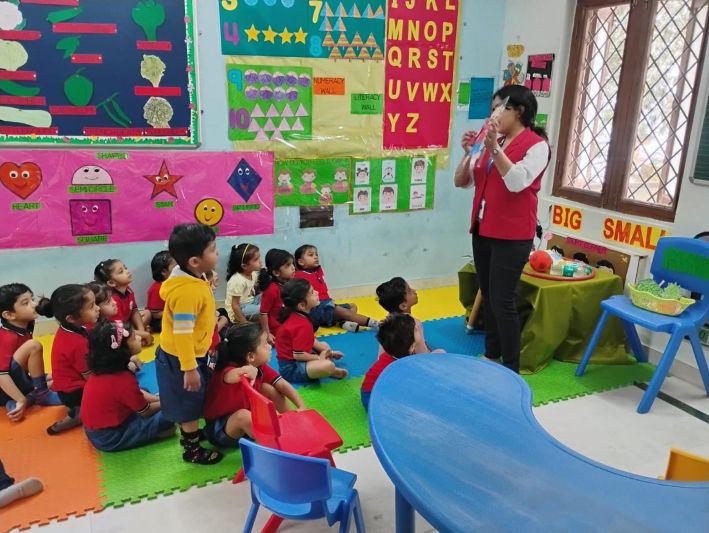
 In India, the growing fascination with international curriculums has reached even the preschool level. Parents are eager to expose their children to global standards early on, believing this will better prepare them for the future. But in this enthusiasm, it’s crucial to ask: how do we adopt global best practices without losing the cultural roots that define Indian learning?
One of the most admired international models is Finland’s Early Childhood Education and Care (ECEC) system. Renowned for its focus on play, emotional well-being, and trust-driven teaching, it consistently ranks among the best in the world.
The Finnish Approach: Learning with Purpose
Finland’s early education is built on one clear philosophy: learning should nurture the whole child. The Finnish National Agency for Education (EDUFI) designs the curriculum to promote holistic growth through play-based learning, nature exploration, social interaction, and parental collaboration.
Children learn through experience rather than rote memorization. Playtime is viewed as essential, not optional it helps children develop creativity, imagination, and problem-solving skills. Teachers adapt learning to each child’s interests, recognizing individuality rather than enforcing uniformity.
A typical Finnish preschool also integrates nature into daily activities, encouraging children to explore their surroundings and learn sustainability firsthand. Parents are not kept at arm’s length but welcomed as partners in the child’s learning journey. The underlying values—equity, empathy, and respect for diversity—shape a system that honors the intrinsic value of childhood itself.
India and Finland: Two Contrasting Realities
When this model is compared with India’s preschool landscape, the differences are striking. Indian education has historically emphasized academic achievement from an early age. Many parents expect preschoolers to read, write, and perform arithmetic before they can even tie their shoes. This pressure often stems from competition and social expectations rather than developmental readiness.
Cultural and linguistic diversity adds another layer of complexity. India has no single standardized early education system; pedagogy and quality vary widely between states and institutions. While the National Education Policy (NEP) 2020 aims to address these gaps through competency-based and inclusive learning, implementation remains uneven.
In contrast, Finland benefits from a relatively homogeneous society and a centralized education authority. Teacher preparation is one of the country’s strongest pillars—every teacher must earn a master’s degree from one of eight elite programs that accept only the top ten percent of applicants. This ensures educators are not only academically equipped but also trusted as professionals who can design and adapt curriculum to suit students’ needs.
India’s teacher training framework, led by the National Council for Teacher Education (NCTE), is evolving but still constrained by regional disparities and outdated practices. The contrast lies not just in structure but in mindset—Finland trusts teachers to teach, while India often dictates how they must teach.
Why Cultural Adaptation Matters
Directly transplanting a foreign curriculum into India’s education system risks what can be called a “loss of culture.” Education should reflect the realities, stories, and values of the community it serves. Cultural adaptation in curriculum design ensures that learning remains relevant, inclusive, and identity-affirming.
A culturally inclusive curriculum celebrates differences—language, religion, traditions—and uses them as learning tools. When children see their festivals, foods, and family structures reflected in their lessons, they feel represented and respected. It also teaches empathy, reduces stereotypes, and encourages critical thinking about multiple perspectives.
Early exposure to cultural diversity builds emotional intelligence and self-confidence. It helps children understand that there isn’t always one correct way to think or be—that multiple truths can coexist. This awareness lays the groundwork for more tolerant and socially responsible citizens.
Localizing Finnish Principles for Indian Learners
The Finnish model doesn’t need to be copied; it needs to be contextualized. India can integrate Finnish principles while rooting them in its own cultural richness.
- Teacher Training: The foundation must start here. Empowering teachers with research-based, hands-on training modeled on Finnish approaches can help them facilitate child-centric, inquiry-led learning.
- Experiential Learning: Activities like market visits, nature walks, and community interaction can make lessons more relatable to Indian children’s daily experiences.
- Cultural Integration: Schools can celebrate local festivals, stories, and art forms while teaching universal values. Music, craft, and folklore from different regions can coexist with global pedagogical methods.
- Child Autonomy: Encouraging decision-making, play-based exploration, and peer collaboration fosters independence—a trait Finnish children develop early and one that Indian classrooms often overlook.
- Parental Partnership: Bridging the gap between school and home is vital. Parents should be guided to value emotional growth and curiosity alongside academics.
A Harmonious Blend of Global Excellence and Local Relevance
Finland’s education system works not because it’s foreign, but because it aligns deeply with its social fabric. India’s diversity demands the same: a curriculum that mirrors its many cultures while embracing global best practices.
Adapting the Finnish approach isn’t about replication—it’s about translation. When Indian preschools combine Finland’s child-centric philosophy with India’s cultural depth, they can build an ecosystem that nurtures confident, compassionate, and globally aware learners—children rooted in their identity, yet ready for the world.