

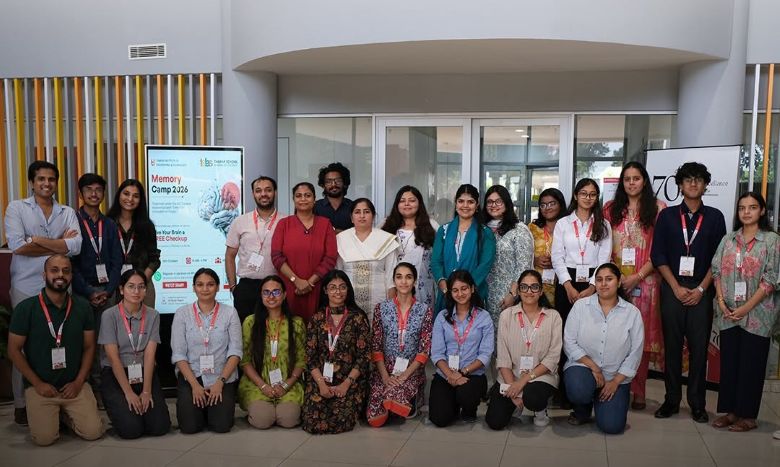
The Thapar School of Liberal Arts and Sciences (TSLAS) at Thapar Institute of Engineering and Technology (TIET), Patiala, held Memory Camp 2026 last week on October 10 (the World Mental Health Day), offering adults aged 60 and above a formal, individual evaluation of their memory and general cognitive functioning. The camp was organised by Dr. Richa Nigam is an Assistant Professor at the School of Liberal Arts and Sciences, along with Dr. Sanat Sogani and Dr. Shilpi Tyagi under the Art Cognition Technology (ACT) funded research project ‘Eldercare Ecosystem in Punjab’, as part of the school’s effort to take its research on ageing beyond the campus and into the community.
The day-long camp saw 17 pre registered older adults assessed one to one in designated classrooms at TSLAS. Every participant went home with a detailed written assessment report and personal feedback on their cognitive functioning. Dr. Sarika Alreja, an RCI licensed counsellor, also counselled participants on age related concerns around memory and cognition wherever required.
The initiative comes at a time when India is ageing fast. The elderly in India, the country’s population aged 60 and above is projected to reach about 230 million by 2036, nearly one in every seven Indians, and Punjab is among the states that already have an above average share of older people.
Memory health is a large and often overlooked part of that shift. As per the nationally representative Harmonized Diagnostic Assessment of Dementia under the Longitudinal Ageing Study in India (LASI DAD), conducted by AIIMS New Delhi and the University of Southern California, 17.6 per cent of Indians aged 60 and above live with mild neurocognitive disorder, an early stage of cognitive decline that researchers flag as increasingly important to identify. The study’s state level estimates project that the number of older adults living with dementia in Punjab will nearly double, from about 1.73 lakh in 2016 to about 3.1 lakh by 2036.
“Memory complaints in older adults are too often dismissed as just a part of growing old, and families usually seek help only once daily life is already affected. With Memory Camp 2026, we wanted to make a formal cognitive assessment simple and unintimidating, and to send every participant home with a clear report and practical guidance on what to do next. For our research scholars and students, it was also a chance to see research on ageing translate into real support for people in our own community, and we intend to take this outreach further across the region,” said Dr. Richa Nigam is an Assistant Professor at the School of Liberal Arts and Sciences, TIET