

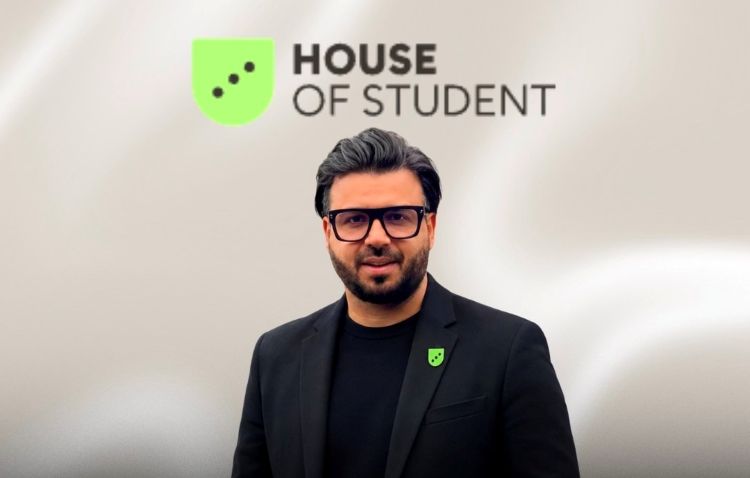
In this interview with Curriculum Magazine, Verma discusses his entrepreneurial journey, Indian roots and policy measures needed to build a more standardised student housing ecosystem
Could you briefly take us through your entrepreneurial journey and explain what prompted you to enter the student housing segment? What gap in the market did you identify, and how has your venture evolved over the years?
My entrepreneurial journey began in 2009, after completing my graduation and post-graduation in the UK, where I experienced first-hand the challenges of finding student accommodation. The market was fragmented, opaque and lacked a centralised platform where students could discover, compare and secure housing with confidence.
I saw an opportunity to change that. I founded Unilodgers as the world’s first-ever global marketplace for student accommodation, pioneering a category that has since evolved into a multi-billion-dollar industry. We bootstrapped the business until it reached a valuation of $109 million (~INR 1,000 crore), and then raised our first external funding round from leading global VC funds. We then went on to build the world’s largest student housing marketplace and served more than 10 million students globally. We were on the trajectory to turn this into a multi-billion-dollar business before COVID disrupted our momentum.
Today, through House of Student, we are rebuilding on that legacy with a broader vision of revolutionising the entire student experience. We have already built the largest supply of student housing, with over 2 million rooms across 25+ countries globally. For me, this has always been about more than building a business. My mission in life is to ensure that no student, anywhere in the world, has to struggle to find a safe, reliable and welcoming home.”
Drawing on your 15 years of experience in student housing across major international education destinations, how have these markets evolved to meet students’ changing needs? What lessons can India learn from their approaches to affordability, safety, quality standards, amenities, and student well-being?
Having been part of this industry since 2009, I have witnessed a significant transformation in student housing. What was once largely considered a transactional requirement has evolved into an important part of the overall education experience.
Students today are far more informed and discerning, which, to be honest, is great progress. They expect transparent pricing, quality accommodation, reliable facilities, safety, connectivity and a sense of community. They are not simply looking for a room; they are looking for a place where they can feel comfortable, focus on their education and build meaningful relationships. Everything we do at House of Student revolves around fulfilling these fundamental requirements of our students in an absolutely honest and caring way.
Markets such as the UK, Australia and the US have developed more organised student housing ecosystems, including purpose-built student housing and professionally managed living spaces. India has an enormous opportunity to learn from these markets while developing solutions suited to its own demographics and affordability requirements.
I believe India needs to focus on building more organised and professionally managed accommodation, with affordability, safety, quality standards and student well-being at its core. Ultimately, student housing should be viewed as an integral part of the education ecosystem rather than simply a real estate asset.
Following tragic incidents involving student accommodation in India, what safeguards and regulatory measures do you believe are necessary to ensure student safety? What lessons can India learn from established student housing ecosystems such as the UK and the US?
The Satya Niketan incident is particularly close to my heart. We began our journey in India with our first office in Satya Niketan, and it was where this entire journey started for us. Seeing what happened there was a painful reminder of the need for clear frameworks and strict enforcement, just as we have for critical infrastructure such as hospitals.
India needs a robust student housing framework, drawing on the UK and US models of licensing, formal codes of conduct under which properties are permitted to rent to students, and very strict law enforcement. These properties should also be assigned tier-based grades, with higher grades awarded for better performance. Accommodation providers should be licensed, regularly inspected and held to clearly defined safety and quality standards, with substantial fines and penalties for non-compliance, as well as rewards for achieving high standards.
Colleges and universities must also take ownership by registering student landlords, maintaining approved accommodation lists and establishing their own codes of standards and grievance-redressal mechanisms. Student safety cannot be the responsibility of landlords alone; educational institutions and regulators must be equally accountable.
Ultimately, no student should ever have to compromise on their safety to pursue their dreams.
How do you see the global student housing market evolving amid geopolitical uncertainties, changing international student mobility patterns, course profiles and rapid advances in AI and other technologies? What do these developments mean specifically for Indian students aspiring to study abroad?
The global student housing market is closely linked to international education, and we have seen how geopolitical developments, visa policies, economic conditions and changing student preferences influence mobility patterns. The choice of destination for international students continues to evolve in line with these developments. However, the underlying aspiration for quality education and global exposure remains strong, ensuring that overall student outflow remains constant while destination preferences continue to shift.
For Indian students, the decision to study abroad is increasingly about evaluating the entire experience and the return on their investment, including the cost of education, accommodation, living expenses, safety and the support available in a foreign country. Indian students, in particular, also place importance on post-study work visas, and countries with favourable work rights always have an edge.
I believe technology, particularly AI, will fundamentally transform this industry. We are moving towards a world where students will be able to discover, compare and personalise their entire student journey through intelligent platforms. AI can make the process more efficient, transparent and personalised, while human guidance will remain essential when students are making life-changing decisions.
At House of Student, we are evolving beyond being a marketplace. We have built proprietary AI models and a connected ecosystem designed to anticipate student needs and support them throughout their journey. Our ambition is to fundamentally transform how students navigate their education and living experience globally.
House of Student offers several services to students, including some that are advertised as free. Could you explain the range of services you provide and how your business model works? If students can access these services without paying, who are your paying customers, and how does the company generate revenue?
Our philosophy has always been to put the student at the centre of everything we do. Students can search, compare and book accommodation across our global network of over 2 million rooms in 25+ countries. We have built the world’s largest student housing supply network, supported by dedicated student advisors who provide personalised assistance and 24/7 support to help students navigate their accommodation journey end to end.
Our platform is free for students to use, from discovery and booking to the support they need along the way. We operate a marketplace-led business model, with accommodation providers as our primary paying partners.
Beyond your online services, do you have a physical presence or partnerships in India? For instance, do you collaborate with study-abroad consultants, educational institutions, or other organisations that help Indian students find accommodation overseas?
India has always been an important part of our global journey. Our teams across the country support our operations, and we work closely with a wide network of partners across the student mobility ecosystem.
We collaborate with education consultants, study-abroad agencies, schools, universities, student travel providers and financial institutions to make the accommodation journey more seamless for students. Through our dedicated B2B referral programme and integrations, we enable partners to incorporate accommodation solutions into the broader student journey, from the moment a student begins planning their overseas education to their eventual arrival.
India is one of the world’s largest student mobility markets. How important is India to House of Student, and how does the company understand and support Indian students?
India has always been at the core of our journey. We originally started in India, and today, India is among our top three markets for student demand. My roots are from India, and while we have a globally spread team, a significant part of our leadership and operating teams is based in India.
Having spent over 15 years in this industry, we deeply understand the aspirations, expectations and challenges of Indian students and their families. India is not simply a market for us, it is a fundamental part of who we are and what we are building.
Our commitment is to continuously deliver the best possible student experience, combining our global network, technology, partnerships and dedicated human support. We remain deeply invested in India and in helping Indian students navigate their student accommodation journeys with confidence.
Finally, talking about future and emerging trends, challenges, or opportunities in student housing that may deserve greater attention?
I believe the biggest opportunity is to make global student housing a standardised, transparent and trusted process, much like Airbnb and Uber have transformed their respective industries. I am deeply committed to bringing that transformation to student housing.
Students should feel safe, supported and protected through transparent standards and regulations, while accommodation providers should have the confidence to open more homes and create more opportunities for students.
We have spent over 15 years building the student housing category and now offer access to 2 million+ verified rooms across 25+ countries and have served over 10 million students globally. Our next phase is about connecting these needs through technology and human support, helping students before, during and after their move.
I believe our future lies in bringing together the best of AI and human intelligence, using technology to make the process smarter and more personalised, while human guidance supports students through some of the most important decisions of their lives.
Ultimately, I want House of Student to help every student find their home, their people and their launchpad.