

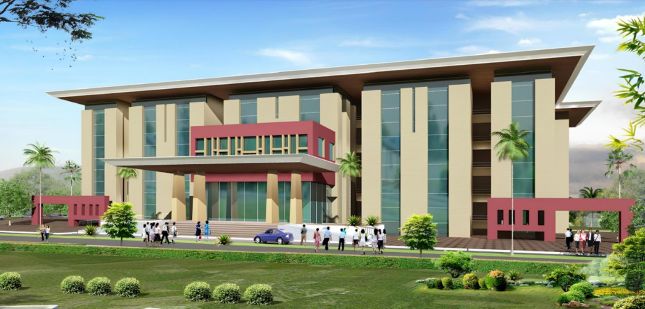
The manner in which the inaugural MBBS batch of the Shri Mata Vaishno Devi Institute of Medical Excellence (SMVDIME) in Reasi district of Jammu & Kashmir was cancelled appears less like a routine regulatory intervention and more like a managed outcome, raising questions about the credibility of the official explanation.
According to the official version, the National Medical Commission (NMC) withdrew the Letter of Permission (LoP) and recognition for the MBBS programme following a surprise inspection that reportedly revealed serious deficiencies, including inadequate infrastructure, a shortage of qualified faculty, and substandard clinical facilities in violation of NMC norms. As a result, the institution has been barred from admitting students to the MBBS course for the current academic year.
Students already admitted for the 2025–26 session will, however, be accommodated in other recognised medical colleges across Jammu & Kashmir, primarily through the creation of supernumerary seats, ensuring that their education is not disrupted.
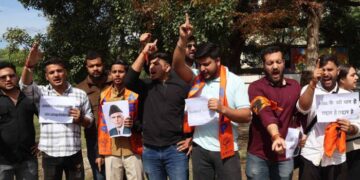
The controversy surrounding SMVDIME predates the NMC’s decision. The college’s first round of admissions sparked protests after more than 80 per cent of the seats were secured by Muslim students, with comparatively few Hindu candidates admitted. Several Hindu organisations, including the Vishwa Hindu Parishad (VHP), objected to the outcome, arguing that the admissions did not reflect the region’s demographic balance—particularly given that the institution is funded through donations from devotees of the Vaishno Devi shrine.
Supporters of the NMC’s decision, notably the BJP and its allied groups, have portrayed the withdrawal of recognition as a corrective measure in response to these concerns. Critics, however, view the episode as a troubling instance of the politicisation and communalisation of higher education, culminating in what appears to be a “middle path” crafted to defuse a politically sensitive situation rather than address underlying issues.
Jammu & Kashmir Chief Minister Omar Abdullah, along with opposition parties such as the National Conference (NC) and the People’s Democratic Party (PDP), has described the decision as “regressive,” warning that it jeopardises students’ futures and undermines efforts to expand medical education in the region. He strongly condemned both the protests and the celebratory response from right-wing groups and the BJP following the withdrawal, remarking that while other parts of the country compete to establish medical colleges, Jammu witnessed a campaign to shut one down.
Omar Abdullah also questioned the integrity of the inspection process, asking how the college had received initial approval if it failed to meet mandatory standards, and called for accountability to be fixed. In contrast, the BJP welcomed the NMC’s move, with party leaders in Jammu & Kashmir asserting that the decision vindicated their long-standing complaints.
While public celebration of the college’s derecognition was undeniably misplaced, the Chief Minister’s sharp political response has arguably amplified the fallout and reinforced a narrative of regional discrimination. This controversy, instead of prompting a broader conversation on minority rights and institutional safeguards for genuinely marginalised groups, has deepened political fault lines. Communalising education is the last outcome a society can afford when education should serve as a tool for empowerment and social cohesion. At a time when Jammu & Kashmir needs healing, trust-building, and unity more than ever, such episodes risk reopening old wounds rather than helping them close.