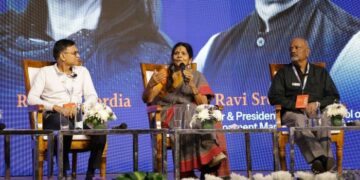


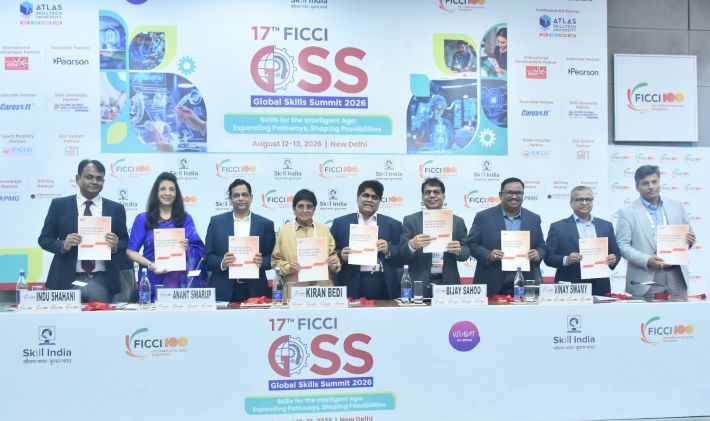
Dr Kiran Bedi, IPS (Retd), Former Lt Governor, Puducherry and Co-Founder & Director, Bharat Skill Exchange on Aug 12 while addressing the FICCI Global Skills Summit 2026 said that India spends very little on vocational education, around 2 per cent of the education budget, and India’s demographic dividend lasting till 2040 is a rare opportunity that requires major investment in skills. Citing the World Economic Forum, she added that 63 per cent of Indian workers will require training by 2030 while employers require analytical and creative thinking, leadership, resilience, flexibility along with AI capabilities. “India’s youth bulge is a time-bound opportunity, and the dividend will not automatically translate into growth, and it has to be collaborative execution,” she added.
While highlighting roadmap for building a future-ready India, Dr Bedi stated that we need to move from degree-first to skills-first. “Measure skilling by livelihoods and outcomes and not by certificates and the ultimate future-ready workers is competent, adaptable, ethical and continuously learning. It has to become part of the education system,” she emphasized.
Stressing on the importance of industry participation, Dr Bedi further stated that industry plays a direct role and skill development should move from government-led programs to employer-owned systems for white collar jobs. “Industry must play a direct role in designing and financing training for white collar jobs by providing apprenticeships, internships, real projects, mentoring, problem-solving assignment and exposure to actual workplace pressures,” she noted.
Industry, Dr Bedi added that must become the co-designer of curriculum, not merely a recruiter at the end. “We, therefore, move towards demand, skill, training, apprenticeship and employment. There is a need to establish call centers by industry and associations along with technology driven common platforms for providing proper support and knowledge,” she said.
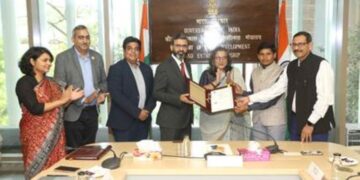
During the inaugural session- ‘FICCI-KPMG’ report on Human Capability in the Age of AI: India’s Roadmap for the Future of Skills’ & ‘FICCI-PWC’ report on Navigating the Skills Imperative for India’s GCCs in the AI era were released in the conference.
Mr Bijay Sahoo, Chair, FICCI Skills Committee and Group President – Strategic HR, Chairman’s Office, Reliance Industries Ltd said that technology will shape the future of work, but skills will determine whether that future is inclusive or unequal, empowering or disruptive. For India, this is a defining moment. “We have one of the world’s youngest populations, a rapidly growing economy, expanding manufacturing capabilities and a vibrant digital ecosystem. Demographic dividend is not destiny but a time-bound opportunity,” he added.
Dr Indu Shahani, Co-Chair, FICCI Skills Committee and President & Chancellor, ATLAS SkillTech University said that the world of work is changing rapidly. “The conversation on skills has traditionally focused on employability but today it needs to move from employability to capability,” she added.
Mr Anant Swarup, Secretary General, FICCI said technology and AI are transforming jobs, new sectors and occupations are emerging, global demand for skilled talent is increasing. At the same time, industrial landscape itself is evolving rapidly with new investments, emerging manufacturing, services sectors, technology-led enterprises and changing modes of employment. “FICCI has been working and contributing through policy advocacy, research, industry consultations, capacity building and partnerships with government, industry, institutions and international organizations. Our objective has been to bring the realities and requirements of the workplace into policy conversation and to help translate policy priorities into industry participation and implementation,” he added.