

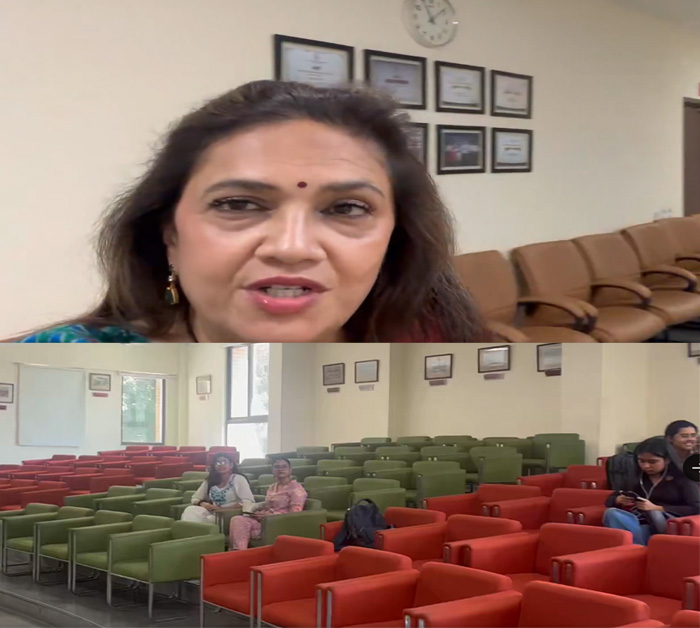
The way Smita Prakash, editor-in-chief of the news agency, ANI, amplified her anger and disgust over being disrespected at an invited event at Miranda House in Delhi—a reputed institution ranked #2 in the NIRF Rankings 2025—may invite observations about her sense of self-importance at one level, but at the same time, it is a good thing she made the incident public, and it should be treated as a matter of concern by HEIs.
She was the chief guest at an event scheduled to begin at 11 a.m. at the college. Despite arriving on time, most of the organizers failed to show up, and the auditorium was nearly empty, with only a handful of students present. From both an academic and professional standpoint, such poor attendance reflects badly not only on the organizers but also on the institution itself, which is often seen as representing the country’s best. There was no apparent justification—no emergency within or outside the campus. The weather was normal, and life in Delhi was proceeding as usual. No apology can fully undo what happened.
This brings us to a more troubling question: the apparent cultural decline on campuses. There is a growing tendency among departments in colleges and universities to emulate “best practices” without adequate preparation or understanding—much like an untrained driver attempting to handle a luxury car. Whether due to pressure from higher authorities or competition with peer departments, many academic units now undertake a range of activities that were once carefully curated as part of major institutional events.
Students today, often more engaged with digital rewards and personal outcomes, seem less inclined to attend events out of solidarity or respect for their teachers and institutional culture. Participation has become more transactional, and group affinity appears to be weakening.
Campuses, however, have always been spaces built on collective engagement. If campus life grows dull or disengaged, it bodes poorly for youth development. When relationships between teachers and students fail to inspire, it risks undermining future potential. A campus must be more than classrooms; students should be encouraged to explore and participate in activities beyond academics.
The Miranda House episode should serve as a wake-up call. Mechanisms exist within University of Delhi and at the college level to investigate issues such as disinterest, workload, or lack of discipline. These concerns must be examined seriously, and all stakeholders should be encouraged to uphold excellence—not just in academics, but also in organizing and participating in institutional events.