

By Chitranshu Mahant
 For a long time, the way students consumed news followed a familiar pattern. You searched for a topic, opened a few sources, compared what you were reading, and gradually formed your own understanding. It took effort, but it also meant that engagement with information was deliberate.
That is now starting to change.
Students today are increasingly receiving information before they actively look for it. From algorithmic feeds like Google Discover to explainers on Instagram and YouTube, news often reaches them in a form that already feels filtered and easy to engage with. Instead of beginning with a search, they begin with what is surfaced to them.
This is where Operator AI comes in.
Operator AI refers to a type of artificial intelligence system designed to perform tasks on behalf of users by interacting with digital tools, software, or online platforms. Operator AI can take actions such as filling out forms, scheduling appointments, managing workflows, analyzing data, and automating repetitive tasks. One of the key advantages of Operator AI is increased productivity.
Operator AI systems understand what a user is trying to do and help carry that across multiple steps. Instead of responding to a single query, it can bring together information from different sources and present it in a structured way that is easier to work with.
From Discovery to Delivery
This is most visible during moments that demand attention. A student preparing for UPSC or following the Union Budget is more likely to first come across simplified breakdowns before moving to detailed coverage. What reaches them first is not the full range of reporting, but a version that highlights what seems most relevant.
Earlier, this process required moving across multiple sources and assembling information manually. Even with AI tools like ChatGPT or Gemini, students still guide the process step by step, asking for summaries, explanations, or comparisons as needed.
Operator AI builds on this by making the process more connected. Instead of treating each step separately, it can bring together information from different sources and present it in a structured way, reducing the need to switch between multiple tools.
As a result, students can begin with something that already feels organised. Less effort goes into managing steps, and more into understanding what they are reading. For many, that first view becomes a starting point before deciding whether to explore further.
A New Layer in How Information Flows
This does not replace existing sources, but it does introduce another layer in how information reaches the user.
Traditionally, editors, publishers, and platforms shaped what audiences saw first. Each layer played a role in selecting and presenting information. Now, systems that operate closer to the user add another layer, one that helps reduce noise and bring forward what is more relevant in that moment.
Consider a student from a town in Madhya Pradesh studying in Delhi. Staying updated with what is happening back home would earlier require actively searching across multiple sources. Today, systems can bring those updates together in a more focused way, without the same effort of filtering through unrelated information.
Students can still explore, compare, and go deeper if they choose to. But the starting point is different. Information is increasingly encountered as a structured view rather than as separate pieces that need to be put together.
Where Understanding Begins
Over time, the way students build understanding also begins to change.
With key developments already brought together, less effort goes into finding information and more into making sense of it. Students are able to arrive at a usable view of a topic more quickly, even if they later choose to explore different perspectives.
The journey does not disappear, but it often begins from a more defined starting point. This influences how quickly context is built and how students approach what they read next.
From Access to Action
This is also where the experience begins to extend further.
When information is connected to what the user is already working on, it becomes easier to act on it. Instead of treating discovery and execution as separate steps, the process begins to feel more continuous.
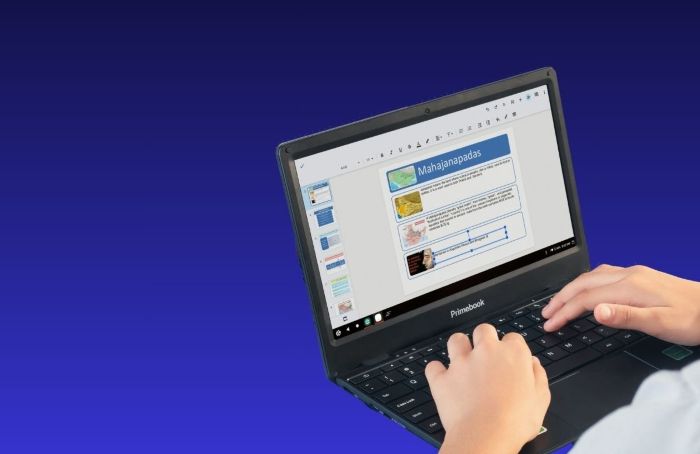
At Primebook, this is being explored through Operator AI within PrimeOS, where information can move more seamlessly from understanding to action.
A student reading about a policy change, for instance, may not just understand it, but also organise notes, compare inputs, or apply it within their own context without switching across multiple tools. What earlier required several steps begins to feel more connected.
As this becomes more visible, the distance between receiving information and acting on it continues to reduce.
What This Means for Information
It is no longer only about whether information is available, but also about how individuals engage with what reaches them first. When the path from question to answer becomes shorter, the responsibility to question, compare, and go beyond that first layer becomes stronger. It is also about the ability to move beyond what is presented.