

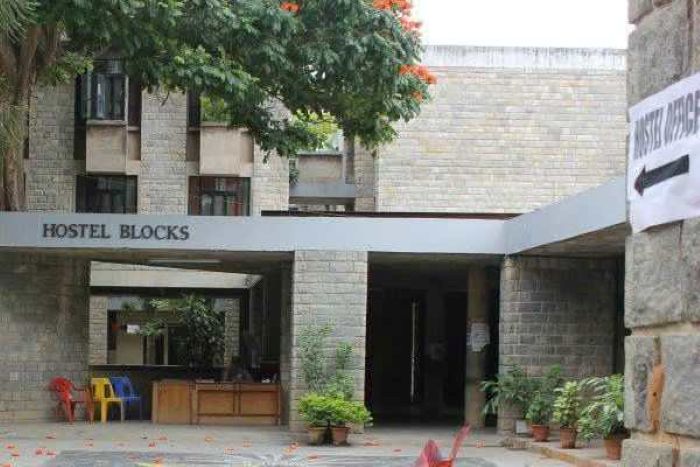
The latest development in Delhi’s student-housing crisis as of Oct 14 is the University of Delhi’s (DU) Executive Council approval of a ₹5,889-crore hostel expansion plan to accommodate 21,895 students through new hostels and the reconstruction of two existing facilities. According to reports, ₹4,027 crore has been earmarked for new hostels serving 15,758 students, while ₹1,862 crore has been allocated for reconstruction to accommodate another 6,137.
In a related development, the Municipal Corporation of Delhi (MCD) has directed authorities in all 12 of its zones to obtain structural safety certificates from 2,453 paying guest (PG) accommodation buildings within 15 days. “There should at least be baseline safety arrangements. Up to 15 days will be provided to the owners to complete this exercise,” Hindustan Times quoted an unnamed official as saying.
Delhi has more than five million buildings, many of which were developed without adequate regulatory oversight, according to reports. Against this backdrop, the latest measures have brought renewed attention to the safety of buildings used for student accommodation and the need for a comprehensive regulatory framework.
A long-standing crisis brought into focus
Delhi, one of India’s major higher-education hubs, woke up to the scale of its student-housing crisis following the collapse of a five-storey building being used as a private hostel in Satya Niketan, South-West Delhi, on September 6. Seven people, including five students, were killed in the tragedy. The incident brought renewed attention to the acute shortage of institutional accommodation, the rapid expansion of private PG facilities around university campuses and the regulatory gaps surrounding them.
The scale of the problem, as revealed in the aftermath of the tragedy, is particularly stark at the University of Delhi. While DU has more than seven lakh students across its conventional, professional and open-learning programmes, its conventional on-campus student population is approximately 2.51 lakh.
The university has only 7,224 official hostel beds—3,688 in college hostels for undergraduate students and 3,536 in DU’s non-college hostels for postgraduate students. Even using a conservative estimate of around 1.2 lakh out-of-station students, the existing official hostel system can accommodate only about six per cent of them.
The result is a vast private student-rental market concentrated around North and South Campus and other educational hubs across the Capital.
For students who fail to secure institutional accommodation, the private market is often a necessity rather than a choice. The shortage pushes many into converted residential buildings, subdivided flats, rooftop rooms and densely occupied PG facilities in neighbourhoods surrounding university campuses. In many cases, these are cramped and improvised living arrangements that raise concerns about basic amenities, occupancy levels and building safety.
The Satya Niketan collapse exposed the consequences of this dependence. Located opposite Sri Venkateswara College, the building housed a private PG/hostel facility reportedly accommodating around 30 students. Investigators subsequently examined renovation work allegedly under way in the building before the collapse.
Following the tragedy, the National Human Rights Commission (NHRC) had also asked the Delhi government about details of current accommodation and infrastructure, including the scope for renovation, upgrading, modification, expansion and other improvements. It directed the government and the University Grants Commission (UGC) to jointly prepare a comprehensive, time-bound plan to address the shortage of hostel accommodation for Delhi University students, in consultation with DU.
High-powered committee tasked with examining the crisis
The tragedy brought the long-neglected issue of student housing into sharp focus, making it a talking point during the Delhi University Students’ Union (DUSU) elections and prompting a broader examination of accommodation availability and safety. It also compelled the Delhi government to initiate action.
Lieutenant Governor Taranjit Singh Sandhu approved the constitution of an 18-member high-powered committee headed by Education and Urban Development Minister Ashish Sood to examine the availability, safety and regulation of student accommodation in the Capital. The committee has been given 60 days to submit its recommendations.
The panel includes the Chief Secretary, Commissioner of Police, Commissioner of the Municipal Corporation of Delhi, Chairman of the New Delhi Municipal Council, Vice-Chairman of the Delhi Development Authority (DDA), and the vice-chancellors of Delhi University, Guru Gobind Singh Indraprastha University, Ambedkar University Delhi and Netaji Subhas University of Technology. The Education Secretary is the member secretary.
Among its terms of reference is an assessment of the gap between demand for student hostels and available accommodation. It will examine whether vacant or underutilised DDA properties and other government-owned buildings can be converted into student accommodation, while also identifying government land and buildings that could be used to construct new hostels.
The committee is to also examine measures to encourage universities and educational institutions to provide safe, affordable and regulated hostel facilities. One proposal is to establish a centralised database of student accommodation covering institutional hostels and, where feasible, registered PG facilities.
Another proposed measure is a centralised digital monitoring mechanism through which students could report unsafe accommodation, overcrowding, fire hazards and other serious safety concerns, with provision for time-bound action.
The committee has also been tasked with examining emergency evacuation and disaster-response protocols, periodic fire and disaster mock drills, and safety-awareness programmes for students, wardens, university officials and PG operators.
Government announces hostel facilities for 10,000 students
Alongside the committee’s work, the government has announced a more immediate intervention. Chief Minister Rekha Gupta said the Delhi government would build hostel facilities for 10,000 students enrolled in colleges and universities across the Capital.
According to the announcement, different government departments will undertake construction, with land to be acquired wherever necessary. A public-private partnership model is also being considered.
The proposal seeks to expand access to institutional accommodation, although its eventual impact will depend on the identification of suitable sites, funding arrangements, construction timelines and the affordability of the resulting facilities.
The newly approved DU expansion plan, meanwhile, envisages accommodation for 21,895 students through new hostels and the reconstruction of two existing facilities. Together, the university’s plan and the government’s proposed intervention represent significant commitments towards addressing the shortage. Their actual contribution will become clearer as implementation schedules and project details emerge.
Proposed legislation to regulate private PG accommodation
The other major issue under discussion is the regulation of the private PG sector. A proposal for the Paying Guest Accommodation Regulation and Safety Bill, 2026 has been prepared to bring the sector under a formal regulatory framework.
The proposal envisages mandatory registration or licensing of PG facilities, safety and security requirements, rent-related provisions, grievance redressal mechanisms and a verified database of accommodation. The draft legislation has yet to be made public.
MCD officials cited in recent reports have pointed to a regulatory gap that has become increasingly significant as PG accommodation has evolved from spare rooms in residential houses into organised commercial operations, including branded and chain-run facilities. A senior MCD official reportedly said there was no specific licensing regime under which PG accommodation units were formally regulated as a distinct activity.
The planning framework itself has evolved only gradually. Under the Master Plan for Delhi 2021 (MPD-2021), PG accommodation was brought within the mixed-land-use framework in August 2016 under the category of “other activities”. It was permitted on residential plots abutting roads meeting specified right-of-way requirements for mixed-use streets. Subsequent planning provisions have continued to leave important questions surrounding PG regulation, according to officials cited in recent reports.
The proposed legislation therefore represents an attempt to move PG accommodation from what has effectively become a largely informal student-housing market towards a defined system of licensing, inspection and safety oversight.
The challenge, however, will extend beyond registration. An effective regulatory framework would need to address structural stability, fire safety, permissible occupancy, sanitation, emergency exits, rental transparency and grievance redressal. It would also need to establish clear accountability among property owners, operators, civic authorities and educational institutions.
Can technology help organise the student-housing market?
Saurabh Arora, founder and CEO of Living Universe, a Noida-based company providing verified housing near universities in popular education destinations, argues that Delhi’s fragmented student-housing ecosystem could benefit from a platform-based model.
Arora suggests something resembling a “Zomato for student housing”—a centralised platform through which students and parents could compare verified accommodation on parameters such as location, rent, facilities, occupancy, safety certification and other relevant information.
“For us, who would have assisted about one lakh students going abroad in housing, all these happenings under our nose appear as a personal guilt. We have informally started conversations with relevant government bodies to see if we can roll out our services here. I think, if we aspire to be a global education destination in future, student housing will have to be reimagined, making it more organised and comparable internationally,” he says.
A verified platform could help students and parents make better-informed decisions, particularly when choosing accommodation remotely. It could also improve transparency by making essential information about rents, facilities, occupancy and safety compliance easier to access.
However, technology alone cannot resolve the crisis. Any such system would depend on reliable verification, regular inspections, accurate records and effective enforcement by the relevant authorities. A digital listing cannot substitute for a structural safety certificate or guarantee that a property remains compliant after inspection.
From emergency response to a comprehensive housing policy
Delhi’s student-housing crisis has been years in the making, with the expansion of higher-education enrolment far outpacing the availability of safe and adequate institutional accommodation. The Satya Niketan collapse has brought this long-neglected issue sharply into focus.
The approval of DU’s ₹5,889-crore hostel expansion plan, the proposed construction of accommodation for 10,000 students by the Delhi government, the MCD’s drive to obtain structural safety certificates and the proposed legislation to regulate PG facilities are important developments. Yet announcements and administrative directions will need to translate into measurable improvements on the ground.
The immediate priority is to identify unsafe buildings, enforce minimum safety standards and ensure that students are not exposed to preventable risks. Equally important is the longer-term task of expanding affordable institutional accommodation and establishing clear standards for the private student-housing market.
Ultimately, the success of these measures will depend on whether they lead to a coordinated student-housing policy that brings together universities, government departments, civic agencies, property owners and private operators.
The hope is that the debate and measures triggered by the tragedy will go beyond an immediate administrative response and become a catalyst for comprehensive reform—one that addresses not merely the shortage of accommodation, but also the larger questions of building safety, regulatory oversight, institutional responsibility, affordability and student welfare.