
• ECCE
  • School Edu
  • Higher Edu
  • Edu Tech
  • Skills
  • Jobs
  • Advertise
  • Login
[t4b-ticker]
  • Home
  • Latest
  • Spotlight
  • Perspective
  • Interview
  • Videos
  • Events
  • Shop
  • Student Kiosk
No Result
View All Result
  • Home
  • Latest
  • Spotlight
  • Perspective
  • Interview
  • Videos
  • Events
  • Shop
  • Student Kiosk
No Result
View All Result
Education21
Home Higher Edu

NIT Rourkela Develops New Cathode Technology to Drive India’s EV and Renewable Energy Growth

education by education
January 17, 2025
in Higher Edu
0
NIT Rourkela Develops New Cathode Technology to Drive India’s EV and Renewable Energy Growth
0
SHARES
96
VIEWS
Share on FacebookShare on Twitter

 Researchers at National Institute of Technology Rourkela (NIT Rourkela) have developed a new class of cathode materials for lithium-ion batteries, presenting a promising alternative to cobalt-based designs. This innovation addresses challenges associated with the high cost, scarcity, and environmental concerns of cobalt, a key component in conventional lithium-ion batteries.

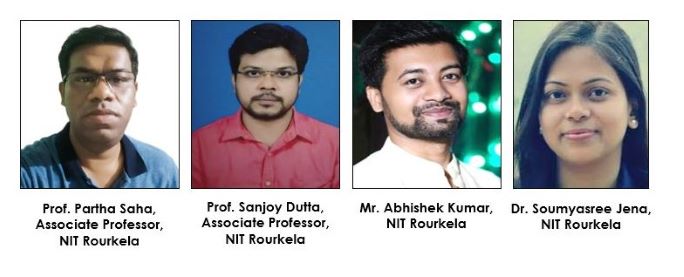
The research team, led by Dr. Partha Saha, Associate Professor, Ceramic Engineering, includes Prof. Sanjoy Datta, Associate Professor, Dr. Soumyasree Jena, Research Graduate, and Mr. Abhishek Kumar, Research Scholar, have created cobalt-free cathode materials using magnesium and nickel. These materials enhance lithium-ion movement, resulting in improved battery performance, greater stability, higher capacity retention, and longer-lasting energy storage.

Lithium-ion batteries, which power devices like smartphones, laptops, and electric vehicles (EVs), predominantly use cobalt-based cathodes. However, cobalt presents several challenges, including its high cost and price volatility, limited availability, with major sources in countries like Cuba, Madagascar, and Papua New Guinea, and significant environmental and ethical concerns associated with its extraction. These issues are becoming increasingly critical as the demand for EVs and lithium-ion batteries continues to grow. Projections indicate that by 2050, the global supply of cobalt may not meet the rising demand, underscoring the urgent need to develop alternative materials.

The research team developed magnesium-based cathode materials as a sustainable and cost-effective alternative to cobalt. Their patented work (Patent No. 554274, Application No. 202431014198) demonstrates that magnesium can effectively replace cobalt in cathode structures without compromising performance.

Magnesium offers several advantages: it is affordable, abundant, and widely available in India, with significant deposits in Tamil Nadu, Uttarakhand, and Karnataka. Additionally, magnesium is environmentally friendly, helping to reduce the ecological impact of battery production.

The cobalt-free cathodes developed by the research team offer several key benefits. Magnesium ions enhance structural stability, effectively addressing issues like ion mixing that often degrade cobalt-based cathodes. This results in improved performance, with the new cathodes retaining 74.3% of their original capacity even after 100 charge-discharge cycles—a significant advancement over traditional designs. Additionally, the use of magnesium reduces production costs, making lithium-ion batteries more affordable and accessible.

Explaining the research, Dr. Partha Saha said, “Our research shows that the new cathode retains 74.3% of its original capacity after 100 charge-discharge cycles, a significant improvement over the rapid capacity loss observed in traditional cobalt-based cathodes. Additionally, the new cathode minimizes the cationic disorder of nickel in lithium sites—a common issue in traditional NMC-based cathodes that leads to capacity and voltage fade.”

This breakthrough has wide-ranging implications and applications. It paves the way to produce affordable, high-performance batteries for electric vehicles, contributing significantly to the growing EV industry. Additionally, it supports India’s renewable energy goals by enabling cost-effective energy storage solutions essential for sustainable development. By reducing dependency on imported materials, this innovation also enhances India’s self-reliance in battery production, strengthening the country’s position in the global energy market.

This research was funded by the Department of Science and Technology’s Nanomission program and conducted in collaboration with the Department of Physics and Astronomy at NIT Rourkela.

NIT Rourkela’s pioneering work in developing cobalt-free cathodes is a significant step toward creating sustainable, affordable, and high-performance lithium-ion batteries. This innovation will not only benefit industries and consumers but also support India’s vision of a cleaner and more energy-efficient future. The research significantly aligns with the Government of India’s Electric Vehicle (EV) Mission, which promotes research and development for EV adoption in India and focuses on the indigenization of battery technologies under the “Make in India” and “Atmanirbhar Bharat” initiatives, reinforcing the country’s push toward self-reliance and sustainability in the EV sector.


  • Facebook
  • Twitter
  • Instagram
  • LinkedIn
  • RSS Feed
Previous Post

Students from Thane and Navi Mumbai government schools showcase innovative projects at Amazon’s Think Big Science Carnival 2025

Next Post

Gujarat Chief Minister inaugurates GIFT International Fintech Institute and Fintech Innovation Hub

education

education

Related Posts

Union Education Minister releases Commemorative Publication on Bharat Innovates 2026
Higher Edu

Union Education Minister releases Commemorative Publication on Bharat Innovates 2026

by education
September 9, 2026
BITS Design School and RMIT University Sign Five-Year Articulation Agreement
Higher Edu

BITS Design School and RMIT University Sign Five-Year Articulation Agreement

by education
September 9, 2026
SRCC & IPE Global Set Up Centre for Social Impact as part of SRCC Centenary initiative
Higher Edu

SRCC & IPE Global Set Up Centre for Social Impact as part of SRCC Centenary initiative

by education
September 9, 2026
36-hour Innovation Challenge IIC 3.0 that began today at Manipal University Jaipur sees participation of 259 teams
Higher Edu

36-hour Innovation Challenge IIC 3.0 that began today at Manipal University Jaipur sees participation of 259 teams

by education
September 8, 2026
From Cabinet to Class: ‘Reimagining Keralam’ Leadership Retreat for State Cabinet at IIM Kozhikode
Higher Edu

From Cabinet to Class: ‘Reimagining Keralam’ Leadership Retreat for State Cabinet at IIM Kozhikode

by education
September 7, 2026
Next Post
Gujarat Chief Minister inaugurates GIFT International Fintech Institute and Fintech Innovation Hub

Gujarat Chief Minister inaugurates GIFT International Fintech Institute and Fintech Innovation Hub

  • Facebook
  • Twitter
  • Instagram
  • LinkedIn
  • RSS Feed

Useful Announcements

  • All
  • Useful Announcements

Satin Finserv Launches ‘Sankalp: The Climate Edition’ with INR 30+ Lakh Prize Pool

September 9, 2026

ISFB Launches Executive Post Graduate Program in Finance & AI

September 8, 2026

Esri India Launches Digital Atlas Program for Schools

September 8, 2026

British Council Opens Applications for the Study UK Alumni Awards 2027

September 7, 2026

Vikalp Online School announces registrations for KALLOL 2026 Literature Festival

September 7, 2026

Sheffield Hallam University invites applications for MSc International Business Management

September 7, 2026

NTPC announces its Electron Quiz 2026–27 from Sep 5 in 8 cities

September 1, 2026

Veranda K-12 launches 3rd season of National Innovation Challenge ‘AVINYA’ for Grades 8–12 students

August 28, 2026

Applications open for VIT Bhopal’s International Cybersecurity Masters with POLIMI GSoM, Italy

August 26, 2026

Applications open for Pravaha’s fully funded 50 postgraduate fellowships

August 25, 2026

Download current issue Not available

https://online.pubhtml5.com/jlyo/bxvr/

Monthly Magazine : Feb 2024

Interactive (Quizzes/Surveys)

Start Monthly Quiz
Education21

An initiative in continuation of Curriculum Magazine, Education21.in, is a platform for New India that aspires to be a valuable innovator, partner and collaborator for a just and sustainable world. Continuing with our steady and 360 degree coverage of education system and skills landscape, we are here more oriented towards learner community.

Useful Links

  • About us
  • Team
  • Contact
  • Editorial opportunities
  • Subscriptions
  • Job Opportunities
  • Features

Important Links

  • Blog
  • Archives
  • People
  • Careerwise
  • Resources
  • Downloadable
  • Old issues

Newsletter

  • Facebook
  • Twitter
  • Instagram
  • LinkedIn
  • RSS Feed

Copyright © 2020 All rights reserved. Education21.

No Result
View All Result
  • Home
  • Latest
  • Spotlight
  • Perspective
  • Interview
  • Videos
  • Events
  • Shop
  • Student Kiosk

Copyright © 2020 All rights reserved. Education21.

Welcome Back!

Login to your account below

Forgotten Password?

Create New Account!

Fill the forms bellow to register

All fields are required. Log In

Retrieve your password

Please enter your username or email address to reset your password.

Log In
Cleantalk Pixel