

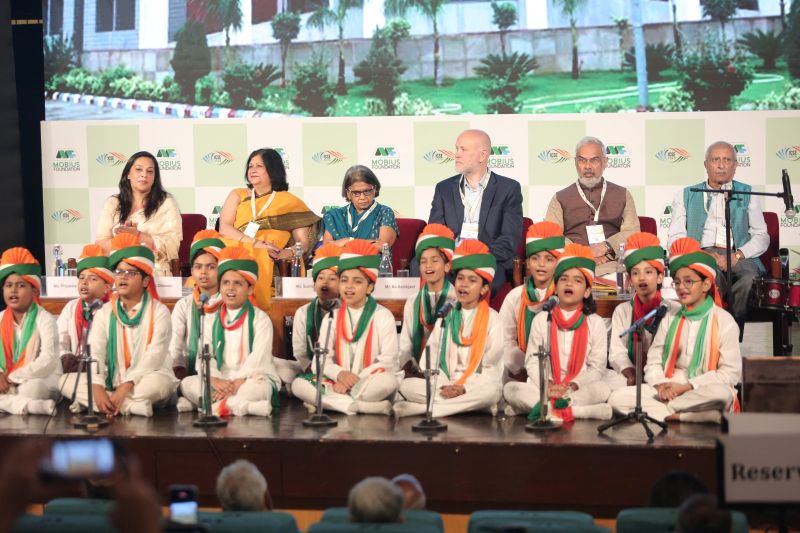
After more than four decades of environmental awareness campaigns, much of the world today has no shortage of people who understand the importance of sustainability. Yet, despite the growing number of sustainability-conscious individuals, action on the ground remains far from transformative. This was among the key ideas that emerged at the 8th International Conference on Sustainability Education (ICSE), organised by the Mobius Foundation in New Delhi on September 2–3 under the theme, “Sustainability Education for Transformative Action.”
The increasing frequency and intensity of extreme climatic events in recent years have sharpened this realisation, prompting environmentalists, academics and business leaders to examine the gaps between awareness and action and explore how education—the bedrock on which future generations are shaped—can help bridge them.
India is home to more than 470 million children—the largest child population of any country—and UNICEF estimates that 55% of them face multiple and overlapping climate risks, including heatwaves, water scarcity and floods. Bo Beiskjaer, Chief of Resource Mobilization and Partnerships at UNICEF, framed his remarks around what he described as the “climate-changed child”. Using the example of a hypothetical girl named Preeti, born this year, he traced how climate stress could shape her schooling by 2030 and her adulthood by 2047, when India marks 100 years of Independence.
The need to open the minds of students to both the risks they face and the role they can play in addressing them, therefore, remains central to meaningful change.
According to Manjima Chatterjee, Head–Sustainability Programs, Shiv Nadar School, schools need to nurture a culture of care, questioning and problem-solving so that children begin to think about the impact of environmental challenges on their own lives and develop values of courage, resilience, risk-taking and caring.
This, however, raised another important question: Are teachers adequately prepared to teach sustainability?
Do formal teacher education and in-service training programmes sufficiently address sustainability education when many teachers continue to be trained primarily to prepare students for examinations?
While there is no clear-cut affirmative answer, the conference also highlighted platforms such as the Climate Educators Network (CEN), where teachers can develop their skills and access quality resources for teaching sustainability.
Dr Ibrahim Hafeezur Rehman, Director General and CEO, Dean–Academic Advancement, R&D and Consultancy, and Director–School of Sustainability at NAMTECH, presented the higher education perspective, arguing that the focus has largely remained on degrees while questions of capacity-building have not received adequate attention. He questioned how much of the existing education and training ecosystem is genuinely focused on developing green skills and preparing young people for the green economy.
Sustainability, he argued, must be placed at the core of education and integrated across engineering pathways horizontally, with sustainability becoming part of the evaluation matrix and a measurable learning outcome. “HEIs have to accelerate transformation in the business ecosystem by solutioning, innovating and giving alternatives that the world can’t ignore,” he added.
Agreeing that the success of sustainability efforts is closely linked to education systems, Prof. Radhika Khosla, Professor of Environmental Science and Policy at the University of Oxford, called for a fundamental rethinking of education.
She said it was necessary to “turn education on its head” and begin by asking fundamental questions about human needs—food, housing, mobility and the economy. Such questioning, she argued, could open up new ways of thinking about sustainability.
Prof. Khosla emphasised the need for systemic thinking and interdisciplinary approaches to build analytical skills, frame the right questions and develop pedagogies capable of transforming the fundamental approach to sustainability at the institutional level.
She added that mindset and knowledge, a supportive policy environment, engagement with practitioners and an understanding of local geography were all important for strengthening human agency and building green enterprises rooted in local models rather than imported concepts.
Describing sustainability education as still largely peripheral, Paridhi Mishra, Deputy Director and Programme Head–Climate Corps, AshokaX, spoke about how the fellowship programme has attempted to embed sustainability within partner organisations and industries while developing fellows into lifelong sustainability practitioners.
Dr Vishal Garg, University Chair Professor and Director of the Indorama Ventures Center for Clean Energy at Plaksha University, Punjab, shared how his university is experimenting with reimagining technology education.
Rather than organising learning strictly around conventional academic disciplines, Plaksha is bringing research centres to the intersections of departments, where students work on live projects over the course of four years and learn by addressing contemporary challenges rather than merely studying problems that may have been solved long ago.
He expressed hope that such experiments could fundamentally change prevailing approaches to education if they demonstrate favourable outcomes in the years ahead.
While interventions at the curriculum, pedagogy, institutional, policy and investment levels continue to be debated and developed, ICSE 2026 also underlined the need for more fundamental responses to environmental challenges.
The broad message was that incremental steps alone have proved inadequate in the face of increasingly severe environmental disruptions.
According to Sunita Narain, Director General of the Centre for Science and Environment (CSE), one of the key lessons her generation can offer young people is that nature is demonstrating that incremental action and patchwork solutions are not working. “We need courage to fundamentally reimagine environmental action and come up with solutions that can mitigate the suffering that lies ahead,” she said.
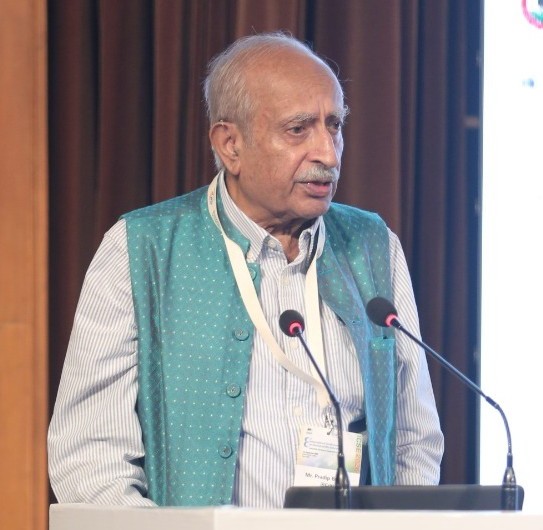 Pradip Burman, Chairman of the Mobius Foundation, said the gap between climate commitments and implementation remained too wide, even as India has made tangible progress. He noted that ICSE had grown since its launch in 2019 from a youth engagement platform into a broader driver of climate literacy and green jobs through initiatives such as the Pani Pahar curriculum and the Mobius Young Climate Leaders Programme across India’s Northeast.
“We want ideas that become partnerships, partnerships that become commitments and commitments that become action,” he said.
Priyanka Sharma, President and CEO of the Mobius Foundation, was more explicit in defining the expanding scope of sustainability.
“Sustainability is no longer simply an environmental conversation. It is a conversation about how we live, how we learn, how we work, how we create prosperity and, ultimately, how we create well-being and wellness for people and the planet,” she said.
Reflecting this broader understanding, this year’s ICSE agenda moved beyond classroom education into discussions on the green economy, covering areas such as critical minerals, e-waste and battery recycling, sustainable agriculture and green jobs.
Prof. Bhaskar Vira, Pro-Vice-Chancellor for Education and Environmental Sustainability and Professor of Political Economy at the University of Cambridge, spoke about the power of storytelling in sustainability education.
Prof. Vira, who is associated with Embers of Hope, a 10-part documentary series on India’s environmental future, said some of the most powerful educational moments in the project emerged not from explaining scientific concepts but from turning them into human stories—a retreating glacier becoming a story about communities dependent on its water, or air pollution becoming a story about children struggling to breathe.
Citing a recent paper in the journal Environmental Politics, he warned against “false hope” based on the assumption that technology alone would solve the environmental crisis, while cautioning equally against despair.
“Sustainability education should therefore equip learners not only with environmental knowledge, but also with the capacity to engage as citizens in shaping those transformations,” he said.
The discussions at ICSE 2026 collectively pointed towards a growing recognition that sustainability education can no longer remain an additional or peripheral component of schooling and higher education. If environmental awareness is to translate into transformative action, education systems will have to foster systemic thinking, interdisciplinary learning, local problem-solving and the skills needed to participate in—and build—a green economy.
– Autar Nehru