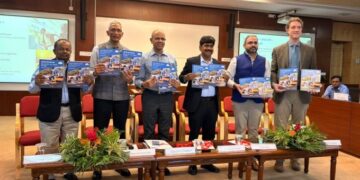


Students are overwhelmingly happy to be back at school but at the same time a sizeable proportion of school goers also believe they are not learning enough (or nothing at all) about how to manage money and a budget or developing digital skills says a report prepared by World’s Largest Lesson, a programme under Project Everyone, a United Nations global partner for SDGs and NetApp (cloud-led, data-centric software company, in collaboration with Play Verto, a research and play-based technology firm.
The top 3 categories of positive messages are practical skills attainment (74%) – students wanting to acquire a new skill, being informed (66%) – students wanting to be informed of local/global events and knowledge attainment (46%) – students wanting to learn something new. The top 3 categories of negative messages are knowledge attainment (33%), being informed (17%) and skill attainment (13%)
The report based on a survey of 37000 (7-19 years old) students from 150 countries including India further concludes that the findings indicate that we must ignite wider discussion around what the purpose of education is. “Students’ perception of the purpose of the education they are currently receiving is narrowly targeted towards careers and ultimately contributing to economic development. When invited to share their own thoughts, they introduce ideas of skills for both work and life and the need to understand the world around them and communicate effectively in it. There is a rich and potentially transformational conversation we could be having, involving all stakeholders and placing children and young people at the centre.”
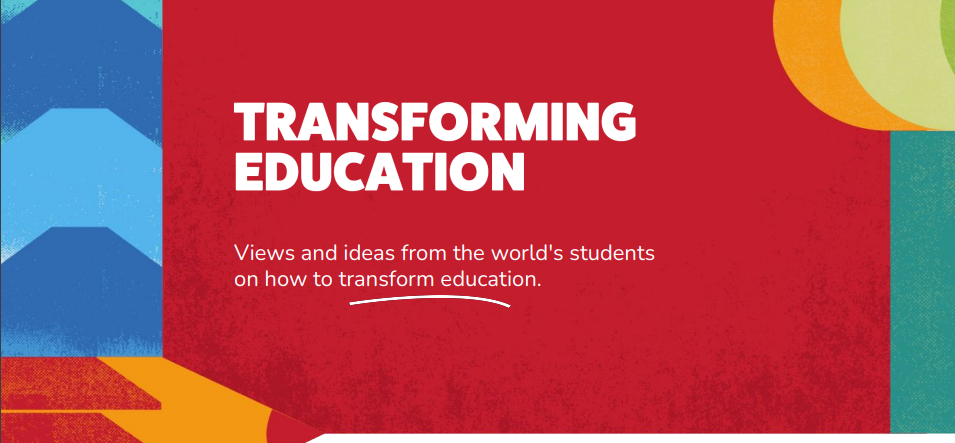
In June 2022, World’s Largest Lesson and NetApp, with the help of Play Verto, launched the Transforming Education survey and invited students aged 7 to 19 years old to share their views on education and what they would like to see change. The questions were developed in collaboration with UNESCO, UNICEF, Teach for All, Play Verto, NetApp and World’s Largest Lesson, alongside a youth advisory panel.
The Transforming Education survey was designed to be played by students as part of a classroom activity. A discussion guide and lesson plan was also created, to give teachers additional support and guidance in distributing the survey. To maximise participation, the survey was open for 6 months, from June 2022 and closing on International Day of Education 24th January 2023. The survey was predominantly played online but an offline version was made available as well. This was created to hear from students from harder to reach communities who do not have digital access.
“Our goal was always to shine a spotlight on the voices of children from around the world, show that it is possible to include them in conversations around the transformation of education, and to create a platform for them to share their views. Our findings show that urgent action is needed if we are to achieve Global Goal 4: Quality Education by 2030, and change must start by including the views of those who are most affected – children and young people,” says the report.
Looking at other responses, 22K children around the world (59%) do not believe they are learning enough (or nothing at all) about how to manage money and a budget, A similar trend can be observed with “Develop digital skills like programming and coding”, where 41% said “Not enough” and 20% replied “Nothing at all”.
Most students are back to having classes in person (80%). 77% of our respondents said they are happy to be back at school after the school closures and that they missed others while their school was closed (74%). In India, 29% said they were happier learning at home The children who are happiest to be back at school, are the ones who had no device of their own to learn with. Looking at the data from another perspective reinforces the relationship between the perception of falling behind and anxiety being back at school. Of those students whose perception is that they have fallen behind their peers, more of them feel anxious to be back at school (48% vs 33%). …but many are anxious However, this doesn’t tell the whole story. As almost a third of our respondents (33%) said they feel anxious being back at school. When we explore this further, we see that although these students still report missing others while their school was closed (76%), almost half of them believe they have fallen behind their classes because of the closures (44%) and 42% of them were happier to be learning at home.
COVID-19 widened existing educational inequalities, with more children in lower social progress countries reporting they feel they have fallen behind in their schoolwork vs students in higher social progress countries. Of these, more did not have access to their own device to learn with. Learning online and using social media is students’ least favourite way to learn. This is an interesting response from the digitally native student generation. This could indicate further need for teacher professional development to support student engagement or a general fatigue with online learning in the light of COVID-19. However, further research is needed to understand this in more detail.
In contrast a blended approach to learning featuring a combination of collaboration with peers, being creative and playful and listening to teachers is perceived as the most effective style. Globally, students feel they are not learning enough about digital skills like coding and programming or how to analyse and use data. Strikingly, India stands out as a country where students feel like they are learning more than enough across a key range of these skills.
To the question Why adults want children to go to school, regardless of where students live, they consistently believe the main reason adults want them to go to school is, “To have a good career” (40%). Students from public schools focus more on “To have a good career” as their purpose for education (33%). Students who attend private school chose both “To have a good career” (28%) and “To enjoy learning and become a great learner for the future” (27%). The proportion of children choosing a “To have a good career” is even higher for the respondents from countries with higher social progress (36% above median, 28% below median)
Practical skills attainment is what children focus on the most, mentioned by 48% of the players and refers to learning or being taught a new skill. Players said things like “to teach people about the world we live in, but also how to create and discover new knowledge” or “to learn how to live in the real world”. Then we see being informed (16%), referring to being informed of current events (locally and globally), for which children had to say, “to learn new things and to figure out how to manage when you get tossed into the real world” and “educate people about the world and human issues, so that they can live more responsibly and make it better” among others. Children also talk about knowledge attainment (15%), which is learning new knowledge, with the phrase “give me a quality education” coming up very often, but expressed in different ways. 9% of children believe understanding others should also be the main purpose of their education, with responses like “to understand and create more adaptable and accepting humans”. We also saw repetition of one of the survey questions used earlier, with students writing “to understand who I am, what I want and be part of the community”.
We asked students “If you could change one thing about your education, what would it be?” Understandably, the common changes students would like to see reflect what they believe the purpose of school should be about acquiring practical skills (33%). Comments vary from, “Focusing not on textbook education, but on skill and creative learning that involves various tools and materials for students” to “Learn to read and write in my mother tongue and to use the computer very early”. We also see being informed (21%), with respondents mentioning “Lots of things, such as learning about much more history, the planet, and more things” or “Talk more about everyday life, about how the world of work works”. Similarly, we see knowledge attainment (18%), in the form of “Granting children the ability to tailor their education to suit their interests and talents” or “I would remove examinations because they teach learners to learn in order to get good grades only.” Understanding others (7%), where “Read and write in my mother tongue” is expressed in different ways. Finally, we also see comments about learning to be creative and innovate and accessing learning in more diverse ways (4% each). Students express a desire for education to “Foster creativity from an earlier age, make creative classes more accessible continuously, as well as other classes regarding specific interests (language, engineering, etc)” or “I would incorporate different types of learning by having various projects and ways to evaluate your knowledge and abilities”.
The “positive” responses (44%) contained ideas that include wanting to learn in their mother tongue, do more creative learning and start learning with technology at a much younger age. Amongst the negative comments (39%) we see critiques of the exam system, concerns about the lack of learning life skills and student perception of focusing on an outdated curriculum We explored the negative further by asking what is one thing that their school should stop doing (Q8). Commons themes also emerge around exams, homework and bringing more technology into classrooms.