

With nearly 65% of its population below the age of 35 and more than 12 million young people entering the workforce every year, India possesses one of the world’s largest demographic advantages. The discussion around this potential is now being debated: Whether this dividend becomes an economic asset or a missed opportunity will depend largely on how effectively the country equips its youth with relevant skills.
Skill development is therefore no longer a welfare initiative or an adjunct to education—it has become central to India’s growth strategy and its ambition of becoming a Viksit Bharat by 2047. And the country has done well to layout an architecture and an enabling environment for skills to be positioned in the right place.
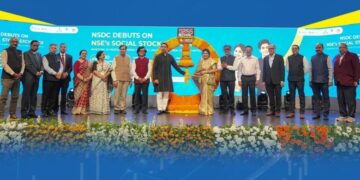
Over the past two decades, India has made significant progress in building a national skilling ecosystem. The establishment of the National Skill Development Corporation (NSDC) in 2008, followed by the creation of the Ministry of Skill Development and Entrepreneurship (MSDE) in 2014, marked a shift towards institutionalising workforce development. The launch of the Skill India Mission and the Pradhan Mantri Kaushal Vikas Yojana (PMKVY) expanded access to short-term, industry-oriented training, while the National Skills Qualification Framework (NSQF), Sector Skill Councils and apprenticeship programmes sought to standardise training and align it with labour market requirements. The National Education Policy (NEP) 2020 further strengthened this direction by integrating vocational education into mainstream schooling and higher education, signalling that skilling should become an integral part of learning rather than a parallel pathway.
Yet the journey is far from complete. Despite the expansion of training infrastructure and programmes, skill development remains unevenly distributed and often disconnected from actual demands of the society. Vocational education continues to struggle against the perception that it is a second-choice option, attracting students only when conventional academic routes fail. The social premium attached to white-collar jobs continues to overshadow careers in manufacturing, services and technical trades, even as these sectors generate millions of employment opportunities.
World Youth Skills Day, observed every year on July 15, provides an opportunity not only to celebrate achievements but also to examine the next phase of India’s skilling journey. As technological change accelerates and artificial intelligence reshapes workplaces, the country must move beyond simply producing certificate holders to creating adaptable, lifelong learners. The future will reward human capability rather than academic credentials alone.
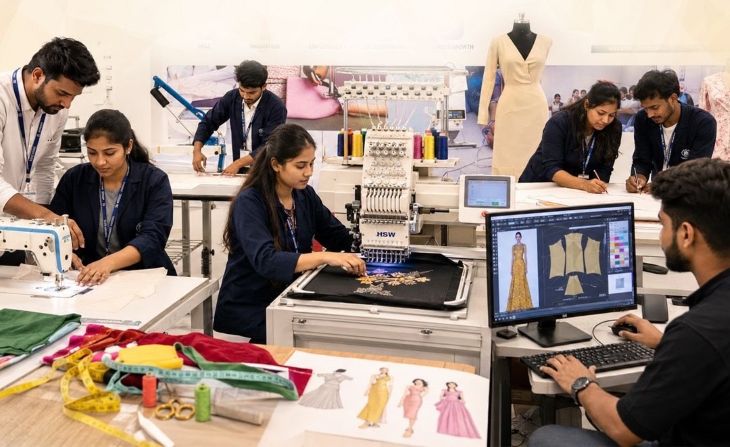
This requires a fundamental reimagining of education. Curricula can no longer remain static while technology evolves every few years. The skilling ecosystem has to become dynamic, modular and continuously updated. Learning must be closely integrated with work, enabling students to acquire practical competencies alongside academic knowledge. Productivity, problem-solving ability, communication skills and adaptability should become as important as examination scores.
Industry has an equally critical role to play. Employers can no longer remain passive consumers of talent; they must become active partners in its creation. Manufacturing plants, hospitals, hotels, logistics hubs, data centres and infrastructure projects should increasingly serve as learning spaces where students gain real-world experience. Apprenticeships, internships and work-integrated degree programmes need to become the norm rather than the exception. Equally important is industry participation in curriculum design so that training reflects evolving workplace requirements. No single stakeholder—government, academia or industry—can achieve this transformation alone.
The traditional notion of a degree as the sole passport to employment is also losing relevance. The emerging employability equation is one of degree plus capability. Employers increasingly value adaptability, digital literacy, teamwork and the ability to learn continuously. Education must therefore prepare young people not merely to secure jobs but also to create value, innovate and, wherever possible, become job creators themselves. The transition should be from “learning to earn” to “learning to create.”
There is also a need to democratise access to skills. Just as the Unified Payments Interface (UPI) transformed digital transactions through a common public platform, India could benefit from a unified digital skills ecosystem that allows learners to discover courses, earn verified credentials, access apprenticeships and connect with employers across sectors. Such an interoperable platform could make skill development more transparent, portable and accessible throughout a person’s working life.
The recognition of learning must also evolve. Micro-credentials, digital badges and competency-based certifications are becoming increasingly important in global labour markets, particularly as workers reskill throughout their careers. These flexible credentials can complement traditional degrees and provide employers with more precise indicators of capability.
Finally, India must address the social attitudes that continue to limit vocational education. A plumber, healthcare technician, hospitality professional, machine operator or solar energy installer contributes as much to the economy as many office-based professions. The country’s education system and society at large need to celebrate those who create employment and build productive enterprises as much as those who secure prestigious white-collar jobs.
India has already laid a strong policy foundation for a skills-first economy. The challenge now is to make skilling more relevant, more aspirational and more deeply embedded in education and industry. If the country succeeds, it will not only meet its own workforce needs but also emerge as one of the world’s leading suppliers of skilled talent. On this World Youth Skills Day, the question is no longer whether India should invest in skills, but how quickly and effectively it can transform skills into its greatest national advantage.