

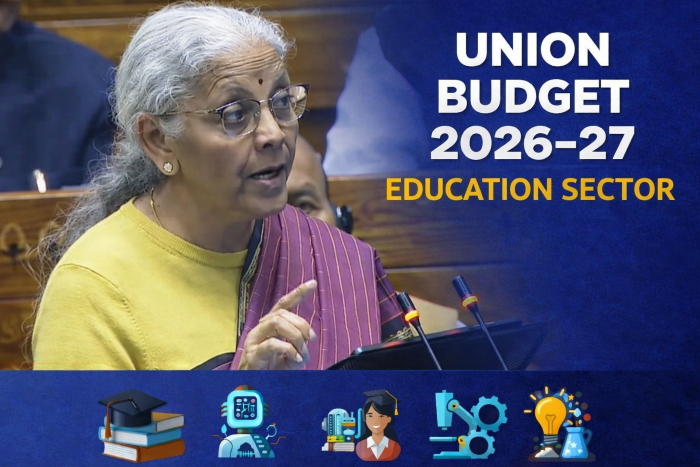
The total education budget for FY 2026–27 stands at ₹1.39 lakh crore, registering an 8.27% increase over the previous year—one of the highest ever allocations for the sector. Complementing this, the skilling outlay under the Ministry of Skill Development and Entrepreneurship has increased sharply by nearly 62%, rising to ₹9,886 crore from about ₹6,100 crore in FY 2025–26. This substantial rise signals a strategic policy shift from mere educational expansion towards outcome-oriented learning and workforce preparedness.
In higher education, the Department of Higher Education has received an allocation of ₹55,727.22 crore, reflecting an 11.28% increase over the previous year. Notable initiatives include the launch of the PM Research Chair (PMRC) scheme with an allocation of ₹200 crore, the expansion of World Class Institutions with ₹900 crore, and enhanced funding for technical education under the MERITE scheme. These investments aim to improve research quality, faculty excellence, and interdisciplinary learning across universities.
At the school level, the Department of School Education and Literacy has received its highest-ever allocation of ₹83,562 crore. Flagship schemes such as Samagra Shiksha, PM-POSHAN, and PM-SHRI have seen significant increases, along with the introduction of Atal Tinkering Labs (₹3,200 crore) to promote innovation, problem-solving, and early exposure to STEM among school students.
A key structural innovation introduced in this Budget is the development of five University Townships and Academic Zones near major industrial and logistics corridors. These townships are envisioned as integrated ecosystems bringing together universities, research institutions, skill centres, startups, and residential facilities. By physically co-locating education with industry, these townships aim to bridge the long-standing gap between academic knowledge and labour market requirements, creating direct pathways from classrooms to careers.
Further strengthening this vision is the proposal to establish a High-Powered Education to Employment and Enterprise Standing Committee. This Committee will guide policy measures linking education with employment outcomes, particularly in the services sector, which is the core driver of the “Viksit Bharat” vision. It will also examine the impact of emerging technologies, including artificial intelligence, on job creation and skill requirements, and recommend curriculum reforms accordingly.
One of the most forward-looking initiatives in the Budget is the creation of a Centre of Excellence for Artificial Intelligence in Education, supported by an allocation of ₹100 crore. This initiative seeks to transform pedagogy through AI-enabled tools such as personalised learning systems, adaptive assessments, and smart digital classrooms. In parallel, the Budget introduces three additional Centres of Excellence in AI with an allocation of ₹250 crore, reinforcing India’s ambition to become a global hub for deep-tech education and research.
The Budget also reflects a strong emphasis on creative and digital skills. Under the AVGC (Animation, Visual Effects, Gaming and Comics) framework, Content Creator Labs will be set up in 15,000 secondary schools and 500 colleges. This initiative aims to prepare nearly two million professionals by 2030, catering to the rapidly expanding media, entertainment, and gaming industries. These labs, along with expanded digital and creative skill centres, represent a shift towards hands-on, industry-linked education that aligns with the needs of the digital economy.
Inclusivity and gender equity form another cornerstone of the Budget. Recognising that India already has one of the highest rates of female participation in STEM education globally, the government has announced the establishment of one girls’ hostel in every district, especially in regions hosting higher education and STEM institutions. This will be supported through viability gap funding and capital support, addressing one of the most persistent barriers to female participation—lack of safe and affordable accommodation. Additionally, the promotion of digital learning resources in Indian languages seeks to democratise access to quality education for students from underserved and rural regions.
The Budget also promotes diversified educational excellence through investments in allied health institutes, Ayurveda education, and research infrastructure, including facilities in astronomy and biotechnology. These measures integrate Indian Knowledge Systems with modern scientific research, ensuring that education remains culturally rooted while globally competitive.
Beyond formal education, the Budget also strengthens the sports and youth development ecosystem. The allocation for the Ministry of Youth Affairs and Sports has increased to ₹4,479.88 crore, with the Khelo India Mission focusing on talent identification, coach development, sports science, and grassroots-to-elite pathways. This reflects an integrated understanding of education that includes physical development, discipline, and alternative career pathways.
Finally, complementary policy measures such as the reduction in Tax Collected at Source (TCS) on educational remittances under the Liberalised Remittance Scheme make foreign education more affordable, while broader tax and financial reforms improve the overall ecosystem for educational investment.
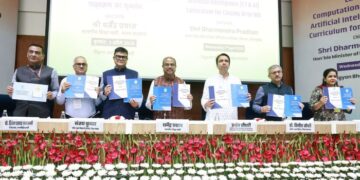
In his response to the Budget, Union Minister for Education Shri Dharmendra Pradhan described it as a “Yuva Shakti–driven” blueprint for India’s next phase of development, highlighting its focus on employment creation, AI integration, and gender inclusion. Together, these measures signal a paradigm shift—from education as a social sector expense to education as a strategic economic investment.
With a strong focus on youth empowerment, employability, innovation, and inclusion, the Budget positions human capital as the most critical driver of India’s medium- and long-term economic transformation. The Finance Minister’s allocations reflect a clear recognition that demographic advantage can translate into sustainable prosperity only if backed by robust educational infrastructure and future-ready skills.
https://x.com/dpradhanbjp/status/2017881243468108029