
• ECCE
  • School Edu
  • Higher Edu
  • Edu Tech
  • Skills
  • Jobs
  • Advertise
  • Login
[t4b-ticker]
  • Home
  • Latest
  • Spotlight
  • Perspective
  • Interview
  • Videos
  • Events
  • Shop
  • Student Kiosk
No Result
View All Result
  • Home
  • Latest
  • Spotlight
  • Perspective
  • Interview
  • Videos
  • Events
  • Shop
  • Student Kiosk
No Result
View All Result
Education21
Home Higher Edu

The Mata Vaishno Devi MBBS Admissions Row and the Unfinished Debate on Minority Rights

education by education
November 26, 2025
in Higher Edu, Opinion
0
The Mata Vaishno Devi MBBS Admissions Row and the Unfinished Debate on Minority Rights
0
SHARES
66
VIEWS
Share on FacebookShare on Twitter

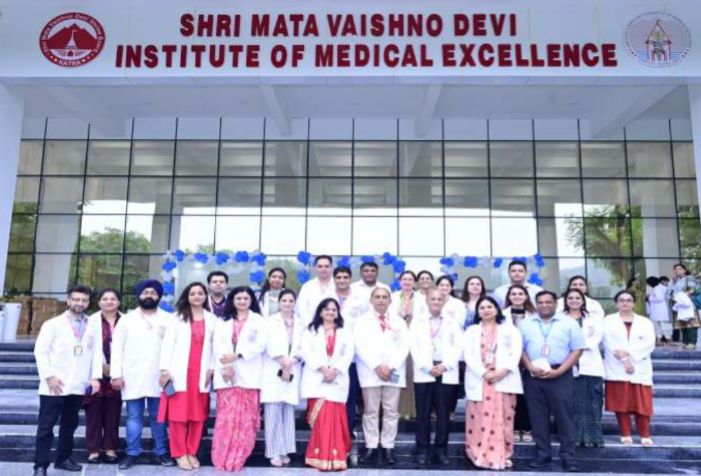
The politicization and backlash over admissions to the 50 sanctioned MBBS seats at the newly established Shri Mata Vaishno Devi Institute of Medical Excellence (SMVDIME) have opened a deeper national debate—one that extends far beyond this single institution. The controversy raises fundamental questions about whether religious identity or community funding can or should influence access to educational institutions that operate under public recognition and modern constitutional norms.

The tension is not merely local; it is structural. Why, for instance, has minority status been denied to Hindus in states where they are demographically a minority, while other communities—sometimes even majorities—continue to enjoy extensive constitutional protections as “minorities” in those same regions? Such contradictions have long been ignored but were bound to resurface the moment faith-linked institutions like SMVDIME entered the competitive admissions space.

Chief Minister Omar Abdullah’s stance reflects the legal position: admissions were based solely on merit, and allowing religion to shape entry criteria would set a “dangerous precedent.” SMVDIME is not a minority institution under law, and hence cannot reserve seats for any religious group. Abdullah has also questioned the BJP for supporting protests over an admission list that, technically, adheres to existing norms.

Yet the protesters are not operating in a vacuum. Their argument—that a medical college built with donations from Vaishno Devi devotees (overwhelmingly Hindu pilgrims) should prioritize Hindu students—may not be legally enforceable, but it is emotionally resonant for many. For them, the high number of Muslim admissions represents a perceived breach of “devotee sentiment” and an unjust “imbalance.” Their concerns belong to the domain of public psychology and political identity, not constitutional law.

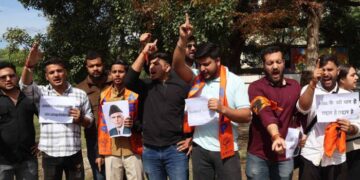
The result is a controversy that is part sentimental, part political, part logical—but not legally grounded. Reports suggest a coalition of more than 60 Hindu organizations, operating under the Shri Mata Vaishno Devi Sangharsh Samiti, is mobilizing for large-scale protests unless the admission list is scrapped. If the matter escalates, the Shri Mata Vaishno Devi Shrine Board (SMVDSB) must take proactive steps—initiating a structured dialogue with the government and examining whether models like the Jamia Millia Islamia internal quota framework can be adapted within constitutional limits.

But ultimately, the real political question is this: Is it time to grant Hindus minority status in Jammu & Kashmir? If such recognition had existed, this controversy might have been resolved (or avoided) through constitutionally valid institutional design, rather than street protests and polarizing rhetoric.

The broader risk is clear. Any prolonged agitation will only deepen the old Jammu-versus-Kashmir fault line—a narrative already exhausted, yet periodically revived for political mileage. While there is little legal justification for overturning a merit-based admission process, there is a compelling opportunity to correct the long-standing anomaly of denying minority status to actual numerical minorities.

This leads naturally to a re-examination of the constitutional architecture of minority institutions in India. The historical need for such institutions—rooted in concerns of marginalization at the time of Independence—may now be evolving. With near-universal access to primary education and expanding state capacity, the original rationale has weakened. Today, many minority institutions benefit not only from relaxed regulatory compliance but also, in some cases, serve as soft power spaces for ideological influence—raising new questions about social cohesion and national security.

The Vaishno Devi admissions row should be viewed not as an isolated controversy but as an inflection point. It exposes a long-ignored tension between meritocracy, religious identity, community funding, and constitutional protections. Judicial scrutiny may follow, but the real solution lies in rethinking the minority framework itself—ensuring it reflects present-day realities rather than mid-20th-century anxieties.

Perhaps the time has indeed come to look at minority institutions afresh, aligning constitutional safeguards with demographic truth and societal harmony. The SMVDIME controversy simply forces the country to confront a debate that has been waiting in plain sight.


  • Facebook
  • Twitter
  • Instagram
  • LinkedIn
  • RSS Feed
Previous Post

Nasscom Foundation and IBM Collaborate to Skill 87,000 Marginalized Youth

Next Post

ISB, Dharmalife, and London Business School collaborate to launch DL Labs

education

education

Related Posts

UC Cricket Challenge returns for the third consecutive year to Bengaluru
Higher Edu

UC Cricket Challenge returns for the third consecutive year to Bengaluru

by education
February 16, 2026
NIU Lecture— “Saving the Wild: Entrepreneurial Solutions to Wildlife Challenges”
Higher Edu

NIU Lecture— “Saving the Wild: Entrepreneurial Solutions to Wildlife Challenges”

by education
February 16, 2026
BharatGen and Amrita Institutions unite to Build India’s Sovereign AI for Healthcare
Higher Edu

BharatGen and Amrita Institutions unite to Build India’s Sovereign AI for Healthcare

by education
February 16, 2026
Amrita Hosts International SPARC Symposium Bringing Together Global Leaders in Biotechnology, AI, and Translational Health Research
Higher Edu

Amrita Hosts International SPARC Symposium Bringing Together Global Leaders in Biotechnology, AI, and Translational Health Research

by education
February 14, 2026
IMU’s AZIMUTH 2026 showcases the Digital Future of Maritime
Higher Edu

IMU’s AZIMUTH 2026 showcases the Digital Future of Maritime

by education
February 13, 2026
Next Post
ISB, Dharmalife, and London Business School collaborate to launch DL Labs

ISB, Dharmalife, and London Business School collaborate to launch DL Labs

  • Facebook
  • Twitter
  • Instagram
  • LinkedIn
  • RSS Feed

Useful Announcements

  • All
  • Useful Announcements

MAHE to host International Convergence on Sustainable Development Goals from March 24-26, 2026

February 16, 2026

EDII Announces PGDM Entrepreneurship for Tech Startups

February 16, 2026
BharatGen and Amrita Institutions unite to Build India’s Sovereign AI for Healthcare

BharatGen and Amrita Institutions unite to Build India’s Sovereign AI for Healthcare

February 16, 2026

OpenAI Academy x NxtWave Buildathon Finale to be held on Feb 17

February 13, 2026
SBI Foundation announces applications for the 14th Edition of the SBI Youth for India Fellowship

SBI Foundation announces applications for the 14th Edition of the SBI Youth for India Fellowship

February 13, 2026

IIMCIP to launch a Year-Long Storytelling Programme for Venture Growth

February 12, 2026

VVISM launches Apprenticeship Embedded Degree Programme (AEDP) in BS in Computer Science

February 12, 2026

Novatr to host an Admissions Webinar on “Computational Design: How Architects Build the Next-Gen Career” on Feb 24

February 12, 2026

University of Birmingham Dubai invites applications for Bachelor of Commercial Law (BCL)

February 12, 2026

SAT Registrations Open for March–June 2026 Tests

February 12, 2026

Download current issue Not available

https://online.pubhtml5.com/jlyo/bxvr/

Monthly Magazine : Feb 2024

Interactive (Quizzes/Surveys)

Start Monthly Quiz
Education21

An initiative in continuation of Curriculum Magazine, Education21.in, is a platform for New India that aspires to be a valuable innovator, partner and collaborator for a just and sustainable world. Continuing with our steady and 360 degree coverage of education system and skills landscape, we are here more oriented towards learner community.

Useful Links

  • About us
  • Team
  • Contact
  • Editorial opportunities
  • Subscriptions
  • Job Opportunities
  • Features

Important Links

  • Blog
  • Archives
  • People
  • Careerwise
  • Resources
  • Downloadable
  • Old issues

Newsletter

  • Facebook
  • Twitter
  • Instagram
  • LinkedIn
  • RSS Feed

Copyright © 2020 All rights reserved. Education21.

No Result
View All Result
  • Home
  • Latest
  • Spotlight
  • Perspective
  • Interview
  • Videos
  • Events
  • Shop
  • Student Kiosk

Copyright © 2020 All rights reserved. Education21.

Welcome Back!

Login to your account below

Forgotten Password?

Create New Account!

Fill the forms bellow to register

All fields are required. Log In

Retrieve your password

Please enter your username or email address to reset your password.

Log In
Cleantalk Pixel