

India’s teachers are a workforce in flux. Let’s begin by a positive update on the current landscape as revealed by the just released UDISE+ 2024–25 report. For the first time ever, India’s teacher count has crossed the 1 crore mark, reaching 1,01,22,420—a 6.7% increase from 2022–23. However, quantity does not always equate to quality. The 2023 State of Teachers, Teaching and Teacher Education Report reveals troubling gaps in teacher qualifications and working conditions: only 46% of primary teachers possessed the mandated diploma, just 32% passed the Teacher Eligibility Test (TET), indicating subpar competency. Scandals and irregularities—such as mass dismissals or corrupt recruitment in states like West Bengal—add to the sense of instability and disrespect surrounding the profession.
So, while celebrating the milestone and progress in improved student-teacher ratios, it should be also borne in mind that despite the Right to Education (RTE) Act mandating at least two teachers per primary school, over 1.1 lakh schools—about 7.15% of all schools—are still run by a single teacher (mostly contractual/para teachers). These schools are disproportionately located in rural, tribal, and marginalized areas, and the burden placed on the lone educators is immense. One teacher is responsible for teaching multiple grades simultaneously, often across subjects they may not be trained in. These teachers must manage attendance records, midday meals, school maintenance, and even act as liaisons for government schemes. These non-teaching duties consume valuable instructional time and dilute their core role as educators. Teachers often feel isolated as no peer collaboration, mentoring, or pedagogical exchange goes with limited access to training or feedback mechanisms. Single-teacher schools are not just a logistical challenge—they’re a symptom of systemic neglect.
The constant juggling of roles, lack of recognition, and absence of support systems contributing to low morale and high burnout is in fact not just about these single teachers but true for a lot of teachers in most places. Poor working conditions and low morale, Disparities in teacher deployment, Inadequate training and certification, Lack of career incentives and professional growth, Limited use of technology in pedagogy, Digital divide in teacher preparedness—all are real issues facing teachers.
In the changed context of technological and policy advances, teachers are now expected to be not only instructors but also mentors, counselors, and role models, all while navigating an evolving curriculum and increased administrative tasks. Reports suggest that teachers feel significant pressure to adapt, often with insufficient support, leading to stress and burnout.
Teachers rarely have autonomy to innovate due to rigid curricula and bureaucratic constraints. In case of private schools, school managements, treat teachers as factory workers with instructions of not voicing their opinions. Teachers in India, particularly in rural and government schools, often face substandard working conditions. Many remain on contractual or temporary appointments with low job security and poor compensation. The increased workload, with many handling classes of 50–60 students or more, leads to burnout and demotivation. Professional development opportunities are scarce, and many educators do not receive regular or relevant training, limiting their ability to adopt modern pedagogical techniques.
It is not only the government school teachers but true for a bulk of private schools as well. These teachers are poorly paid and under-trained with over 50% of female teachers in private schools working without formal agreements. Another issue to ponder on teachers’ issues is that teaching in India is a feminized profession, with women comprising over 70% of the younger workforce. While this reflects positive trends in female employment, it also raises questions about gender equity, career progression, and workplace safety. With fewer young people aspiring to join the profession despite broad recognition of its importance, the profession needs more than awards and official celebrations.
Currently, the National Education Policy (NEP) 2020 is the primary catalyst for the transformation of the teaching profession in India. Its provisions are directly reshaping teacher education and professional development. The policy mandates a four-year Integrated Teacher Education Programme (ITEP) by 2030, which combines subject-specific knowledge with pedagogical training. This moves away from the traditional, often fragmented, training models and aims to produce more well-rounded educators. The NEP requires every teacher to complete 50 hours of Continuous Professional Development (CPD) annually. This ensures that educators are constantly updating their skills in areas like digital pedagogy, critical thinking, and experiential learning. Platforms like DIKSHA are key to this, providing digital training modules to over 1.5 crore teachers. The policy’s focus on competency-based learning and critical thinking requires teachers to abandon traditional rote-based methods. This necessitates a change in mindset from being a mere information dispenser to a facilitator of knowledge and skills. The NEP 2020 further formalizes this transformation, pushing for a more flexible, multidisciplinary, and student-centric approach. It advocates for the integration of subjects, experiential learning, and continuous professional development for teachers.
Then, there are other bigger issues of emphasis on mother tongue instructions, which at micro level is challenging for teachers both in terms of content and adaptation. Officials eager to report implementation results on paper often rush their diktats, which comes as poor-quality compliance and non-engagement.
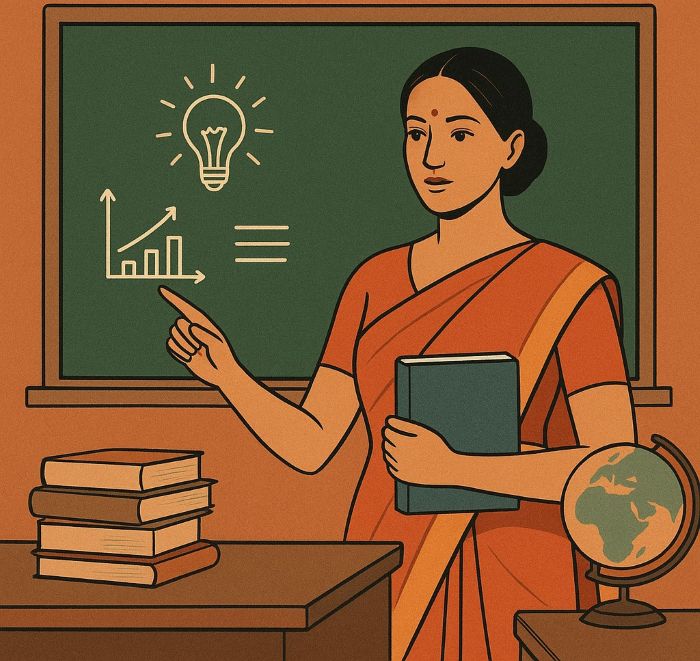
The traditional role of the ‘guru’—a revered mentor and moral guide—is being redefined by the advent of technology and new pedagogical approaches, pushing educators to become adaptable facilitators of learning in an increasingly digital and globalized society. For centuries, the Indian education system was deeply rooted in the ‘guru-shishya parampara’ (teacher-disciple tradition). This model emphasized a holistic approach to learning, where the guru’s role extended beyond academic instruction to include moral, ethical, and spiritual development. Teachers were not just instructors of subjects but also custodians of cultural values, historical knowledge, and social etiquette. They were instrumental in passing down a rich tapestry of art, philosophy, and traditional knowledge systems.
This traditional ethos instilled a deep sense of respect for the teacher and fostered a close, personal relationship between the teacher and the student. In many rural and semi-urban settings, this model still holds significant sway, where teachers are often seen as pillars of the community and sources of wisdom. But overall, in the changed context the profession is undergoing a profound transformation. The traditional respect for the “guru” is now coupled with the modern need for digitally proficient, adaptable educators. The pressure to adopt new technologies can be overwhelming, and a lack of support can lead to burnout.
Generative AI has ignited global discussions about its role in classrooms. However, there is a broader consensus—learning is not just about knowledge transfer—it’s about encouragement, empathy, and moral guidance, which AI lacks. Rather than substitution, the real potential lies in symbiosis—AI as a powerful assistant that empowers teachers to focus on what only humans can do: mentorship, empathy, and inspiring creativity. Teachers understand cultural nuances, classroom dynamics, and students’ personal challenges. AI operates on data, not lived relationships.
Students often face struggles—academic, personal, or social—that require understanding and compassion. A teacher’s ability to read emotions and respond with care builds trust and motivation. A teacher can sense when a learner is disengaged, anxious, or overwhelmed and adjust in real time—something AI cannot fully grasp in context. Mentors shape not just knowledge, but values, resilience, and character. Students observe how teachers navigate challenges, ethics, and collaboration. And that’s today the role of teachers. They have to connect students with opportunities, inspire them to dream bigger, and give confidence when self-belief is fragile.
The resilience and adaptability of Indian teachers must be the national narrative as we celebrate the awarded teachers. Shortages coupled with perennial issues of recruitment and training must be addressed urgently. We have regions and places where there are more teachers and less teachers forcing school closures and mergers. Then there are regions where to fight single teacher school issues, activists have to fight the system in the court. While the urgency of recruitment of good teachers in underserved areas is there, the Government can take a leaf from Election Commission, which deploys officials on election duty from other states. A similar national framework of short-duration deployment from surplus areas can be thought of. It will also make profession attractive and rewarding in a way.
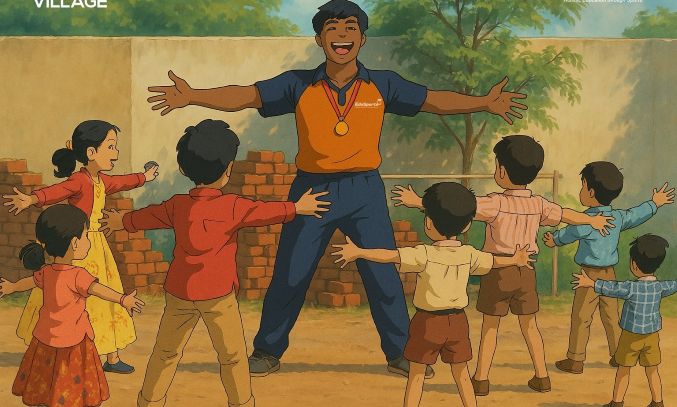
The rapid proliferation of digital tools, online learning platforms, and educational apps is changing the very nature of the classroom. Teachers are no longer the sole source of information; they now compete with a vast, ever-expanding ocean of data available at a student’s fingertips. This shift necessitates a move from rote memorization to skill-based learning, critical thinking, and problem-solving. Teachers must now become proficient in digital pedagogy, using tools like interactive whiteboards, educational software, and AI-powered learning assistants to create engaging and personalized learning experiences.
The true test for Indian teachers lies in their ability to reconcile. They must find a way to honor their traditional role as a moral and cultural guide while simultaneously adopting the skills and mindsets of a modern educator. However, this journey is not without its challenges. Many teachers, especially in rural areas, face significant digital infrastructure gaps and a lack of adequate training. The Indian teacher is a figure of remarkable transition. And, every teacher has to know this on this day dedicated to them.
–Autar Nehru