

The announcements by the Karnataka and Andhra Pradesh governments of their plans to ban social media use for children under 16 to reduce screen addiction, mental health issues and excessive mobile use among students mark a significant development. If implemented, these initiatives could potentially pave the way for similar responses from other states in India, mirroring an emerging global trend to regulate children’s access to social media.
Karnataka is slated to become the first state in India to take the lead on an issue that has been gaining prominence in public discourse, particularly after several global studies began highlighting a correlation between social media addiction among children and adverse effects on their mental wellbeing and overall development. Announcing the proposed ban during the presentation of the state’s Budget for 2026–27 in the Assembly, Chief Minister Siddaramaiah said, “To prevent adverse effects of increasing mobile usage on children, usage of social media will be banned for children under the age of 16.”
Andhra Pradesh is also likely to follow suit and could become the second state to consider restrictions on children’s social media use. Chief Minister Chandrababu Naidu has stated that while the government plans to implement a ban for children under 13 years of age within the next three months, it is also examining whether the restriction should be extended to those up to 16 years of age. “The decision is aimed at protecting children from harmful online content and excessive digital use,” he said.
Announcements by two of India’s more progressive states could potentially trigger a broader national debate. The wellbeing of children is a politically and socially sensitive issue, and any policy aimed at protecting them from the harmful effects of excessive digital exposure is likely to find support among many parents and educators. While the details of implementation are yet to be worked out and may emerge in the coming weeks as the governments frame the rules and enforcement mechanisms, the issue has already sparked considerable debate. It is worth noting that the Supreme Court of India, while declining to entertain a public interest litigation seeking a ban on social media use by children a few years ago, had clearly observed that the matter falls within the policy domain of the government.
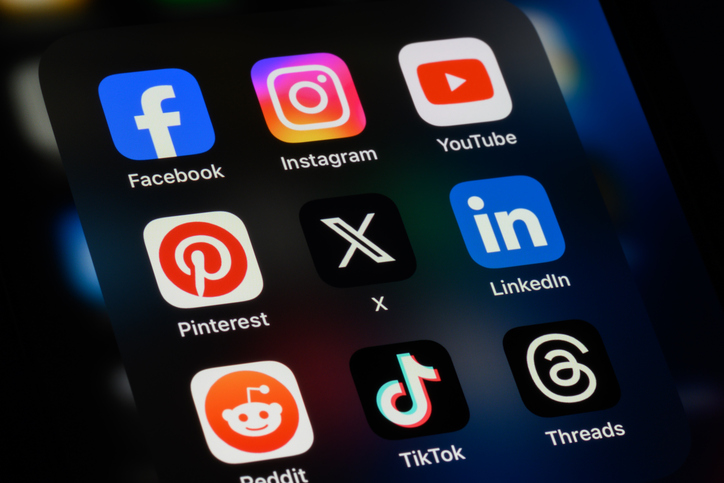
Other states have also begun taking steps to regulate mobile phone use among students, though not necessarily imposing outright bans on social media. The Himachal Pradesh government has announced that students will be prohibited from using mobile phones in all government and private schools across the state beginning March 1, 2026. Earlier, the Punjab government directed authorities to strictly monitor social media content to protect children from obscene, vulgar and violent material. District officers were instructed to report such content to the police and the Child Rights Commission for prompt legal action. While this initiative primarily targeted the promotion of gun culture, drugs and indecent videos on platforms like Facebook and Instagram, it reflects growing concern among policymakers about children’s online exposure.
Globally, several countries have begun introducing or considering restrictions on children’s access to social media due to concerns about mental health, cyberbullying and excessive screen time. Australia became the first country to pass a nationwide law banning social media for children under 16, requiring platforms such as Instagram, TikTok and Snapchat to prevent minors from creating accounts or face heavy penalties. In Asia, Indonesia has recently announced new regulations to restrict social media use for minors, citing risks such as cyberbullying, harmful content and digital addiction.
In Europe, lawmakers in France have moved to restrict social media access for children under 15, requiring parental consent for younger users. Spain is preparing legislation to raise the minimum age for social media use to 16 along with stricter age-verification mechanisms, while Malaysia has announced plans to introduce similar restrictions for users below 16. Other European countries including Slovenia, Denmark and Greece are also discussing or drafting laws to limit social media access for minors.
At the same time, experts point out that enforcing such bans could be difficult. Age verification mechanisms on online platforms remain technically complex and raise privacy concerns. For example, Discord, a popular voice-chat and messaging platform, recently delayed the rollout of its age-verification system due to privacy issues. In practice, many children could bypass restrictions by entering false dates of birth, using VPNs or accessing accounts through parents’ devices. As a result, some experts argue that awareness, digital literacy and parental supervision may be more effective than outright bans.
Others believe that implementation will depend heavily on families and schools rather than government enforcement alone. Parents often provide smartphones to children to keep them occupied, while teachers may have limited ability to monitor usage outside school hours. The central government could potentially require companies to strengthen age-verification systems, but the practical mechanisms for verifying age online remain an open question.
India has already been steadily strengthening regulation of social media platforms and online content. The government first released draft amendments to intermediary guidelines to curb fake news, hate speech and misinformation. This was followed by the Information Technology (Intermediary Guidelines and Digital Media Ethics Code) Rules, 2021, which mandated that platforms remove sexual or impersonation content within 24 hours of receiving complaints. More recently, India introduced further amendments addressing AI-generated content and misinformation. Under the new rules, platforms must remove illegal content within three hours of receiving government notice, compared with the earlier 36-hour deadline. Non-consensual intimate images must be removed within two hours, and AI-generated content and deepfakes must be clearly labelled.
Concerns about children’s exposure to online risks — including cyberbullying, sexting, stalking and blackmail — have also contributed to growing policy attention. At the same time, scientific research and statistical data are increasingly highlighting the potential harms of excessive smartphone use, gaming, social media addiction and binge-watching of OTT content among children and teenagers.
A survey conducted by LocalCircles, a Noida-based community platform, involving around 50,000 parents between 2023 and 2025 found that a significant number of children in India spend between three and six hours daily on smartphones. Similarly, a research paper titled “Excessive Screen Time is Associated with Mental Health Problems and ADHD in US Children and Adolescents: Physical Activity and Sleep as Parallel Mediators” by Ying Dai and Na Ouyang found that excessive screen time is associated with poorer mental health and ADHD symptoms, partly due to reduced physical activity, irregular bedtime patterns and insufficient sleep.
Several studies indicate that children with highly addictive patterns of phone use are two to three times more likely to experience anxiety, depression, aggression and inattentiveness. Children using screens for two hours or more daily face significantly higher risks of screen addiction. Smartphone addiction has also been associated with reduced cognitive functioning, lower levels of physical activity and increased sedentary behaviour. Among younger children, excessive screen exposure has been linked to emotional instability, behavioural problems and difficulties with self-control and attention. Physical health effects such as eye strain, vision problems, headaches and sleep disruption have also been widely reported.
Researchers from Hindusthan College of Nursing in Coimbatore, in a study titled “Prevalence and Impact of Mobile Phone Addiction among Teenagers in Selected Schools at Coimbatore,” published in the International Research Journal of Education and Technology, concluded that phone addiction is widespread among teenagers and closely linked to mental health disturbances. Their study of 400 students aged 13 to 19 studying in classes 9 to 12 found that 56% of teenagers were addicted to mobile phones. Students with higher addiction levels also showed significantly higher levels of anxiety, depression and stress. The study further observed that addiction rates were higher among private school students and those living in urban areas.
Researchers note that adolescence is a particularly vulnerable developmental stage marked by impulsivity, social exploration and strong peer influence. Excessive smartphone use among teenagers has been linked to poor sleep quality, declining academic performance, attention difficulties, anxiety and depression. The surge in digital exposure during the COVID-19 pandemic, when online learning and social isolation became widespread, further accelerated teenagers’ dependence on mobile devices.
As scientific research continues to shed light on the effects of screen addiction, policymakers, educators, and parents will need to work together to strike a balance between digital engagement and healthy development.