

The tragic death by suicide of Sahil Wakode, a second-year student at IIT Bombay, on September 18 has triggered widespread outrage and renewed debate over caste-based discrimination and student mental health within the country’s premier engineering institutions. The incident is reportedly the third student suicide at IIT Bombay in the past seven months, raising fresh questions about the institutional environment and the support systems available to students.
The case took a serious legal turn following the registration of an FIR alleging abetment of suicide and offences under the Scheduled Castes and Scheduled Tribes (Prevention of Atrocities) Act. The investigation has since been transferred to the Mumbai Police Crime Branch. The deceased student’s parents have alleged that he was subjected to harassment. The institute denied that Sahil had submitted a caste-discrimination complaint to the SC/ST cell or administration.
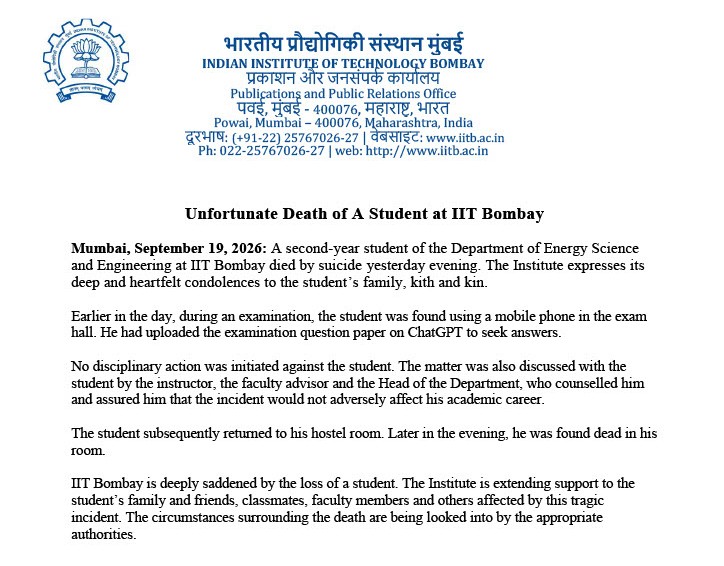
On September 19, IIT Bombay issued an official communication expressing condolences and extending support to Sahil’s family. However, the statement also referred to the student allegedly being found using a mobile phone during an examination and uploading the examination paper to ChatGPT to obtain answers. The inclusion of these details, before the circumstances of his death had been established through an investigation, was widely perceived as insensitive and intensified the criticism of the institute’s handling of the matter.
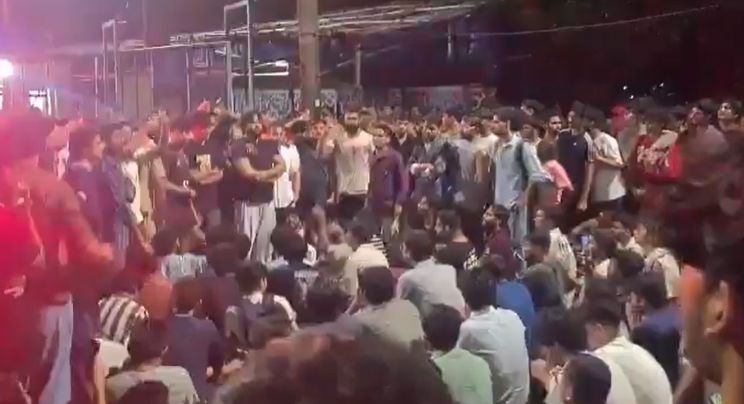
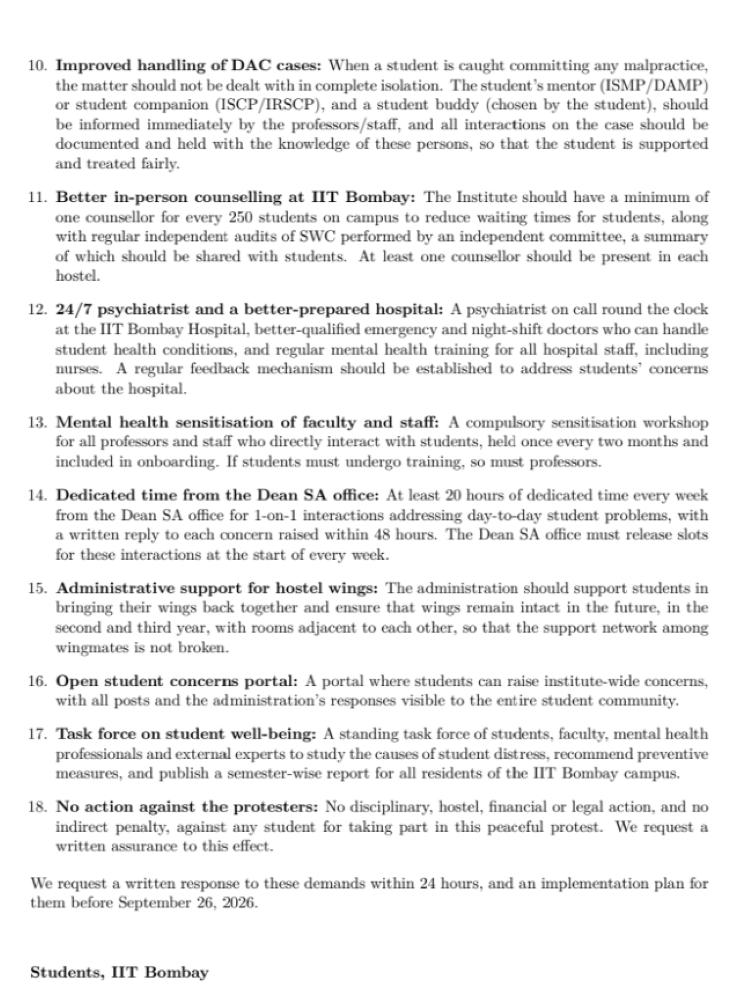
That day in the evening more than 400 students staged a massive protest and submitted an 18-point charter of demands. The protesters called for institutional accountability, an independent investigation, reforms in student welfare mechanisms, and action against officials identified in their demands. According to reports, following a meeting on September 20 lasting approximately three hours, IIT Bombay Director Shireesh Kedare agreed to the demands.
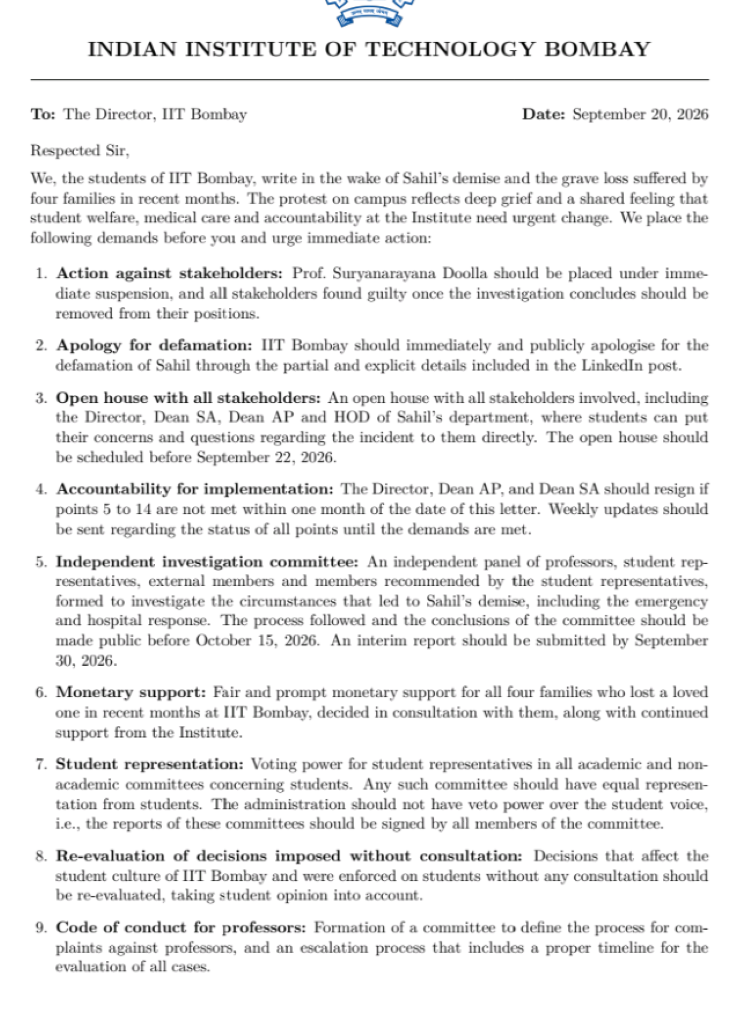
Professor Suryanarayana Doolla, who was identified as the faculty member supervising the examination and named in the FIR in connection with the allegation of abetment, was subsequently suspended from his deanship. He is a faculty member in the Department of Energy Science and Engineering, where he teaches and conducts research in power electronics and power systems.
Realizing its insensitivity and the criticism it evoked, IIT Bombay on September 21 issued an apology for its earlier communication, acknowledging that its reference to the alleged examination misconduct was inappropriate. In a statement posted on X (formerly Twitter), the institute said:
“We apologise for the statements contained in our earlier communication concerning the circumstances surrounding the unfortunate demise of Sahil.”
It further stated:
“The details and circumstances leading up to the incident remain subject to investigation by the appropriate authorities. In view of the ongoing investigation, it was inappropriate to have set out or characterised details relating to the events preceding his demise before they had been duly established through the appropriate investigative process.”
While the case remains under investigation, it raises important questions about whether the institution’s procedures, communication practices and grievance-redressal mechanisms adequately fulfil its obligations towards students. The allegations of discrimination and harassment require a thorough, impartial investigation, while the institutional response must be assessed on the basis of established facts rather than assumptions.
At the same time, institutional accountability must be accompanied by due process and fairness to those facing allegations. If an academic is publicly identified, subjected to disciplinary action or placed under intense scrutiny before the investigation establishes the facts, it could create insecurity among faculty members and adversely affect the trust and openness essential to the teacher–student mentorship relationship. The case also underscores the need for higher education institutions to examine how they handle student distress, academic disciplinary proceedings, complaints of discrimination and communication following student deaths.