

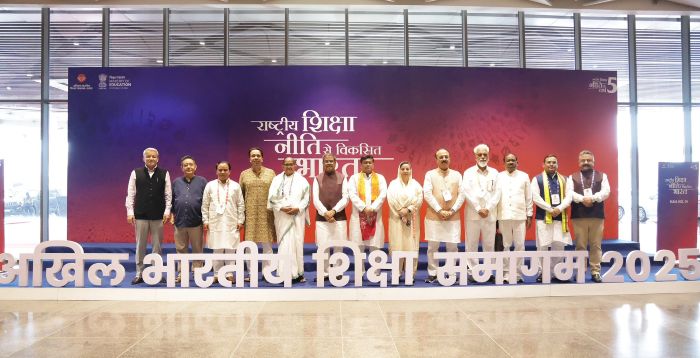
As India celebrates the fifth anniversary of the National Education Policy (NEP) 2020 on July 29, the occasion offers a moment of reflection on one of the most ambitious overhauls in India’s educational history. Introduced after a 34-year policy vacuum, NEP 2020 aimed to disrupt and reimagine the country’s learning landscape—from anganwadis to autonomous universities—with a promise to mold India into a “global knowledge superpower.”
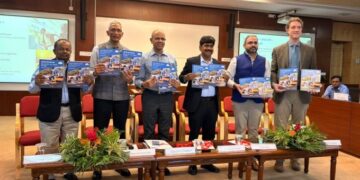
Unveiled during Prime Minister Narendra Modi’s second term, NEP 2020 features prominently in the “VIKSIT BHARAT KA AMRIT KAAL: SEVA, SUSHASAN, GARIB KALYAN KE 11 SAAL” booklet released by the Government in June, showcasing it as a flagship reform of his decade-long rule. The NEP’s goals were clear: improve foundational literacy and numeracy, reduce dropout rates, create multidisciplinary higher education institutions, and enhance employability through skill-based and vocational training. Yet, five years in, the nation stands at a crossroads: between vision and viability, between federal ideals and central ambitions, and between inclusivity and institutional reality.
NEP’s uniform structure has sparked resistance from several states, many of them governed by opposition parties. The primary contention: education is a concurrent subject in the Constitution, but NEP’s implementation has felt top-down and prescriptive.
Tamil Nadu was the first to reject the policy outright, terming it an “imposition” and a threat to linguistic diversity. The state has opted for its own education framework, bypassing NEP mandates entirely.
Kerala followed suit, arguing that the policy undermines the state’s long-standing progressive education ecosystem. West Bengal, Chhattisgarh, and parts of the Northeast have raised similar concerns.
At the heart of the opposition lies the controversial three-language formula, seen by many as a veiled push for Hindi imposition. Tamil Nadu and Karnataka have both pushed back, preferring regional languages in primary education, while northeastern states and West Bengal worry about neglect of indigenous and regional tongues on central platforms like DIKSHA and SWAYAM.
States with strong state universities have resisted the centralization of regulatory power through bodies like the Higher Education Commission of India (HECI). There are fears that giving HECI control over academic, financial, and accreditation functions may dilute the role of state governments and local education boards as is being done by NIRF rankings currently. The proposed dismantling of UGC and AICTE and replacing them with central bodies has also sparked concern about increased bureaucratic control.
Also, the task of restructuring curricula, aligning them with the National Curriculum Framework (NCF), and training lakhs of educators is proving daunting. The teacher-student ratio remains at 1:35 nationally, and teacher absenteeism—as high as 38% in states like Jharkhand—continues to plague rural education systems.
According to Prof. Santosh Mehrotra, former JNU economist and currently with the University of Bath, the NEP “does not reflect the ground realities” of India’s education system. “Learning must become joyful and engaging, not a task that churns out unemployable youth,” he stresses. Learning requires motivated, well-trained teachers, updated pedagogy, and greater financial investments—none of which can be addressed by policy documents alone.
“There is no serious recognition of the systemic crisis that unfolded after the massification of school education. While enrolment surged—especially post mid-day meal schemes and incentives like Nitish Kumar’s bicycle scheme for girls—learning levels remained stagnant. The employability crisis in this country is directly related to education trajectory of last three decades and yet there is no recognition of this in the government. The NEP glosses over these foundational issues,” he explains.
Indeed, ASER reports have repeatedly highlighted dismal outcomes in reading and arithmetic among primary students. While NEP acknowledges the importance of foundational learning, critics argue that its approach lacks urgency and depth.
In higher education, NEP promotes multidisciplinary institutions, encourages academic flexibility, and introduces credit banks for seamless mobility. These ideas, while progressive on paper, have collided with the realities of over-regulation, poor infrastructure, and low employability.
Prof Mehrotra is particularly critical of the push to model Indian UG programs on American lines without strengthening institutional capacity. He warns that reducing core subject weightage in the name of interdisciplinarity is harming academic depth.
“More than 50% of Indian engineers are unemployable. And yet, we keep opening private engineering colleges without regulatory oversight. NEP fails to address the crisis of unchecked expansion and questionable quality,” he adds.
India’s vast diversity—linguistic, cultural, geographical—demands that any educational reform be anchored in grassroots realities. As Prof Mehrotra asserts, “India is not a country, it is a continent. Each state must be empowered to localize education within a national vision, not forced into a singular mold.”
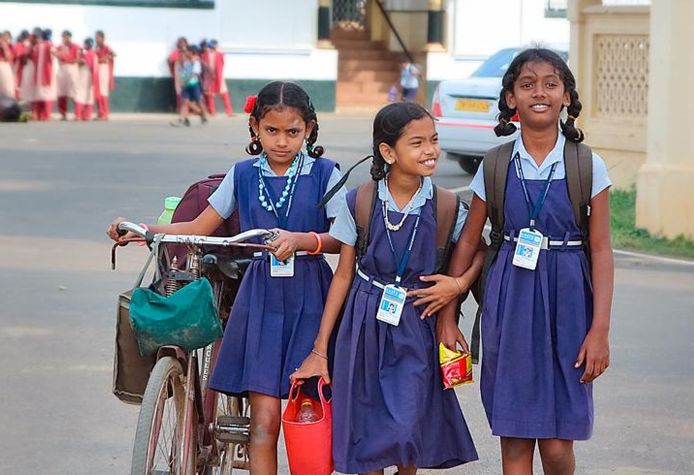
Despite the criticism, the Union Education Ministry maintains that NEP 2020 is a visionary framework. A senior official says that over 1.5 crore students have already benefited from NEP-linked programs and over one lakh schools are being developed as PM SHRI Schools across the country. The ministry also talks about most notable initiatives under NEP 2020 such as NIPUN Bharat, a mission to ensure that every child in India attains foundational reading and numeracy skills by the end of Grade 3; Digital and Play-based Learning: PM e-VIDYA, DIKSHA platform, and Jadui Pitara to digitize and gamify early education; Teacher Training through NISHTHA 1.0, 2.0, and 3.0; National Curriculum Framework (NCF) and National Digital Education Architecture (NDEAR) to unify digital education infrastructure nationwide.
Likewise in higher education, the officials claim that the NEP has introduced sweeping reforms through Academic Bank of Credit and Multiple Entry-Exit options; National Credit and Qualification Frameworks; Online and distance learning regulations now allowing up to 40% of coursework to be completed via platforms like SWAYAM; Professor of Practice and collaborations with foreign institutions being institutionalized. A strong emphasis has been placed on Indian Knowledge Systems (IKS), with 32 centres established and over 3,000 internships offered to promote research into ancient Indian sciences, arts, and sustainable practices.
As India celebrates five years of NEP 2020, it finds itself at a pivotal juncture. The policy’s ideals—equity, creativity, critical thinking—are noble and necessary. But to move from intention to impact, the nation must now invest in capacity-building, bottom-up implementation, and state-level autonomy.
In an Op-Ed in the Times of India today (July 29), Education Minister Dharmendra Pradhan writes, “under PM’s leadership, education is not just policy but the greatest investment. Where there is learning, there is progress. A billion minds unshackled and empowered aren’t just a demographic dividend, but India’s supernova.”
True, but the evidence so far. According to a recent study by QS I-GAUGE, Indian higher education institutions face considerable hurdles in joining large knowledge-sharing networks due to infrastructural, financial, and cultural constraints. While many have embraced curricular flexibility, implementation of NEP 2020’s multiple entry and exit options remains limited. Student support services are well-established, yet partnerships with premier mental health institutions are lacking. Institutions show strong alignment with national qualification frameworks, and programme and course learning outcomes are nearly synced. Despite enthusiasm for involving industry experts in curriculum design, actual engagement through appointments of Professors of Practice is low. Institutional autonomy is hampered by financial dependency, bureaucratic inertia, resistance to change, and capacity limitations. International research collaborations are underdeveloped, though there’s a growing commitment to integrate the Indian Knowledge System, which—with strategic focus and investment—can be meaningfully embedded into mainstream education.
And, from Government’s own PARAKH Rashtriya Sarvekshan 2024, under the National Education Policy (NEP) 2020, has raised serious concerns about learning outcomes in key subjects. The recently released report reveals a sharp decline in students’ understanding of mathematics and science as they progress from primary to secondary school. This points to a system where learning is not being reinforced, tracked, or strengthened over time. A student may clear one grade without mastering the concepts needed for the next—and by the time they reach higher classes, they are left unprepared and demotivated. Maths and science are not just subjects—they are gateways to critical thinking, problem-solving, and innovation. A student who gives up on fractions in Class 6 is less likely to pursue engineering or science in Class 11. These learning gaps are not mere academic failures; they are missed opportunities in the making of a knowledge economy.
Therefore, while NEP 2020 has ‘placed learning at the heart of nation building, drawing from civilizational wisdom’ and ‘reimagined learning as a process free from confines of rote memorization, rigid structures and linguistic hierarchies’ as per the Minister, the systematic overhaul for readiness and reforms, realistic and robust teacher capacity building and missing industrial policy to address and align the employment environment with education—all are making implementation of NEP 2020 sluggish and looking best only on paper, campaigns and speeches. It needs critiques to make it more effective on ground. -Autar Nehru