

Since its inaugural edition in 2023, Dialogues on Development Management (DoDM), hosted by the Indian School of Development Management (ISDM), one of India’s pioneering development management schools, has evolved into a platform for conversations on development management. Across its editions, the convening has brought together 4,000+ participants, 400+ speakers and moderators, 270+ research papers and 50+ track partners.
The fourth edition of DoDM, held in New Delhi on October 8, 2026, centred on the theme “What Makes Social Change Last?” and brought together leaders and practitioners from business and technology, grassroots development, financial inclusion, public policy, governance, philanthropy and social-sector institution-building to examine what enables social change to endure.
As in the previous edition, the programme featured plenary conversations, Development Management Cases, masterclasses, research paper presentations, interactive discussions and Development Management Clinics. These formats provided opportunities to engage with practical challenges of organisational development, institutional resilience and systemic change.
DoDM 2026 brought together diverse perspectives to deepen the conversation on what it takes to move from creating change to sustaining it. By examining the institutional, systemic, financial and impact dimensions of social change, the convening sought to advance a more enduring approach to development, one that enables organisations, systems and communities to build, adapt and carry progress forward over time.
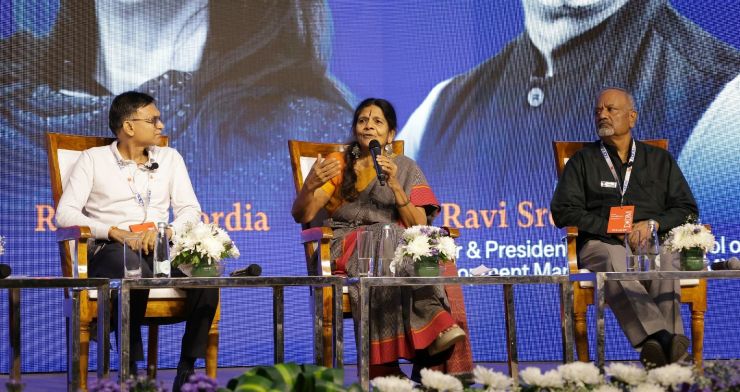
Among the voices contributing to the day’s conversations were Ashwin Yardi, Non-Executive Chairman of Capgemini India; Chetna Sinha, Founder and Chairperson, Mann Deshi Bank and Mann Deshi Foundation; and Ravi Sreedharan, Founder and President, ISDM. Their perspectives reflected the breadth of the development ecosystem and the different institutional, community and leadership dimensions required to sustain social change.
DoDM 2026 explored a fundamental question facing the social sector: while many organisations create meaningful change, far fewer are able to sustain it. Programmes can lose momentum, reforms can unravel, and movements can struggle beyond funding cycles or changes in leadership. The fourth edition examined what enables change to endure across organisations, systems and communities.
The day’s conversations spanned four interconnected tracks across governance, government systems, funding and impact: “Building Institutions, Not Just Organisations”, which examined the governance, leadership and resilience needed for institutions to endure beyond individuals and funding cycles; “From Schemes to Systems”, which explored how public systems can become more adaptive and capable of sustaining change at scale; “Funding the Future We Say We Want”, which examined the funding relationships and forms of capital needed to support long-term change; and “What is Impact Beyond the Numbers?”, which explored how the sector can move beyond outputs to understand whether change is truly taking root and enduring over time.
Chetna Sinha, Founder and Chairperson, Mann Deshi Bank and Mann Deshi Foundation, said, “For social change to last, communities must have the agency, institutions and resources to shape their own futures. Our experience with rural women has shown that financial inclusion, entrepreneurship and community institutions can root change in people’s lives. Lasting change is about creating the conditions in which communities can continue to lead, adapt and expand their own progress.”
Ravi Sreedharan, Founder and President, ISDM, said, “Social change may happen because of good programmes or even good individuals. But for social change to last, it needs Social Purpose Organisations that are resilient and equipped to work over long periods in specific geographies or on specific issues. That is where Development Management comes in: strengthening the leadership, management and organisational capabilities that keep them effective as they grow and contexts change. DoDM 2026 is an effort to bring these questions to the centre of the sector’s conversation.”
Sharad Agarwal, Co-Founder, ISDM, added, “Sustaining social change requires a greater focus on the systems that development programmes operate within. Outcomes endure when those systems are accountable and responsive to the communities they serve, and when we invest in what carries progress forward, not just in what a programme delivers today.”