

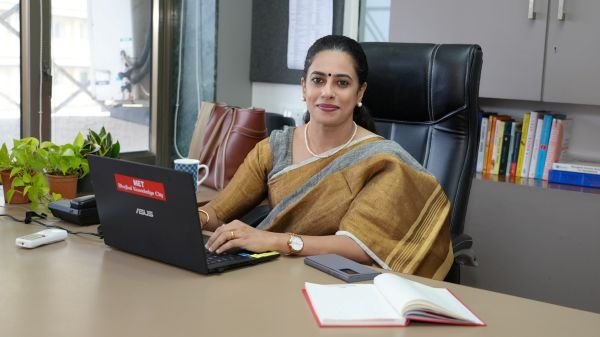
Dr Priya Menon Nair, Director, Institute of Mass Media, Mumbai Educational Trust
Most media education still operates on a decades-old model built around lectures, theoretical frameworks, case studies and, inevitably, more lectures. While this approach provides students with foundational knowledge, it was designed for an industry that was slower, more predictable and less demanding in its timelines than the one graduates enter today.
The media industry, particularly advertising and creative agencies, rarely operates within neat frameworks or predictable schedules. Projects evolve, client expectations shift, deadlines move and ideas are frequently revised under pressure. The ability to respond to these changes is not simply a matter of knowing the right theory. It requires judgement, adaptability and the confidence to make decisions when there is no obvious answer.
Students who have spent most of their academic years studying theory can find themselves unprepared for this reality. They may understand the principles of branding, consumer behaviour or media planning, but struggle when a brief changes midway through a project or when a client rejects an idea they have spent days developing.
Recruiters and agencies tend to recognise this gap quickly. During an interview, a transcript can establish what a candidate has studied, but it cannot fully demonstrate what the candidate can create, how they approach a problem or how they respond to feedback. Employers increasingly want to see evidence of practical ability: a portfolio, completed projects, creative thinking and the capacity to contribute meaningfully from the outset.
When Frameworks Are Not Enough
The challenge is not that media education relies on frameworks. Models such as the 4Ps and 7Ps of marketing, consumer behaviour theories, positioning frameworks and media planning tools remain valuable. They provide students with a structured way to understand markets, audiences, brands and communication strategies.
The limitation arises when these frameworks become the primary measure of learning, without sufficient opportunities to apply them in dynamic, real-world situations.
A case study of a successful campaign can explain the decisions a team made, the strategy it adopted and the results it achieved. But studying someone else’s decisions is fundamentally different from having to make your own. A student may be able to analyse why a campaign worked, yet struggle to develop an original response when a client calls at 9 p.m. and asks for three fresh concepts by the next morning.
The real test is not whether students can reproduce a framework in an examination. It is whether they can use what they have learned when the brief is incomplete, the deadline is tight and the first idea is rejected.
This is where media education needs to move beyond knowledge acquisition towards applied learning, creative problem-solving and professional judgement.
What Is Missing from the Learning Experience?
Many graduates can explain a positioning strategy or construct a media mix with reasonable confidence. Fewer have had repeated opportunities to defend an idea before a demanding client, manage competing priorities within a team or deliver work when a deadline changes without warning.
These abilities are difficult to develop through classroom instruction alone. They emerge through practice, feedback and reflection.
Defending an idea, for instance, involves more than presenting a creative concept. Students must learn to explain the reasoning behind their decisions, respond to criticism without losing sight of the brief and recognise when an idea needs to be strengthened or abandoned. Similarly, meeting a deadline requires planning, collaboration and the ability to make practical trade-offs when time and resources are limited.
Professional judgement is developed through exposure to situations that require decisions, not merely through memorising the principles behind those decisions.
This is why repeated, structured exposure to practical work is so important. Students need opportunities to experience the full cycle of a project: understanding a brief, researching an audience, generating ideas, presenting proposals, receiving feedback, revising the work and delivering a final output.
The process is rarely linear. That is precisely what makes it educational.
The Agency’s Changing Expectations
The demands placed on agencies have also changed. Shorter timelines, tighter budgets, multiple communication platforms and rapidly evolving client expectations have increased the pressure on teams to deliver efficiently. Agencies may have limited time and resources to train every new recruit from the ground up.
This does not mean that fresh graduates should be expected to arrive as fully formed professionals. Every industry has its own processes, standards and expectations, and early-career employees will always need guidance.
However, there is a meaningful difference between teaching a graduate the specific workflow of an agency and expecting them to learn the fundamentals of collaboration, deadline management, presenting ideas and responding to feedback for the first time on a live assignment.
The greater the exposure students receive before graduation, the better positioned they may be to understand the demands of their first professional role.
This places an important responsibility on educational institutions. Media schools must consider how they can create meaningful opportunities for students to practise professional skills before they enter an industry where mistakes can have commercial consequences.
The objective is not to replicate every pressure of agency life or to turn the classroom into an environment of constant stress. It is to create structured, supported and progressively challenging experiences in which students can learn from mistakes, receive feedback and improve their work.
Learning from the Professionals
The careers of prominent advertising professionals, including Prahlad Kakar, K. V. Sridhar and the late Piyush Pandey, offer a useful reminder of the importance of practical experience in developing creative instincts. Their professional journeys, like those of many successful practitioners, highlight the role of sustained work, experimentation, collaboration and learning from setbacks.
Creative judgement is not developed in a single classroom session. It is refined over time through the process of generating ideas, testing them, confronting limitations and responding to the reactions of clients, colleagues and audiences.
Media education should therefore do more than explain what this process entails. It should give students an opportunity to experience it.
A well-designed practical project can provide a low-risk environment for students to work through the uncertainties of professional assignments. A weak idea can be revised. A presentation that fails to persuade can be improved. A missed deadline can become an opportunity to examine planning and teamwork.
In such an environment, a mistake might affect a grade or a project outcome, but it does not carry the same commercial implications as an error made on behalf of a paying client. This distinction allows students to develop competence and confidence while they still have the support of faculty and peers.
The experience becomes particularly valuable when students are required to take ownership of their work rather than simply complete a predetermined classroom exercise.
Closing the Gap Through Practice
At MET Institute of Mass Media, Mumbai, we have sought to incorporate this approach into the Postgraduate Programme in Mass Communication and Media Management through the MET Media Collective—a student-run agency that works on client briefs, deadlines and feedback, rather than relying exclusively on simulated assignments.
The purpose of such an initiative is to introduce students to the practical realities of media work while they are still in an educational environment. By working on assignments that involve real expectations and deliverables, students can begin to understand the relationship between a creative idea and its execution.
They also gain opportunities to develop skills that are difficult to assess through conventional examinations alone: communicating with clients, collaborating with team members, responding to changing requirements and taking responsibility for the quality of an output.
The value of a student-run agency lies not simply in producing additional projects. It is in creating a learning process in which students must engage with the decisions, challenges and revisions that shape professional work.
For this approach to be effective, however, practical exposure must be supported by mentoring and reflection. Students need to understand why a particular approach succeeded or failed, how feedback can improve their work and where classroom concepts can be applied more effectively. The objective should be learning through practice, not practice without learning.
From Employability to Professional Readiness
No curriculum, however comprehensive, can entirely eliminate the distance between education and employment. Every workplace has its own culture, expectations and challenges. But educational institutions can take meaningful steps to ensure that students do not encounter the fundamentals of professional practice for the first time after graduation.
The media industry needs graduates who can think critically, create thoughtfully, collaborate effectively and adapt to changing requirements. These capabilities cannot be developed through theory alone, just as practical experience without conceptual understanding has its own limitations.
The answer lies in bringing the two together.
Media schools must continue to teach the frameworks that help students understand communication, marketing and media strategy. At the same time, they must create opportunities for students to apply those frameworks to meaningful assignments, work through uncertainty and learn from the consequences of their decisions.
A strong portfolio is one outcome of this process. Greater confidence, professional awareness and the ability to approach unfamiliar challenges are equally important.