

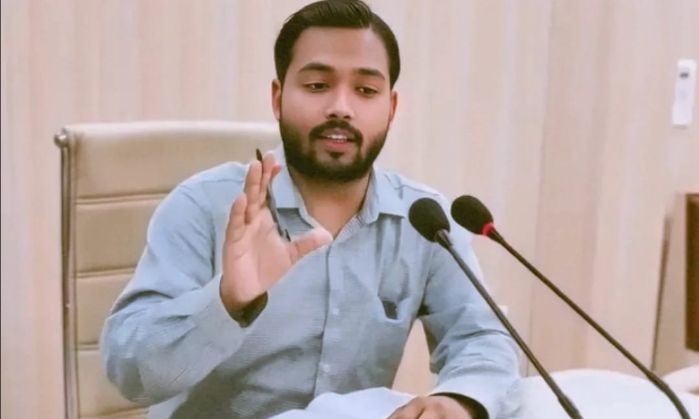
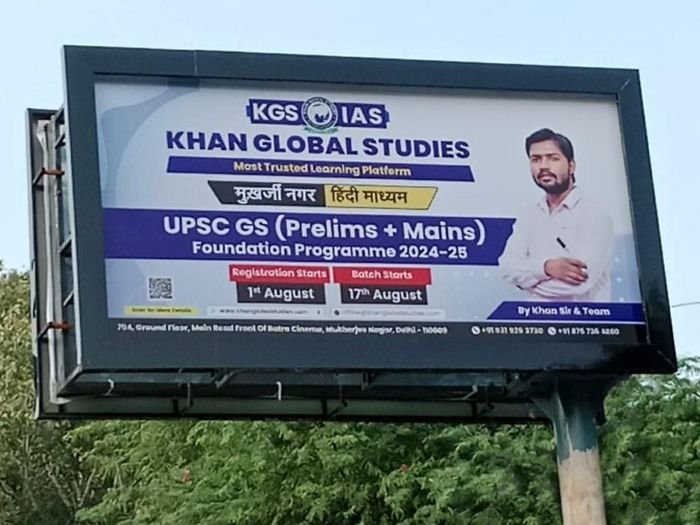
Khan Sir (Faisal Khan), currently embroiled in a legal dispute with a rival coaching institute in Patna, has also found himself at the centre of other controversies in recent weeks, including a public spat involving a television news anchor. Yet, irrespective of these episodes, his remarkable rise from a local tutor to one of India’s most influential online educators—with more than 24 million followers across digital platforms—offers a compelling case study in personal branding, digital media, and educational entrepreneurship.
Khan Sir became a household name through a distinctive combination of teaching style, strategic content creation, and astute use of digital platforms. His journey demonstrates how local credibility, when amplified through viral distribution networks, can evolve into national influence.
A science graduate from Allahabad University, Khan Sir reportedly aspired to join the Indian Army but could not realise that ambition. He subsequently began teaching at coaching centres in Patna. His use of Bihari-Hindi dialects, colloquial expressions, humour, and informal storytelling resonated deeply with working-class students and government-job aspirants—an audience often underserved by mainstream educational institutions. In 2010, he founded Khan Global Studies (KGS) in Patna’s Musallahpur Haat area.

His teaching focused on examination-oriented curricula closely aligned with the needs of students preparing for government recruitment examinations. By offering free lectures and affordable educational resources, he lowered entry barriers for thousands of students unable to afford expensive coaching institutes. Over time, his theatrical delivery, concise explanations, and highly engaging classroom style transformed “Khan Sir” from an individual educator into a powerful educational brand.
An AI-generated analysis on Quora succinctly captures the formula behind his rise: local teaching establishes credibility; recorded lectures attract students through search-driven discovery; short, dramatic clips spread rapidly across social media and messaging platforms; and media attention, controversy, and brand diversification convert viral visibility into sustained public influence.
A crucial element of Khan Sir’s appeal is his ability to simplify complex subjects—history, geography, polity, current affairs, and general studies—into memorable stories and digestible explanations. Punchlines, humour, vivid illustrations, and dramatic emphasis enhance both attention and retention. His long-form lectures attracted students actively searching for examination preparation material, while consistent digital engagement helped cultivate a loyal subscriber base.
The COVID-19 pandemic dramatically accelerated this trajectory. Clips, compilations, and mobile-friendly excerpts from his classes circulated widely through WhatsApp, Facebook, Instagram, and YouTube Shorts, extending his reach far beyond conventional YouTube audiences. In effect, Khan Sir successfully bridged the gap between Patna’s coaching-centre culture and India’s rapidly expanding digital learning ecosystem.
Khan Sir Through the Lens of Manisha Priyam
An equally illuminating perspective comes from academician Manisha Priyam of NIEPA. In her study, Enterprise Culture in the Galli: Youth, Coaching Classes, and Higher Education in Patna, based on fieldwork conducted between 2019 and 2023 and published in South Asia: Journal of South Asian Studies (October 2025), Priyam situates Khan Sir within the broader social world of Patna’s coaching economy.
She identifies him as perhaps the most prominent among the many “sirs” who have emerged as youth icons in the city’s famous coaching lanes. Priyam writes that coaching centres provide not only training but also identity and social respectability. For unemployed graduates who become coaching instructors, they offer dignity and purpose. For students, they represent disciplined effort and hope. In this ecosystem, Khan Sir is perhaps the most visible and successful embodiment of the “sir” phenomenon.
His institute, located in a cluster of repurposed cold-storage warehouses, attracts thousands of students every evening. Those unable to enter the classroom often watch lectures on giant screens installed outside. Success stories are celebrated publicly, creating an atmosphere of aspiration and collective achievement.
Priyam notes that even the modest fees charged by Khan Sir can be difficult for some students to afford. As a result, lecture notes circulate through informal photocopy networks in the surrounding lanes. For students in rural Bihar who cannot bear the costs of relocating to Patna, mobile phones have become their gateway to Khan Sir’s classes, with lectures and study material reaching them through YouTube and WhatsApp.
Students interviewed by Priyam repeatedly highlighted two aspects of his appeal: accessibility and relatability. His use of rustic vernacular speech, regional dialects, humour, and cultural references makes his classes engaging and easy to understand, particularly for rural youth who often feel alienated by formal educational settings.
However, Priyam’s study also points to the broader symbolic role Khan Sir plays among young people. He is not merely a teacher but a charismatic public figure who is perceived as knowledgeable, approachable, and willing to champion student causes. During the railway recruitment controversies of 2022 and later protests over alleged examination irregularities and paper leaks, he openly aligned himself with aggrieved aspirants. Through his YouTube channel, he has cultivated a direct line of communication with students, bypassing traditional institutions and media intermediaries.
Yet Priyam also raises an important criticism. She observes that Khan Sir’s educational model prioritises examination success over intellectual inquiry. In her account, students are encouraged to focus narrowly on mastering workbooks and examination techniques rather than engaging with broader forms of knowledge. This reflects a larger tension within coaching culture itself: while it provides access and opportunity, it often reduces education to the instrumental goal of clearing examinations.
What Should Be the Verdict?
Priyam’s larger concern is not Khan Sir alone but the rise of the coaching economy as a response to the failures of public education and higher education institutions. Her study examines how neoliberal reforms, shrinking opportunities, and the declining credibility of universities have created fertile ground for coaching centres to flourish.
As she notes, universities are founded on ideals of equality, intellectual freedom, and social mobility. Yet many students increasingly perceive them as spaces marked by social conflict, administrative dysfunction, and uncertain outcomes. Coaching centres, by contrast, offer a clear and practical promise: preparation for employment.
His success, therefore, cannot be explained solely through personal charisma or marketing acumen. It is also a reflection of systemic realities: the aspirations of millions of young Indians, the limitations of public institutions, the demand for affordable educational pathways, and the transformative possibilities of digital technology.
At the same time, his achievements are undeniably rooted in his own ingenuity. He recognised a neglected audience, adapted teaching to their linguistic and cultural realities, embraced emerging technologies, and built a model that could scale beyond physical classrooms. Few educators have navigated this transition as effectively.
Khan Sir thus remains a subject worthy of serious academic inquiry—and perhaps a full-length biography. His story is not merely about one teacher’s rise to fame. It is a commentary on contemporary India: its educational aspirations, institutional shortcomings, digital transformations, and changing pathways to social mobility.
If Khan Sir has become one of Patna’s enduring public figures, the larger lesson for policymakers is equally clear. The state must invest far more seriously in improving school education, strengthening public universities, and restoring the intellectual vibrancy of campus life. Until that happens, the coaching lane and the YouTube classroom will continue to fill a vacuum that formal institutions have struggled to address.