


Two major space science and technology international conferences, Space for Sustainability: Science, Technology, Education, and Policy (S²-STEP2025) and the 6th Indian Planetary Science Conference (IPSC-2025), held synchronously at IIT-Roorkee from March 4-7 reinforced the importance of government initiatives, institutional research, and industry partnerships in shaping India’s space sector. Programs like IN-SPACe, the National Space Policy, and Atmanirbhar Bharat are paving the way for greater private sector participation, advanced research, and skill development in space technology.
The Centre for Space Science and Technology (CSST) at IIT Roorkee which hosted these two prestigious international conferences in collaboration with the Indian Space Research Organisation (ISRO), Indian National Space Promotion and Authorisation Centre (IN-SPACe), International Academy of Astronautics (IAA), Astronautical Society of India (ASI), and the Indian Planetary Science Association (IPSA), provided a high-impact platform for discussing sustainable space technologies, planetary exploration, and academia-industry collaborations.
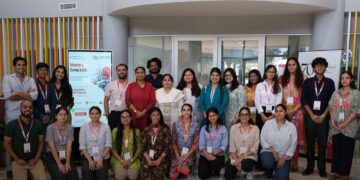
The conference saw enthusiastic participation from leading scientists, researchers, and entrepreneurs from ISRO labs, academic institutes, and the space industry. A major highlight was an interactive session titled “Journey of Indian Space Startups and Their Roadmap Ahead,” which was organized in collaboration with IN-SPACe. This session provided a platform for space startups and emerging industry leaders to showcase their contributions to India’s growing space economy.
More than 20 startups participated in the event, including Agnikul, which specializes in small satellite launch vehicles; Dhruva Space, focused on advancing satellite technology solutions; Digantara, which works on space situational awareness and orbital debris tracking; Manastu Space, a company developing sustainable propulsion systems for satellites; and SatSure, known for its expertise in Earth observation and geospatial analytics.
The Interactive Open Session titled “Indian Space Startups and Industry” at the event marked a significant milestone in the integration of startups, industry, and academia within the Indian space sector. The session was graced by Dr. Vinod Kumar, Director (PD), IN-SPACe, Department of Space, Government of India, as the Chief Guest. Mr. Prateek Jain, IAS, Managing Director, SIIDCUL, Uttarakhand, and Dr. Durgesh Pant, Director General, UCOST, joined as Guests of Honor. The event was presided over by Prof. K.K. Pant, Director, IIT Roorkee.
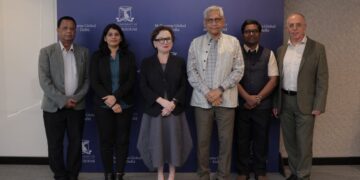
A high-level panel discussion on “Development of a Robust Space Ecosystem through Education, Skilling, and Capacity Building” brought together some of the most distinguished experts in space technology and policy. The discussion featured Air Chief Marshal R.K.S. Bhadauria (Retd.), Chairman, Uttar Pradesh Defence Industrial Corridor; Prof. Indranil Manna, President, Indian National Academy of Engineering, & Vice Chancellor, BIT Mesra; Mr. Arjun Goel, Director-Technical, Saraswati Dynamics Pvt. Ltd.; Prof. (Dr.) Suhas Deshmukh, Director, National Council for Vocational Education and Training; and Prof. Inderdeep Singh, Dean-Infrastructure, IIT Roorkee. The session was moderated by Dr. Vinod Kumar, Director (PD), IN-SPACe. The discussion highlighted key strategic policy interventions necessary to strengthen India’s space sector. The panelists emphasized the critical role of academic institutions in space research and development, the need for a structured approach to skill development, and the importance of fostering industry-academia collaborations. By addressing these areas, India can build a more resilient and innovation-driven space ecosystem capable of competing on a global scale.
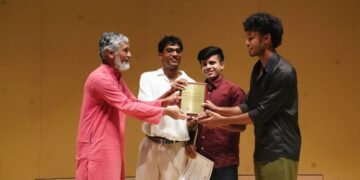
The event also featured technical demonstrations from the CANSAT, Model Rocketry, and POEM teams, offering attendees valuable insights into cutting-edge space research and student-led innovations. These demonstrations highlighted the increasing role of young innovators and research-driven projects in advancing India’s space technology sector. The discussions and engagements during this session underscored the crucial need for continued investment, policy support, and collaboration to drive the success of India’s space startups and ensure long-term sustainability in the industry.
Prof. Sanjay Upadhyay, Head, Centre for Space Science and Technology (CSST), IIT Roorkee, expressing happiness at the fruitful event said, “IIT Roorkee, through CSST, is committed to strengthening India’s space research ecosystem and driving innovation in emerging space technologies. As a step in this direction, we wish to establish a Space Research Park in Uttarakhand, which will serve as a hub for cutting-edge space technology development, industry-academia collaboration, and capacity building. With the support and guidance of ISRO, IN-SPACe, the Government of Uttarakhand, and the Central Government, this initiative will foster innovation, facilitate research partnerships, and nurture space startups. This Space Research Park will hold the potential to contribute to Uttarakhand’s growing technology landscape while positioning India as a global leader in sustainable space exploration.”
Institutions like IIT Roorkee, through its Centre for Space Science and Technology (CSST), play a crucial role in fostering innovation, nurturing talent, and driving collaborative research in emerging space domains. Industry leaders and startups are actively contributing to technological advancements, while policymakers are ensuring the right frameworks for sustainable growth.
The collective efforts of government agencies, academia, and industry stakeholders will be instrumental in positioning India as a global leader in space exploration and sustainable space practices. The insights gained from the conference will serve as a foundation for future collaborations, groundbreaking research, and the continued development of a self-reliant and competitive space ecosystem.