
• ECCE
  • School Edu
  • Higher Edu
  • Edu Tech
  • Skills
  • Jobs
  • Advertise
  • Login
[t4b-ticker]
  • Home
  • Latest
  • Spotlight
  • Perspective
  • Interview
  • Videos
  • Events
  • Shop
  • Student Kiosk
No Result
View All Result
  • Home
  • Latest
  • Spotlight
  • Perspective
  • Interview
  • Videos
  • Events
  • Shop
  • Student Kiosk
No Result
View All Result
Education21
Home Opinion

Partition Modules: Remembering, Not Reviving Wounds

education by education
August 17, 2025
in Opinion, School Edu
0
Partition Modules: Remembering, Not Reviving Wounds
0
SHARES
54
VIEWS
Share on FacebookShare on Twitter

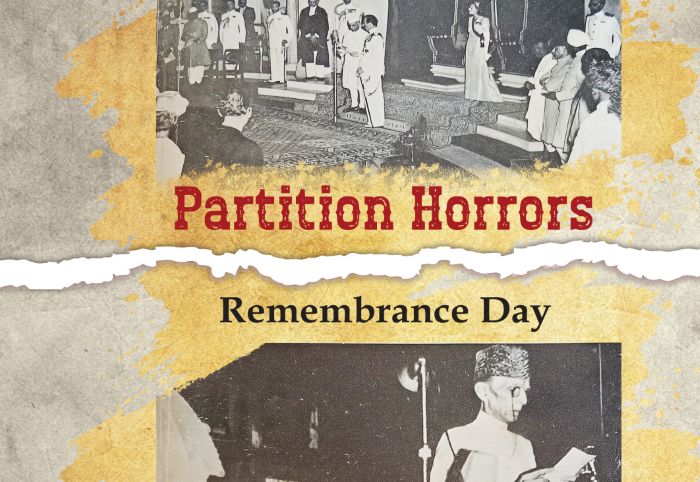
The NCERT’s new Partition modules—one for Classes 6–8 and another for Classes 9–12—released on Partition Horrors Remembrance Day (Vibhajan Vibhishika Smriti Diwas) this August 14, have ignited headlines and debate. By offering a more candid analysis of 1947, they mark a shift in how the tragedy of Partition is taught to schoolchildren.

Predictably, the modules have become a political flashpoint. The BJP-led government, often accused by critics of reshaping textbooks with nationalist overtones, is once again under scrutiny. The Congress has objected strongly, calling the account misleading and incomplete, particularly for omitting the role of right-wing Hindu organizations. The modules rest on a clear plank: Partition was not inevitable, and its responsibility lay with three principal actors—Muhammad Ali Jinnah, who demanded it; the Indian National Congress, which accepted it; and Lord Mountbatten, who hurried its implementation.

But beyond the political sparring, the real question is this: Should young students be taught the Partition story in such depth? Is it necessary to revisit such memories in classrooms, or does it serve as an essential lesson for 21st-century learners?

The answer lies in what education aspires to achieve. Partition was not merely a footnote to independence—it was the defining rupture that shaped South Asia’s political and economic trajectory. To understand India’s democracy, federalism, communal tensions, and even its foreign policy, students must grasp the magnitude of 1947. Far from burdening young minds with sorrow, this kind of history builds critical faculties—the famous “Cs” of education: critical thinking, creativity, communication, and collaboration.

Yes, in the 1950s and 1960s, the silence around Partition in school curricula was deliberate. India was fragile, still reeling from the trauma of nearly 1.5 crore displaced people, bloody riots, and a nation-building project that demanded unity above all. The leadership feared that keeping Partition memories alive might deepen wounds and breed discord.

Seventy-eight years later, those fears no longer hold. Today, Partition memory lacks the capacity to spark mass violence at a societal level. Politicians may weaponize it for rhetoric, but for ordinary citizens, an accurate and unflinching account of the tragedy only strengthens understanding and resilience. In fact, teaching Partition candidly is a way to counter new-age propaganda, radicalization, and selective amnesia about the costs of communal politics.

Across the Radcliffe Line, too, memory is fading. When official posters of Independence Day in Pakistan omit Jinnah’s portrait, it shows a society drifting from its roots. India, by contrast, gains by confronting its past honestly. Only by doing so can younger generations learn how historical wrongs unravel nations, and how difficult but necessary compromises must be made to preserve peace.

The NCERT modules, whatever their political genesis, deserve to be seen not as a revival of old wounds but as an act of remembrance and reckoning. The Partition of 1947 was one of the darkest chapters of modern history. Placing it squarely before students is not a burden—it is a duty.


  • Facebook
  • Twitter
  • Instagram
  • LinkedIn
  • RSS Feed
Previous Post

Shaping Well-Rounded Learners Through Experiential Education

Next Post

Architecture as a Career Path: Current Trends, New Skilling, and Aptitude

education

education

Related Posts

Karnataka and Andhra Pradesh announce plans to ban Social Media use for children, mirrors global moves
Latest

Karnataka and Andhra Pradesh announce plans to ban Social Media use for children, mirrors global moves

by education
March 7, 2026
STEM on Wheels by SLB Pune & Thinksharp Foundation to advance STEM Education for Girls in Pune schools
School Edu

STEM on Wheels by SLB Pune & Thinksharp Foundation to advance STEM Education for Girls in Pune schools

by education
March 5, 2026
SGIS Launches Dedicated Internet Safety Curriculum
School Edu

SGIS Launches Dedicated Internet Safety Curriculum

by education
February 26, 2026
Canadian International School Bangalore Hosts Annual Terry Fox Run for Cancer Research
School Edu

Sportz Village’s 14th Annual Health Survey Report: 66% children cannot sustain basic cardiorespiratory activity

by education
February 26, 2026
School Edu

Arduino partners with Get Set Learn to scale Physical AI and future ready STEAM school education

by education
February 25, 2026
Next Post
Architecture as a Career Path: Current Trends, New Skilling, and Aptitude

Architecture as a Career Path: Current Trends, New Skilling, and Aptitude

  • Facebook
  • Twitter
  • Instagram
  • LinkedIn
  • RSS Feed

Useful Announcements

  • All
  • Useful Announcements

FIIB Opens Applications for its international business plan competition, Meraki 2026

March 6, 2026

UPES announces 1,000 fully tuition-free Online MBA scholarships under the ‘1,000 Women – 1,000 Dreams’ initiative

March 5, 2026

Aarohan 3.0, a convergence event on Youth Entrepreneurship at JKLU Jaipur on March 6

March 5, 2026

Siemens Energy India announces first cohort of Energy4Good scholars

March 5, 2026

Gamepoint and CoLLearn Sports to launch Job-Integrated Sports Management Program in Hyderabad

March 5, 2026

ICAI Launches Data Protection Compliance & Audit Certification at CoE Hyderabad

March 3, 2026

Ministry of Education invites participation of youth for Yuva Sangam (Phase VI); Online registrations started from Mar 2

March 3, 2026

Dost Education convenes “Talk, Care, Play” to Spotlight Playful Caregiving on March 9 in Delhi

February 26, 2026

MAT February Registration to Close on March 2

February 26, 2026

ISH launches B.Sc. in Global Business and Entrepreneurial Leadership

February 26, 2026

Download current issue Not available

https://online.pubhtml5.com/jlyo/bxvr/

Monthly Magazine : Feb 2024

Interactive (Quizzes/Surveys)

Start Monthly Quiz
Education21

An initiative in continuation of Curriculum Magazine, Education21.in, is a platform for New India that aspires to be a valuable innovator, partner and collaborator for a just and sustainable world. Continuing with our steady and 360 degree coverage of education system and skills landscape, we are here more oriented towards learner community.

Useful Links

  • About us
  • Team
  • Contact
  • Editorial opportunities
  • Subscriptions
  • Job Opportunities
  • Features

Important Links

  • Blog
  • Archives
  • People
  • Careerwise
  • Resources
  • Downloadable
  • Old issues

Newsletter

  • Facebook
  • Twitter
  • Instagram
  • LinkedIn
  • RSS Feed

Copyright © 2020 All rights reserved. Education21.

No Result
View All Result
  • Home
  • Latest
  • Spotlight
  • Perspective
  • Interview
  • Videos
  • Events
  • Shop
  • Student Kiosk

Copyright © 2020 All rights reserved. Education21.

Welcome Back!

Login to your account below

Forgotten Password?

Create New Account!

Fill the forms bellow to register

All fields are required. Log In

Retrieve your password

Please enter your username or email address to reset your password.

Log In
Cleantalk Pixel