

By Kadwin Pillai, Director, Transworld Educare, and Chairman, Kings International Medical
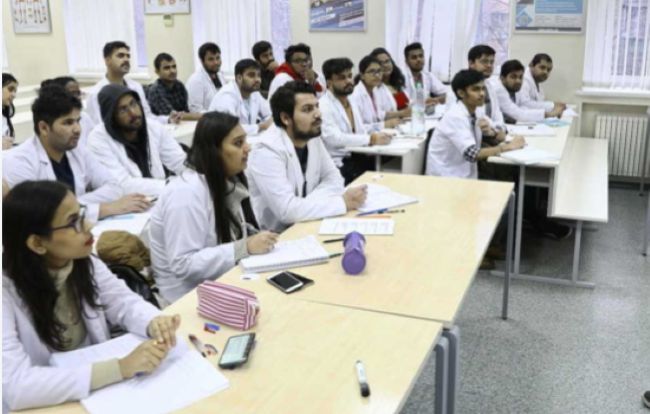
E very year, thousands of Indian families sit down with the same question once NEET results are declared: if a seat in India does not come through, where should the child go for MBBS? The instinctive answer is usually a country name: the Philippines, Russia, Georgia, or one of a dozen others that show up in advertisements and agent pitches. But the country should be the last thing decided, not the first. The order that actually protects a student’s future is career first, college second and country third.
Why career has to come first
A medical degree earned abroad is only as good as the licence it eventually leads to in India. That is the entire point of the exercise, and it is why the National Medical Commission’s April 2026 advisory on foreign medical education exists. It asks students and parents to check course duration, medium of instruction, clinical training, and internship arrangements before taking admission, not after the fees have already been paid.
The reason this check cannot be skipped is clear from the FMGE June 2026 results. The national pass rate for that session was just 12.38 %. That number does not mean studying abroad is a mistake. It means outcomes depend heavily on where a student studies and families who treat the licensing exam as a distant formality are often the ones who struggle with it later. The exam should shape the choice of college from the outset, not arrive as an unpleasant surprise five years in.
Why the college matters more than the country
Once the career outcome becomes the actual goal, the college is the decision that determines whether a student reaches it. Two colleges in the same country can produce very different results, because what matters is the curriculum, how early clinical exposure begins, hospital affiliations, faculty quality, and how seriously the institution prepares students for their licensing exam. None of that is decided by a country’s name on a brochure.
Davao Medical School Foundation offers a useful illustration of what consistency looks like over time. In the June 2026 FMGE, its first-time pass rate was close to 75%, nearly six times the national average, and three of its graduates secured All India Ranks 4, 6, and 9. Results at that level do not happen by chance. They come from structured teaching, early clinical rotations, and exam preparation built into the course itself.
Scale matters too, since it shows a pathway has been tested repeatedly rather than just once. In March 2026, 1,015 Indian-origin students graduated with Doctor of Medicine degrees from Davao Medical School Foundation at its 25th graduation ceremony, one of the largest single batches of Indian medical graduates from any institution abroad. A pathway proven across thousands of students, over 25 years, carries far less risk than one still finding its footing.
Where the country actually fits in
Country still matters, but only once the college has been properly evaluated. Language of instruction, the clinical training environment, cost of living, and regulatory alignment with India are all worth examining, just not before the institution itself has been checked.
The Philippines has become popular with Indian families for reasons that hold up under scrutiny: English-medium teaching throughout the course, a curriculum built on the American system, and a demonstrated record of graduates clearing India’s licensing exam. Even so, a low tuition fee means very little on its own if the college cannot deliver proper clinical training or meet NMC’s regulatory requirements.
The decision that actually works
India’s own medical education capacity has also grown meaningfully this year, with the National Medical Commission’s revised seat matrix for 2026-27 adding 13,186 seats and taking the total intake to 140,214 seats across 836 colleges. That is genuinely good news for aspirants. Even so, many NEET-qualified students will continue to look abroad each year, and for them, the sequence that protects five years and a career remains simple: decide the career outcome first, verify whether a specific college can deliver it, and only then compare countries.
The destination shapes the experience of studying medicine abroad. The college, and the clinical training and exam outcomes it delivers, shape whether that degree becomes a working career back home. That is the distinction every family weighing MBBS abroad should hold onto in 2026.