

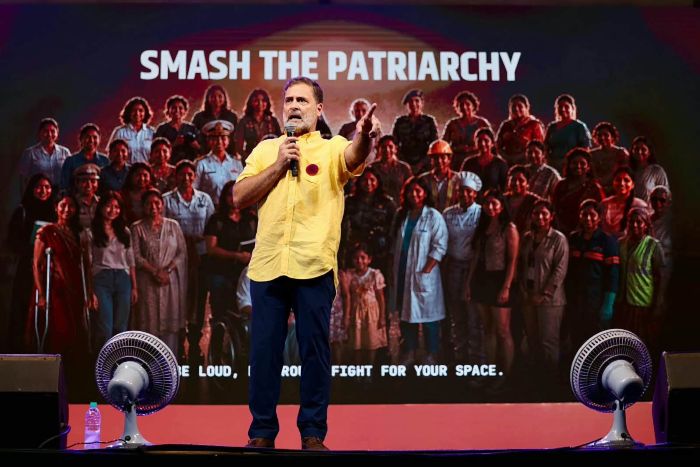
The Rahul Gandhi-led Congress party student outreach programme, Chhatron Ki Goonj, in its latest edition (4th) focused exclusively on young women and female students in Pune on August 22. The event drew an estimated gathering of 8,000–10,000 people including students and working women to discuss education, employment, safety, equality and competitive examination-related concerns.
Addressing the gathering, Gandhi, Congress leader and Leader of Opposition in the Lok Sabha, described India’s 70 crore women as the country’s “biggest asset” and argued that women should not be defined only through their relationships as daughters, wives or mothers. He attacked what he termed the “Manusmriti mindset” and called upon young women to challenge patriarchy and assert their independence.
Gandhi also criticised the BJP and RSS, alleging that their ideology seeks to restrict women’s freedom. He referred to recent controversy over women protesters using abusive language, questioning why language considered unacceptable from women is often tolerated when used by men.
https://x.com/RahulGandhi/status/2091212746587328551
Neha Singh Rathore — the Bhojpuri folk singer and political satirist appeared on stage with Rahul Gandhi and performed a song criticising the government. She subsequently spoke with Gandhi about the abuse and criticism she has faced for raising political questions. Asees Kaur, a playback singer also performed at the programme.
Students used the interaction to raise concerns over paper leaks, competitive examinations, employment opportunities and social and family pressures.
The Pune edition also came amid a political controversy over the event. The BJP alleged that Congress had paid influencers to attend and promote the programme. Congress rejected the allegations and said the BJP was unsettled by Gandhi’s outreach to Gen-Z.
Chhatron Ki Goonj, which began in Kota on June 17 has since travelled to other cities including Dehradun and Prayagraj. With its women-centric Pune edition, the campaign has broadened its focus from student and examination concerns to women’s autonomy, safety, employment and social equality, while intensifying the political contest for Gen-Z support.